
Septic Inspection In Travis County
We Inspect Septic Across Travis County
If your system is aerobic, like most new ones here, a septic inspection in Travis County is due about every four months. We keep that schedule.
★★★★★
5.0
on Google
OSSF Licensed & Insured
Local Travis & Hays County Team
SIGNS YOU MIGHT NEED
Is Your Inspection Due?
Here's a quick check: count back four months. If your system is aerobic and nobody has opened the lids since then, it's due for its next inspection, and we can put it on the calendar.
Any Of These Happening To You?
Spray heads out in the yard?
Lost track of the last inspection?
Not sure if yours is aerobic?
Two-year contract running out?
Alarm beeping on the panel?
Recognize one of these? That's the moment to call, and we'll work out which visit your system needs.
OUR SERVICE AREA
WE LOVE OURHOME TURF
Find your town for a Travis County septic inspection. Buda, Kyle, Mountain City and Dripping Springs are under Hays rules.
What Travis County Says
What Customers Wrote On Google


Inspections In Travis County
Inside A Septic System Inspection In Travis County
Most owners figure the system is fine while toilets flush. Septic inspections in Travis County give you an answer, not a guess, because we look at the tank itself. They're part of our residential septic services, so the same team handles what the visit turns up.
On an aerobic unit, the moving parts get a look too, because they clean the water before it reaches your yard. If the visit shows a pump-out is due, we quote before we pump, and the quote is the price.
Buying Or Selling Is Its Own Inspection
Buying or selling a home? The sale needs its own inspection: a full test of the system and its parts, with the findings written up in detail for everyone in the deal. Ask us for a real estate septic inspection, and we'll book that one instead.
How It Goes
How An Inspection Visit Runs
01
Call Or Book
Call us, and we can usually get out the same day or the next. You don't need to know what kind of system you have first.
02
Find The Lids
We find the tank and dig to the lids, and we warn you before any deep digging.
03
Look It Over
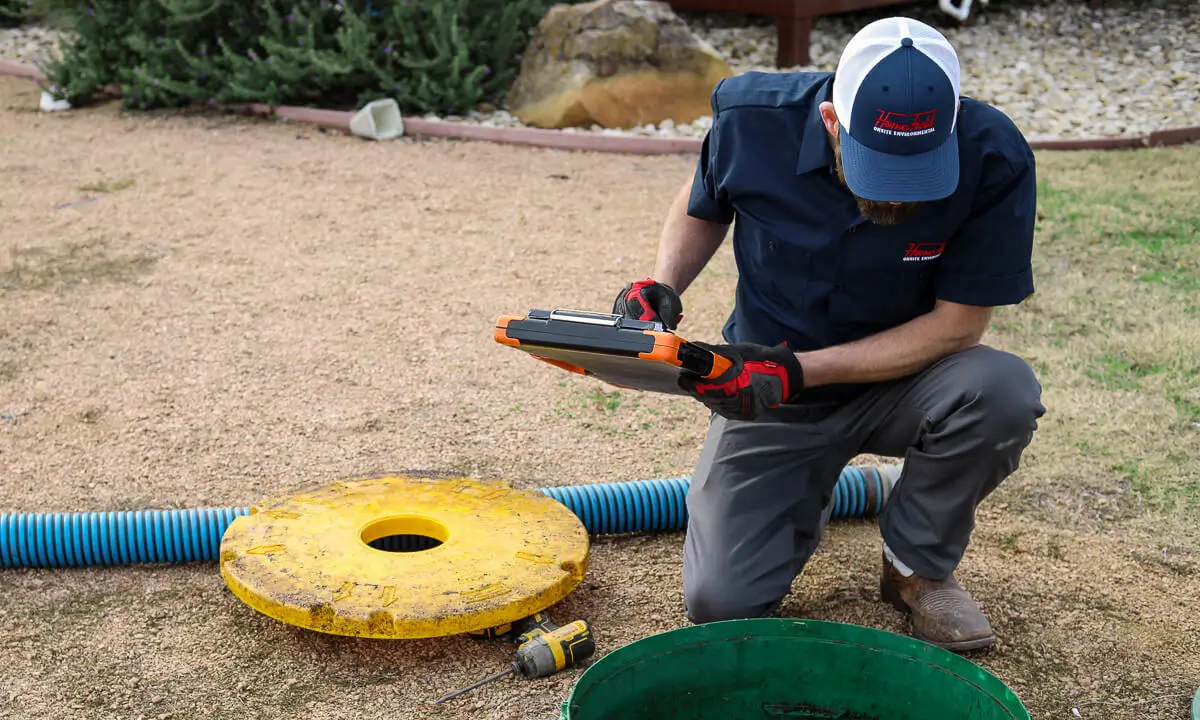
For a septic tank inspection in Travis County, we visually inspect the tank. On an aerobic system, the aerator, spray heads and control panel get checked too.
04
Talk It Through
We explain the tank's condition and what's due next, and anything beyond the inspection waits for your OK.
WHAT TO EXPECT
What An Inspection Costs Here
We handle all of your legally required inspections with an Advantage Plan. The monthly price covers the visits, and plans start at $39 a month. Call us about your system, and we'll match a plan to it.
4 months
How often Texas expects an aerobic system inspected. That's three visits a year, and the plan carries every one of them.
Switching
When the builder's contract runs out, the visits don't. Call before it ends, and we move you onto a plan, starting with a first inspection we file.
Pump-outs
A pump-out isn't an inspection, and the plan doesn't include one. If a visit shows the tank is due, you get the price first.
Local Rules In Travis County
The Four-Month Aerobic Septic System Inspection
The visit isn't only for you. Texas expects a record of each one, filed with the office that holds your permit, and on an aerobic system that's about every four months. West of I-35, thin soil over limestone is why so many homes here run aerobic units.
East of the highway, on a conventional tank, the visit is mostly about sludge level: a drainfield in Houston Black clay has no room to spare. Either side, we file every inspection with your permit office, so your contract stays current without you chasing it.
Who Permits Septic Work Here
It depends on the address. Travis County TNR covers the unincorporated county, Austin Water covers its jurisdiction and every Lake Austin frontage lot, and the LCRA covers the land within 2,000 feet of Lake Travis.
On the Hays side it's Hays County or the City of Dripping Springs, and West Lake Hills has its own septic inspector. We work out which one covers you, and when a repair needs a permit, we handle it with that office.
Why HomeField
Inspections Kept On Schedule
Keeping a four-month calendar shouldn't fall to you. HomeField Travis County is based in west Austin, next door to West Lake Hills, so the team holding your schedule is close by.
An Advantage Plan is how we hold that schedule, and plans start at $39 a month. Give us a call to choose the one that fits.
We're locally owned, with HomeField teams across Texas and Arizona behind us, and we inspect in the Hays County towns too.
WHAT TO EXPECT FROM HOMEFIELD
Your schedule, tracked
Tank found for you
Your system explained
Pump-outs priced first
Permit work handled
Repairs by the same team
POPULAR QUESTIONS
Inspection Questions From Travis County

STILL WONDERING?
ASK US ANYTHING
One call gets a real local tech, not a call center. If it's septic, we've seen it.
★★★★★ 5.0 on Google (512) 275-6619
MAINTENANCE PLAN
Choose Your Advantage Plan
An Advantage Plan puts the four-month visits on our calendar, so the inspection happens whether or not you remember it.
InspectionAdvantage Plan
Stay compliant and keep an eye on things. Repairs billed as they come.
MID-TIER
MechanicalAdvantage Plan
Everything in Basic, plus repairs on the parts that actually fail out here.
Full CoverageAdvantage Plan
Mechanical, electrical, sprinkler heads, and pumping after year one.
Looking for a commercial plan? Get a customized commercial plan »