
Septic Repair In Travis County
We Fix Septic Systems In Travis County
When spray heads quit or drains back up, our septic repair in Travis County starts with what broke. Often it's one part, not a whole new system.
★★★★★
5.0
on Google
OSSF Licensed & Insured
Local Travis & Hays County Team
SIGNS YOU MIGHT NEED
Septic Repairs
Most septic systems give some warning before they quit. Catch it early, and a septic tank repair in Travis County is often one part or one broken line.
Any Of These Happening To You?
Spray heads not coming on?
Gurgling in the drains?
Soggy ground over the field?
Drains slow after every rain?
Alarm light blinking or buzzing?
One of these is enough reason to call. The sooner we look, the smaller the fix tends to be.
OUR SERVICE AREA
WE LOVE OURHOME TURF
Find your town below. Our Travis County septic repair covers all of them, including the northern Hays County towns.
What Travis County Says
Reviews Of Our Travis County Repairs


Repairs In Travis County
What Septic System Repair In Travis County Covers
Something quit, and you want to know what and why. Residential septic repair done right finds the cause first and fixes only what failed, so you don't pay for parts you don't need.
Here that usually means one of two jobs. West of I-35 it's most often a part on an aerobic unit, and east of I-35 it's a clay drainfield. If it turns out the tank just needs pumping, that's in our residential services too.
Where Repair Stops And Replacement Starts
A worn aerator, a cracked lid or one broken line is a repair. A system that's undersized, collapsed or can't meet today's rules needs replacing, which means a new design and a new permit. If a repair would only buy you a few months, we'll say so plainly and walk you through what a replacement involves.
How A Repair Goes
How A Septic Repair Goes
01
Describe The Problem
Tell us what you're seeing and hearing. Call us, and we can usually get out the same day or the next.
02
Find The Tank
We find the tank and dig to the lids, and we warn you before any deep digging.
03
Trace The Fault
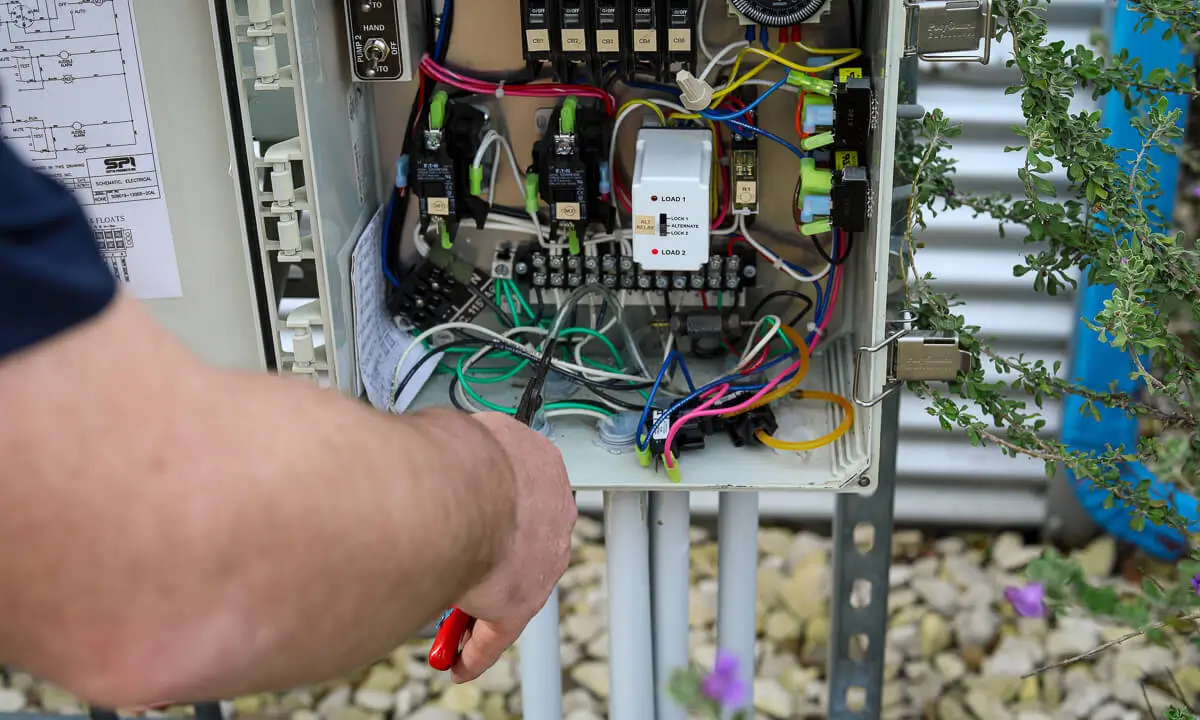
We visually inspect the tank and check the aerator, spray heads, control panel and field until the cause is clear.
04
Approve, Then Fix
You get a plain explanation and a price. Nothing gets replaced until you say go.
WHAT TO EXPECT
What A Septic Repair Costs
A repair price depends on the part, your ground and whether the job needs a permit. Call us and describe what's going on, and we'll tell you over the phone what you most likely need.
One part
West of I-35 the usual fix is an aerator, a pump or a spray head. That's parts and labor, not digging.
Fix or redo
One broken line is a repair. A field failing all over in east-side clay is a new design, and that answer comes before anything gets dug.
Price first
The price comes before the work, and no part gets swapped until you say so. If the repair needs a permit, that's ours to handle.
Ground In Travis County
Septic Repair On Both Sides Of I-35
Your neighbor's fix across town may not be yours. What breaks depends on where your house sits, and the ground here splits roughly at I-35.
West, thin soil over limestone put most homes on aerobic units with plenty of moving parts. East, the clay barely drains at all. We come ready for whichever side your system is on.
Aerobic Septic System Repair West Of I-35
If you live out along Hamilton Pool Road, Bee Caves Road or RM 620, your system probably waters the yard through spray heads. Those units have pumps, aerators, air compressors and a control panel that wear out. We handle septic aerator repair, clear clogged spray heads and replace worn pumps, and most of it is parts and labor rather than digging.
Drainfield Trouble East Of I-35
If the yard over your field stays soggy, or the drains slow down after every rain, the clay is usually why. Houston Black clay, the ground under Del Valle, Mustang Ridge and the prairie out past US-183 and SH-130, is rated unsuitable for a standard drainfield, so a field there has little room to spare. On this side, drain field repair in Travis County is mostly ground work, and we show you whether a fix will hold before anything gets dug.
Who Permits Septic Work Here
Some repairs need a permit, and the office depends on your address. Unincorporated land goes through Travis County. Austin Water covers the city and every Lake Austin frontage lot, and the LCRA covers land near Lake Travis. Around Buda, Kyle and Mountain City, septic repair in Hays County goes through Hays County itself, and Dripping Springs, Bee Cave and West Lake Hills run their own programs. We work out which office is yours and handle the permit when a repair needs one.
Why HomeField
Local Septic Repair Team
You want one call that sorts it out. HomeField Travis County works out of west Austin near Lake Austin and serves every town on this page.
We're locally owned, with the wider HomeField network in Texas and Arizona behind us. We diagnose before we sell a part, so you pay only for what failed, and we show you what we saw.
Once it's fixed, an Advantage Plan keeps it on a regular schedule, and plans start at $39 a month. Curious what a plan would run for your system? Give us a call.
What To Expect From HomeField
Diagnosis before parts
A price before work
We locate the lids
Permits handled for you
Straight answers
Aerobic and field repairs
POPULAR QUESTIONS
Questions We Get About Repairs In Travis County
STILL WONDERING?
ASK US ANYTHING
One call gets a real local tech, not a call center. If it's septic, we've seen it.
★★★★★ 5.0 on Google (512) 275-6619
MAINTENANCE PLAN
Choose Your Advantage Plan
Small aerobic faults are easiest to fix when a regular visit catches them, and an Advantage Plan books those visits so you don't have to keep track of them.
InspectionAdvantage Plan
Stay compliant and keep an eye on things. Repairs billed as they come.
MID-TIER
MechanicalAdvantage Plan
Everything in Basic, plus repairs on the parts that actually fail out here.
Full CoverageAdvantage Plan
Mechanical, electrical, sprinkler heads, and pumping after year one.
Looking for a commercial plan? Get a customized commercial plan »
Keep Exploring Septic emergencies → Septic pumping in Travis County → Septic FAQs →