COMMERCIAL SEPTIC INSPECTION IN THE EAST MOUNTAINS
Keep Your Septic System In The Green
For a business, a septic inspection is both a compliance step and an insurance policy. We give your commercial system a thorough evaluation, document it for your records, and flag anything heading toward a failure before it interrupts your operation.
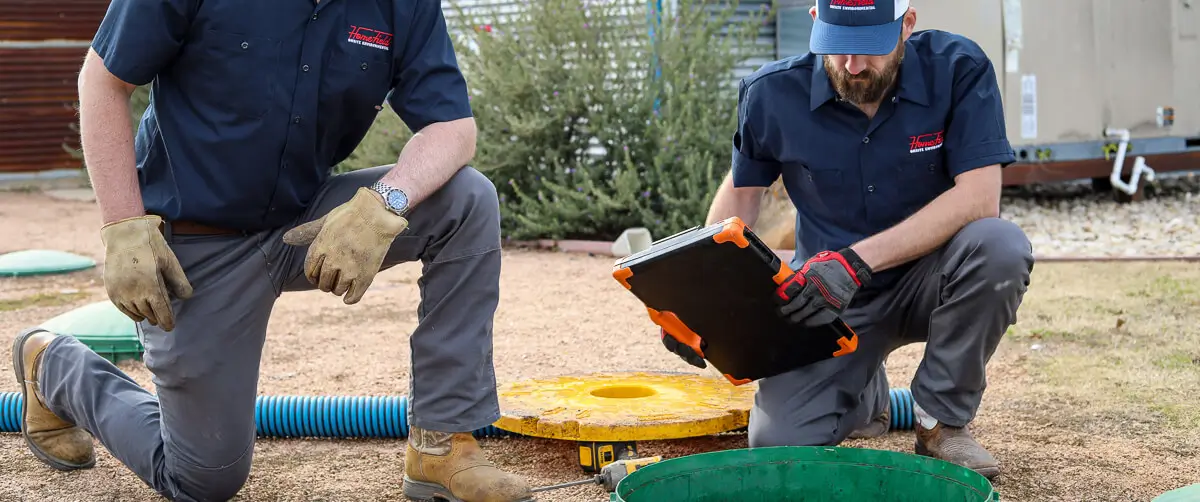
Your HomeField East Mountain inspector can give you a detailed written report covering your current system health and exactly what's needed to keep it running smoothly.

Reasons To Get
A Septic Inspection
From honoring state and local regulations to just knowing your system is doing fine, we know there’s a lot of reasons to get your commercial septic system inspected.
TOP REASONS FOR INSPECTIONS
- You’re Required To Get One To Be Compliant
- Your Septic System Might Be Overloading
- Unexpected Plumbing Issues Keep Happening
- You’re Buying Or Selling A Property
- You Don’t Know Your System’s Condition
Regular Septic Inspections Keep YourSystem Legal And Running Smoothly
WHAT YOU SHOULD KNOW ABOUT
Septic Inspections
Why Do Commercial Systems Need Regular Inspection?
Because the stakes and the rules are both higher than residential. Most commercial properties here run advanced treatment systems, and those systems typically carry ongoing maintenance and reporting obligations under their permit...under the Bernalillo County ordinance in the unincorporated communities, under NMED elsewhere. A lapse isn't just a breakdown risk; it's a compliance problem on top of one.
Then there's the load. A business pushes high, grease-heavy, peaky flow through the system, which stresses components faster than a home ever would — and on our granite and caliche ground the dispersal field is already working hard to keep up. Regular inspection is how you catch a tired pump, a failing chlorinator, a grease interceptor near capacity, or a field starting to strain before any of it becomes the kind of failure that closes your doors. For a commercial operator, it's routine risk management with real downtime on the line.
What Does A Commercial Septic Inspection Cover?
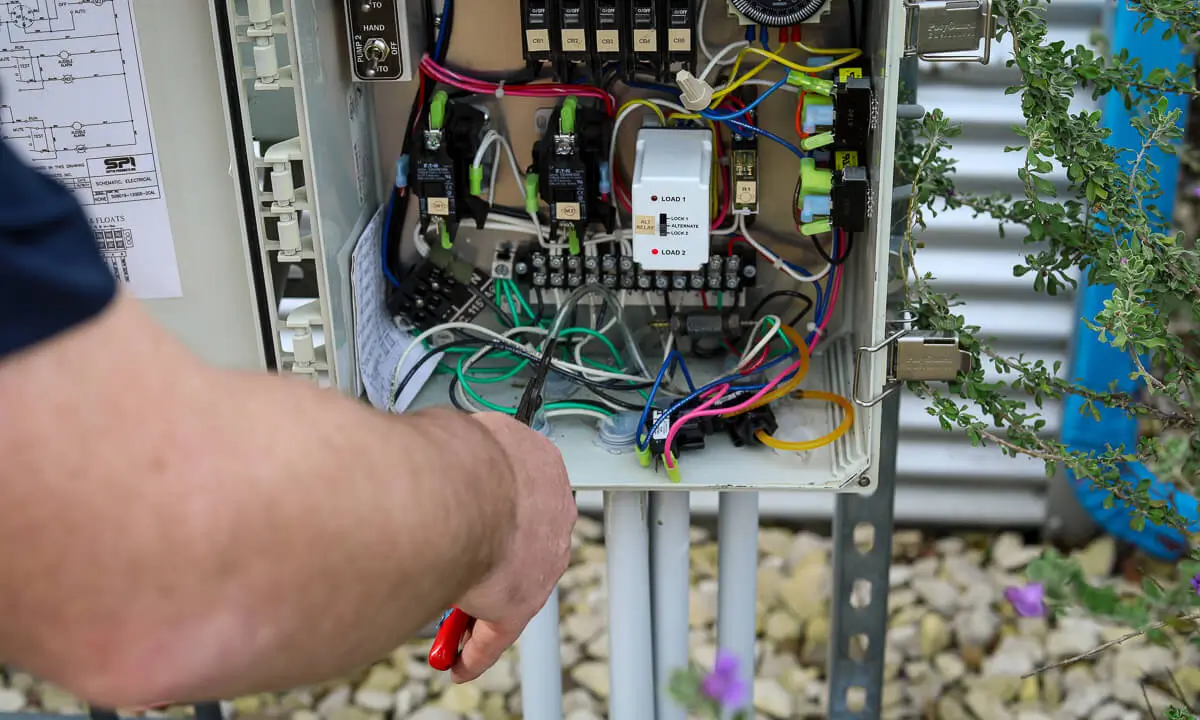
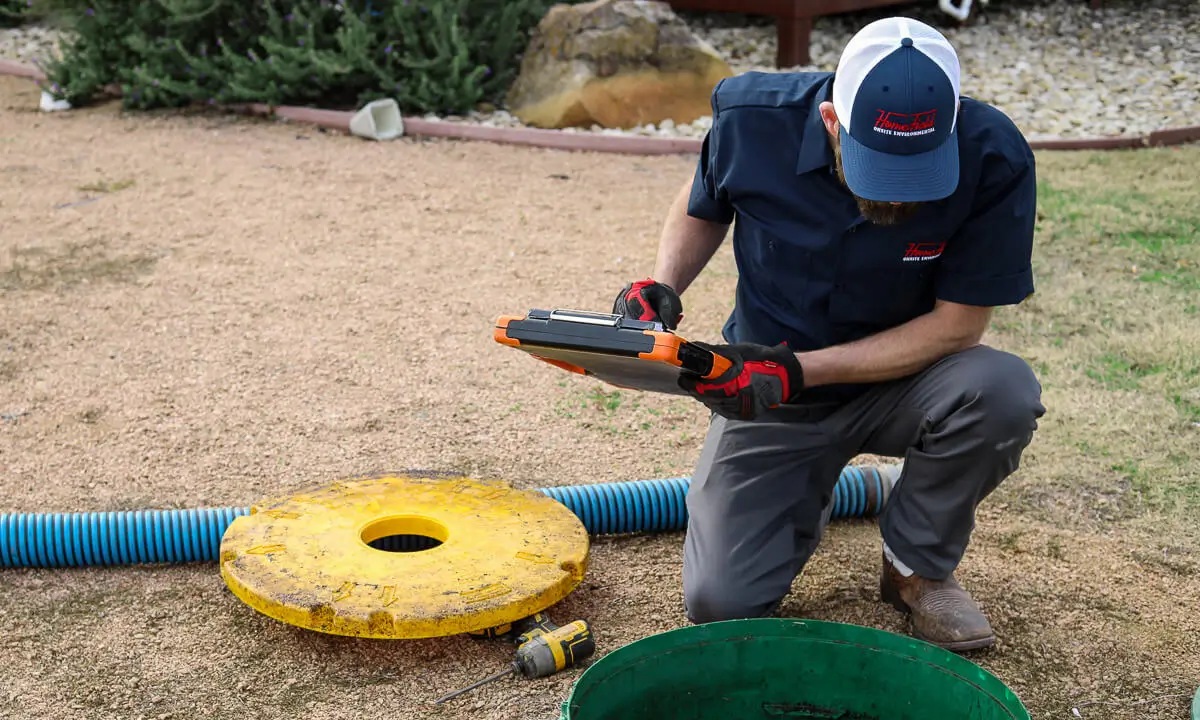
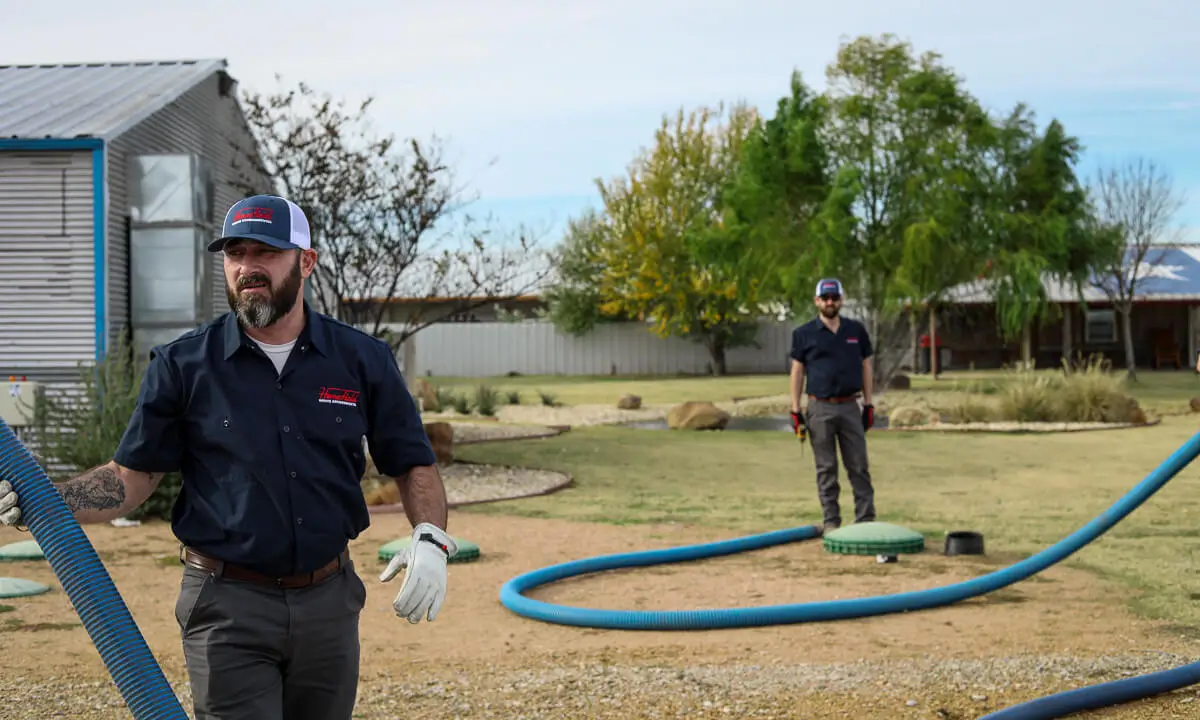
We evaluate the full system at commercial scale. That means the tanks and sludge levels, the grease interceptor for food-service operations, the treatment components on an advanced system (air pump, disinfection, controls and alarms) and the dispersal field's condition. Where grease loads are stressing the system, we look closely, because that's where commercial systems most often get into trouble out here.
You come away with a documented report suited to two jobs: satisfying the regulator and planning your budget. It tells you what's compliant, what's marginal, and what needs action, with the detail a permitted system's file requires. We also read the findings in local context — a dispersal field showing strain on shallow granite means something different than it would on deep soil, and we'll explain what yours implies for the months ahead.
How Often Should A Business Get Inspected, And Is It Worth It?
The cadence is partly set for you by your permit (many advanced commercial systems require scheduled maintenance and reporting at fixed intervals) and partly by your real-world flow, with higher-volume operations benefiting from more frequent eyes. We map your permit requirements and your actual use to a schedule that keeps you both compliant and ahead of trouble.
On worth: an inspection is trivial next to the cost of a commercial failure. A shutdown closes revenue, an out-of-spec discharge invites a compliance action, and a neglected dispersal field on rock or caliche is a major capital replacement. Catching the problem early, on a planned visit, is far cheaper than meeting it during business hours. We price inspections straight and, being local, without padding for travel out to a valley or mountain site.

How Does HomeField Inspect Commercial Systems Differently?
We inspect with your operation and your obligations in mind: honest condition reporting, documentation that satisfies the regulator, and context on what's normal wear versus what needs action. Because we know the local authorities and what each requires, our reports help you stay in good standing rather than just describing the system.
And because we know the local ground, the findings come with meaning — what a given reading implies on this soil, at this elevation, for a system carrying this kind of flow. Anything the inspection turns up can be handled by the same local team on one call, so you're not handed a problem and a list of other numbers to dial. The goal is a system you can plan around, not react to.
TESTIMONIALS
What Our Customers Are Saying About Us
We’re here to give our customers around New Mexico peace of mind whenever they think about their septic system. Here’s what they’ve been saying...
OUR PROCESS
The Game Plan For Septic Inspections
We’re here to make sure your system is inspected, working correctly, and in compliance. We follow a simple game plan to consistently get you great results.

Check The Tank’s Condition
We need to look inside your tank to see what your internal levels look like, while also checking for any worrying leaks or cracks.

Check Your Drain Field
Not every system has a drain field (but many do). Our goal is to see where your treated water is going, and how your system handles its water.

Inspect Your Connections
We’ll review the pipes and connections your system has, looking for any irregularities or potential leaks, making sure things are secure.

Test! Test! Test!
Once we inspect your septic system thoroughly, we’ll test it to make sure it’s functioning normally, the way you need it to.

Report The Results
We’ll let you know if your septic system passed with flying colors, or if it needs a little bit of tender care to get it back functioning the way it needs to
Need Your System Inspected?

OUR SERVICE AREA
WE LOVE OURHOME TURF
We proudly serve the cities and towns of our home turf here in the East Mountains, including: