
RESIDENTIAL SEPTIC INSTALLATION IN NORTH TEXAS
Get A New Septic System Installed
Need a residential septic tank installation for your home in North Texas? We'll make sure you the right system and the right placement, and ensure the whole process is smooth.
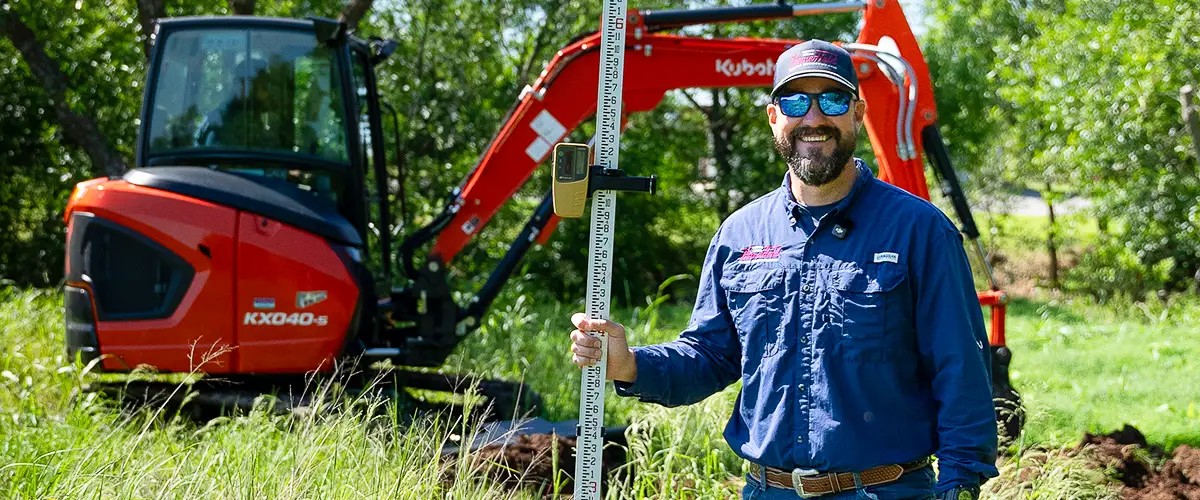
By considering your home size, location, soil conditions, and our local regulations, we'll identify the perfect septic system to meet all your home needs.

REASONS YOU MIGHT NEED
A Septic Install
If you’re ready for a new residential septic system, or looking to replace your old one, HomeField North Texas is your one-stop place to get your installation taken care of.
TOP QUESTIONS TO ASK...
- Do You Need A New Septic System?
- Is Your Current System Too Small For You?
- Does Your Old System Work Consistently?
- Is Your Drain Field Backing Up Or Failing?
- Has Something Damaged Your Old System?
Tell Us About Your Unique Needs And We’ll Install Your Next Septic System
WHAT YOU SHOULD KNOW ABOUT
Septic Tank Installation
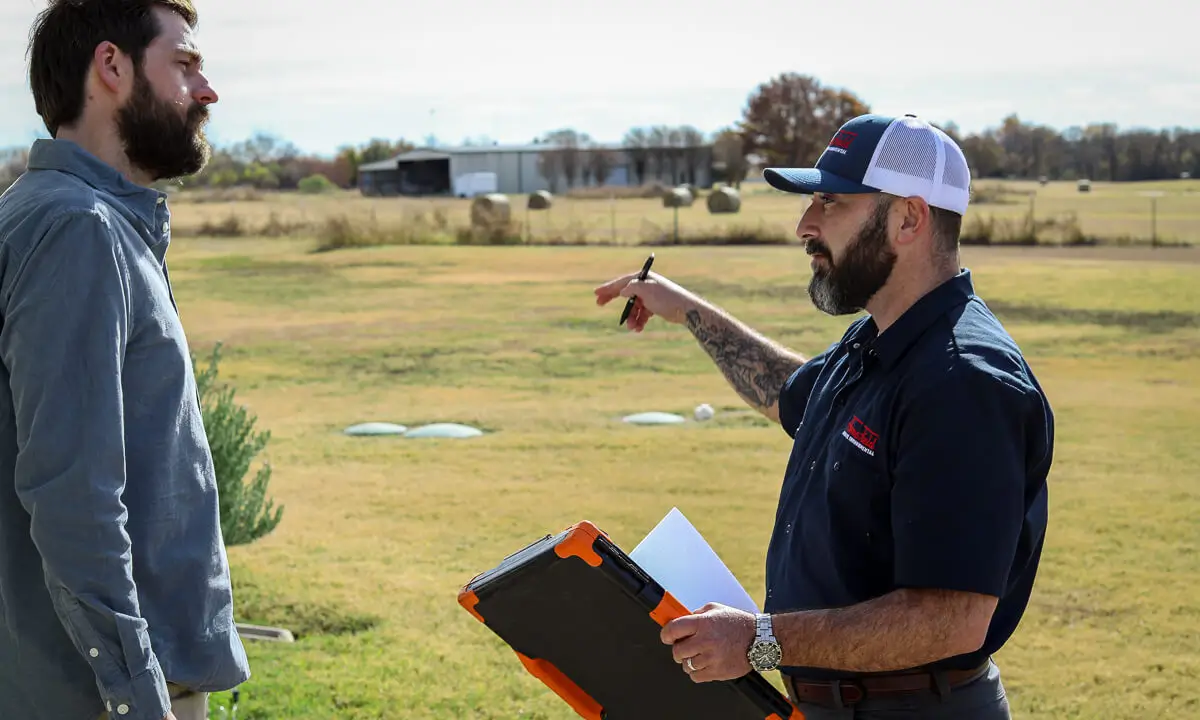
What’s The Best Type Of Septic System For Our Local Area?
The majority of local home septic systems fall into one of two categories: conventional and aerobic. A conventional septic system is likely the first thing that came to mind when you considered septic (a large tank, a dispersal field, etc). What you may not be aware of is the newer and more efficient category of aerobic septic systems...
Your selection of septic system is typically determined by the soil conditions and the space requirements you have surrounding your home. For our local area, the majority of the systems we install are aerobic systems. The most effective way to determine exactly what type of septic system fits the needs of your home and surrounding soil conditions, just give us a call! We'll work through what you need, and run the proper tests to determine what's possible for you.
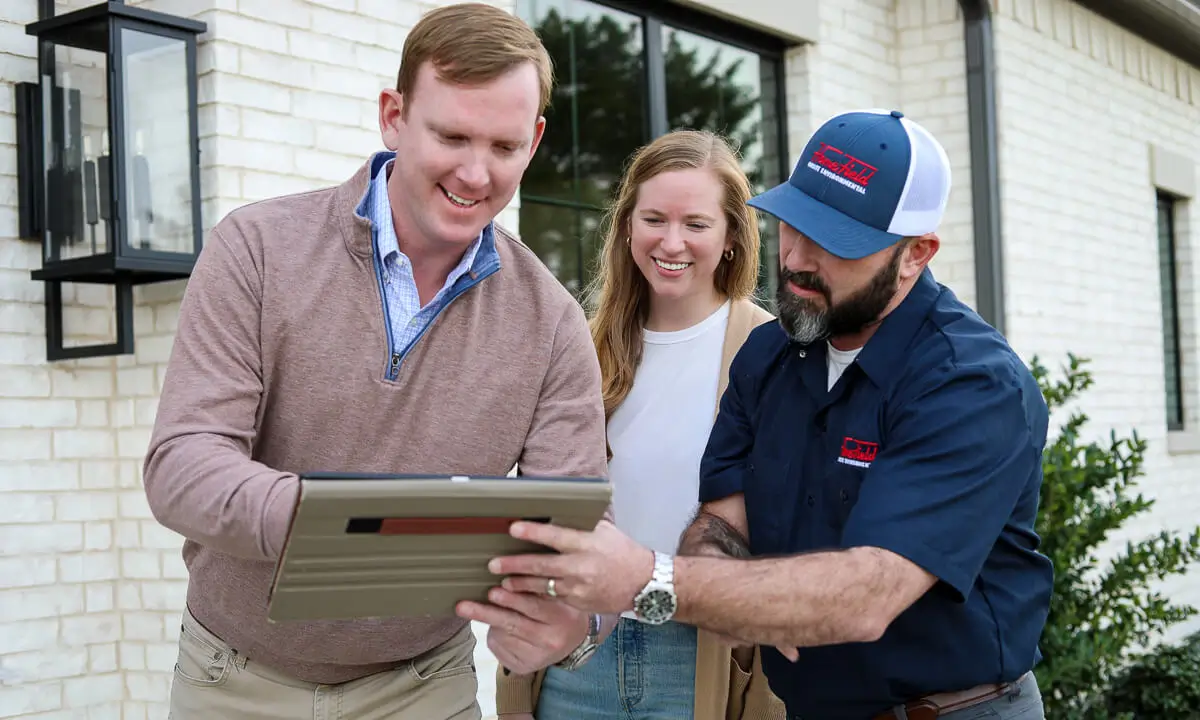
What Should My Residential Septic Installation Cost?
To begin with, installing your new home septic system is essentially you investing in a mini wastewater treatment plant in your backyard. If that sounds wild, it kind of is, but it's also not something to be scared of. Depending on where your home is located, you need a working septic system.
You can think about installing one like buying a used or new car. The price of your unique system and installation depends on the needs of your home, the type of system you're getting, the size of it, and a few other factors. All of the systems we install are quality, and we can give you a custom quote based on your needs. Give us a call! (And yeah, we wish there was a super simple answer to that question)

As A Septic System Owner, What Are You Responsible For?
As a home septic system owner, you have a responsibility to understand your system, observe it to make sure it's working properly (or get help if you're not sure it is), and follow all the safety rules and requirements for your system...
We're always here to keep things running smoothly with regular maintenance, but here's what you need to think about in the day-to-day care of your system:
- Don't use vehicles on or near your system. You'd think that would be obvious, but a common way septic tanks and disposal fields get damaged is when an owner forgets and drives over a part of it.
- Your septic system will never produce water that's safe for human or animal consumption. Your system produces water safe for the environment to process, but keep your pets and loved ones away from your system and its components, just in case.
- Finally, if your system is an aerobic one, you need to make sure your aerator is clear of water, fire ants (how we hate them here in Texas), or rodents.
Don't try to service your system yourself without training. There's a real risk of severe electrical shock.
How Long Should A Residential Septic Installation Take?
There is no one-size fits all answer to this (and we wish there was!). There are a LOT of factors we consider, including system type (aerobic or conventional), the size and complexity of your system, solid conditions, weather conditions, and, of course, Texas state and local permitting (which are factors often outside of our control).
The system introduces air into the wastewater treatment process to promote the growth of aerobic bacteria, which break down organic matter more effectively than anaerobic bacteria used in conventional systems There are 4 treatment component steps of an Aerobic Septic System. The level of the surface of the water in a chamber or basin. A v-shaped opening usually found on one side of a weir. The v-notch provides a means of controlling flow into the weir and separating solids from the final effluent. Anything that isn’t liquid that enters the treatment system. Solids can be trash or sludge. The solids produced by the natural biological treatment process. Activated sludge has an abundance of beneficial microbes (“bugs”) and is used to bolster the aerobic treatment process. The distance from the opening of the treatment system to an adjacent property or structure. Most areas have minimum setback requirements from nearby structures and property. The solids that float on the surface of the water or wastewater. The pipe that conveys water out of a chamber or tank. The process of churning the contents of a chamber or basin. Mixing ensures that solids stay in suspension and the contents of the chamber or basin are uniform in dissolved oxygen, waste-strength and microbes. In many states—and especially Texas—regulators use OSSF instead of “septic system” because it covers all types of on-site wastewater systems, not just traditional tanks. Key points: Governed by state and local health and environmental authorities Requires permits, inspections, and maintenance Must meet public health and groundwater protection standards Conventional (gravity) systems Aerobic treatment units (ATUs) Low-pressure dosing systems Drip irrigation systems A portion of the treatment system that separates solids from the raw wastewater prior to biological treatment. The separation of solids from the wastewater using gravity. Here is the **On-Site Sewage Facility (OSSF) contact information for Region 3 of the Texas Commission on Environmental Quality (TCEQ) — the region that covers all the counties in this question outside city limits as part of Region 3 (Abilene). TCEQ+1 Regional Director: Michael Taylor, P.G. This regional office handles environmental and regulatory issues, including septic/OSSF questions and enforcement in Region 3 counties, which include Foard County. TCEQ If you need technical guidance, licensing information, or direction to the correct local authority, you can contact the state office too: TCEQ Ongoing OSSF Program Assistance Phone: 512-239-3799 Email: ossf@tceq.texas.gov Fax: 512-239-6390 Mailing Address: Wichita Falls/Wichita County Public Health District OSSF program hub: https://www.wichitafallstx.gov/376/On-Site-Sewage-Facilities-OSSF State baseline permitting guidance (still applies): https://www.tceq.texas.gov/permitting/ossf/ossfpermits.html For your franchise documentation, I recommend storing these four master links: TCEQ OSSF Program Permit Requirements Authorized Agent Lookup Rulebook (30 TAC 285) All septic systems (On-Site Sewage Facilities — OSSF) in Texas are regulated under: Texas Commission on Environmental Quality (TCEQ) OSSF Program Permit Requirements 30 TAC Chapter 285 (OSSF Rules) Authorized Local Agent Lookup Tool Permits are required for new installations, replacements, system modifications, and most repairs. Final inspections and compliance documentation are mandatory prior to approval. Inside City Limits Fees and Forms Outside City Limits TCEQ OSSF Program: https://www.tceq.texas.gov/permitting/ossf TCEQ OSSF Permit Requirements: https://www.tceq.texas.gov/permitting/ossf/ossfpermits.html 30 TAC Chapter 285 (OSSF rules): https://texreg.sos.state.tx.us/public/readtac$ext.ViewTAC?tac_view=5&ti=30&pt=1&ch=285 TCEQ “Authorized Agent” lookup (use this to confirm which city or county is the permitting authority for a specific address): https://www.tceq.texas.gov/permitting/ossf/ossfsearch Wichita County administers septic permitting in rural areas. County permit required Site evaluation required Inspection approval required Maintenance documentation required for aerobic systems Cities such as Wichita Falls operate municipal septic programs. City permit required Additional spray irrigation restrictions may apply City inspections required Final approval required before system use The system introduces air into the wastewater treatment process to promote the growth of aerobic bacteria, which break down organic matter more effectively than anaerobic bacteria used in conventional systems There are 4 treatment component steps of an Aerobic Septic System. The level of the surface of the water in a chamber or basin. A v-shaped opening usually found on one side of a weir. The v-notch provides a means of controlling flow into the weir and separating solids from the final effluent. Anything that isn’t liquid that enters the treatment system. Solids can be trash or sludge. The solids produced by the natural biological treatment process. Activated sludge has an abundance of beneficial microbes (“bugs”) and is used to bolster the aerobic treatment process. The distance from the opening of the treatment system to an adjacent property or structure. Most areas have minimum setback requirements from nearby structures and property. The solids that float on the surface of the water or wastewater. The pipe that conveys water out of a chamber or tank. The process of churning the contents of a chamber or basin. Mixing ensures that solids stay in suspension and the contents of the chamber or basin are uniform in dissolved oxygen, waste-strength and microbes. In many states—and especially Texas—regulators use OSSF instead of “septic system” because it covers all types of on-site wastewater systems, not just traditional tanks. Key points: Governed by state and local health and environmental authorities Requires permits, inspections, and maintenance Must meet public health and groundwater protection standards Conventional (gravity) systems Aerobic treatment units (ATUs) Low-pressure dosing systems Drip irrigation systems Texas OSSF rules (Texas Health & Safety Code, Chapter 366; and 30 TAC Chapter 285) establish minimum statewide standards for: Planning, site evaluation, design, construction, installation, alteration, extension, repair, operation, maintenance, and inspection of septic systems. Licenses and registrations for installers, evaluators, and maintenance providers. Enforcement and permitting procedures where a county or authorized entity administers the program. https://www.tceq.texas.gov/downloads/publications/rg/on-site-sewage-facility-rules-compilation-rg-472.pdf Unless a county adopts its own authorized agent program, the TCEQ itself (through regional staff) is the permitting authority and these statewide rules apply. https://www.tceq.texas.gov/downloads/publications/rg/on-site-sewage-facility-rules-compilation-rg-472.pdf TCEQ rules allow a county or local governmental entity to become an “authorized agent” if it: Passes a formal OSSF regulatory order or ordinance that incorporates TCEQ minimum standards. Holds a public hearing and meets TCEQ criteria. Gets official approval from TCEQ to operate the program within that jurisdiction. https://www.tceq.texas.gov/downloads/publications/rg/on-site-sewage-facility-rules-compilation-rg-472.pdf If a county becomes an authorized agent, it can enforce the state minimum standards plus any locally adopted requirements that are at least as stringent as state law — and it becomes the primary permitting authority rather than the TCEQ regional office. You can confirm whether a specific county has an authorized agent program by contacting the TCEQ or checking county resolutions and public notices (many are not widely published online). https://www.tceq.texas.gov/permitting/ossf/ossf_contacts.html At present, there is no widely published indication that Hardeman, Haskell, Knox, Wilbarger, or Archer County operates its own TCEQ-authorized local OSSF program separate from the statewide default. For most rural Texas counties of similar size and population, this means: TCEQ (via its regional office) is likely the permitting authority, and 30 TAC Chapter 285 and related rules apply directly as the governing standards for septic systems. https://storelocator.homefieldonsite.com/admin/add-question# Local commissioners courts in these counties typically adopt state rules as written rather than establishing separate OSSF programs. Many counties simply enforce the TCEQ rules through the regional office because they do not have the resources to administer a local program. Because the statewide rules govern unless otherwise adopted locally: A. Permitting and Plan Requirements A permit and approved plan are required for construction, repair, alteration, extension, or operation of a septic (OSSF) system unless a qualifying exemption (e.g., the 10-acre rule) applies. Permits may be issued by TCEQ staff or the local authorized agent if one exists. https://www.tceq.texas.gov/downloads/publications/rg/on-site-sewage-facility-rules-compilation-rg-472.pdf B. Site Evaluation and Design A site and soil evaluation, and a system design, must conform to state standards carried out by licensed professionals. Setback and separation requirements from wells, property lines, and water features are established by state rules. https://www.tceq.texas.gov/downloads/publications/rg/on-site-sewage-facility-rules-compilation-rg-472.pdf C. Installation and Maintenance Licensed installers must perform installation (with some exceptions), and maintenance contracts may be required for certain system types. Homeowners must follow state minimum OSSF maintenance obligations. https://www.tceq.texas.gov/downloads/publications/rg/on-site-sewage-facility-rules-compilation-rg-472.pdf D. Enforcement and Compliance The TCEQ regional office or a local authorized agent will handle inspections, approvals, and enforcement actions. Failure to comply with permit conditions or the OSSF rules can lead to orders to repair malfunctioning systems or other enforcement actions under state law. https://www.tceq.texas.gov/downloads/publications/rg/on-site-sewage-facility-rules-compilation-rg-472.pdf Before planning septic work in any of these counties, you should: Contact the TCEQ OSSF program to confirm whether the county is an authorized agent and who the current permitting authority is (TCEQ or local). TCEQ OSSF contacts: ossf@tceq.texas.gov, Phone: 512-239-3799. https://www.tceq.texas.gov/permitting/ossf/ossf_contacts.html Check with the county clerk or commissioners court for local OSSF orders or resolutions adopting state rules as local ordinance. Confirm permitting procedures and fees with the permitting authority identified by TCEQ. Inside city limits, the city is usually the permitting authority, not the county and not directly the TCEQ regional office. Under Texas law, municipalities may act as TCEQ-authorized agents for OSSF regulation within their city boundaries, even when the surrounding county does not administer a local OSSF program . This means: The city may issue OSSF permits The city may conduct inspections The city may adopt stricter standards than the state minimum If public sewer service is available (or reasonably accessible), most Texas cities prohibit new septic systems and require connection to sewer. TCEQ rules allow cities to: Deny septic permits when sewer is available Require abandonment of septic systems upon sewer extension Set distance thresholds (often 100–300 feet) for “availability” . This is the single biggest difference between inside vs. outside city limits. Even though 30 TAC Chapter 285 still applies statewide, cities may adopt ordinances that are more restrictive than TCEQ minimums, including: Larger minimum lot sizes Greater setbacks from property lines or structures Prohibition of certain system types (e.g., spray irrigation) Mandatory aerobic systems instead of conventional systems Enhanced maintenance or inspection requirements TCEQ explicitly allows municipalities to impose stricter requirements once authorized . When a property is inside city limits, the authority order is: City OSSF ordinance or utility department City’s adopted TCEQ-approved OSSF order TCEQ minimum standards (30 TAC Chapter 285) If the city has not adopted an OSSF ordinance: The city still controls sewer availability decisions TCEQ rules apply, but permits may still be routed through the city Cities may require: Additional inspections beyond TCEQ minimums Proof of ongoing maintenance contracts (especially for aerobic systems) Mandatory reporting of failures or alarms Periodic recertification of systems These requirements are city-specific and do not exist uniformly outside city limits . Inside city limits, septic approval is often tied to: Zoning compliance Subdivision plat approval Minimum lot size and density rules Building permit issuance Even if a septic system meets TCEQ design standards, the city can deny approval if the development does not comply with municipal planning rules. Despite local differences, the following do not change: Core design standards still derive from 30 TAC Chapter 285 Licensed installers, designers, and site evaluators are still required Soil and site evaluations are still mandatory Systems must protect groundwater and public health For any of these counties, inside city limits, you should: Confirm sewer availability with the city utility department Identify the city’s OSSF ordinance or permitting authority Verify whether septic is allowed at all Confirm required system type (aerobic vs conventional) Check for stricter setbacks or lot-size rules Obtain city-issued OSSF permit and inspections Coordinate septic approval with building permits A portion of the treatment system that separates solids from the raw wastewater prior to biological treatment. The separation of solids from the wastewater using gravity. Here is the **On-Site Sewage Facility (OSSF) contact information for Region 3 of the Texas Commission on Environmental Quality (TCEQ) — the region that covers all the counties in this question outside city limits as part of Region 3 (Abilene). TCEQ+1 Regional Director: Michael Taylor, P.G. This regional office handles environmental and regulatory issues, including septic/OSSF questions and enforcement in Region 3 counties, which include Foard County. TCEQ If you need technical guidance, licensing information, or direction to the correct local authority, you can contact the state office too: TCEQ Ongoing OSSF Program Assistance Phone: 512-239-3799 Email: ossf@tceq.texas.gov Fax: 512-239-6390 Mailing Address: Permitting authority must be confirmed first (before any install/repair). Outside city limits, septic permitting is handled by the local permitting authority (authorized agent) for the property’s county; if there is no local authorized agent, TCEQ becomes the permitting authority. Start here: https://www.tceq.texas.gov/permitting/ossf/ossfpermits.html A permit is generally required for a new system and for most repairs/alterations (e.g., replacing tanks, changing disposal fields, adding lines, relocating components). TCEQ overview: https://www.tceq.texas.gov/permitting/ossf Do not assume “rural = no permit.” Texas has a narrow “permit not required” scenario (e.g., certain single-family situations on larger tracts) that has strict conditions and is not universal—verify with the actual permitting authority first using: https://www.tceq.texas.gov/permitting/ossf/ossfpermits.html Outside-city-limit compliance risks to manage (high frequency): Soil/site constraints (seasonal water table, restrictive layers) driving system type/layout Required separation distances (wells, property lines, structures, drainage features) Flood-prone placement and poor surface drainage planning Use licensed OSSF professionals when required. Licensing categories (Site Evaluator, Installer, Maintenance Provider, etc.) are here: https://www.tceq.texas.gov/licensing/licenses/ossflic If you can’t identify the local office quickly, use TCEQ program contacts: https://www.tceq.texas.gov/permitting/ossf/ossf_contacts.html These counties administer septic permits locally through county offices but do not publish centralized public OSSF web portals. Official authority is verified through the TCEQ Authorized Agent registry: Foard County Hardeman County Haskell County Knox County Wilbarger County Baylor County Throckmorton County Young County TCEQ Local Authorized Agent Lookup This tool confirms: Whether authority is held by county or city Primary administrative contact Jurisdiction boundaries Compliance responsibility This is the state-approved reference method used by installers, inspectors, and regulators. For your franchise documentation, I recommend storing these four master links: TCEQ OSSF Program Permit Requirements Authorized Agent Lookup Rulebook (30 TAC 285) All septic systems (On-Site Sewage Facilities — OSSF) in Texas are regulated under: Texas Commission on Environmental Quality (TCEQ) OSSF Program Permit Requirements 30 TAC Chapter 285 (OSSF Rules) Authorized Local Agent Lookup Tool Permits are required for new installations, replacements, system modifications, and most repairs. Final inspections and compliance documentation are mandatory prior to approval. TCEQ OSSF Program: https://www.tceq.texas.gov/permitting/ossf TCEQ OSSF Permit Requirements: https://www.tceq.texas.gov/permitting/ossf/ossfpermits.html 30 TAC Chapter 285 (OSSF rules): https://texreg.sos.state.tx.us/public/readtac$ext.ViewTAC?tac_view=5&ti=30&pt=1&ch=285 TCEQ “Authorized Agent” lookup (use this to confirm which city or county is the permitting authority for a specific address): https://www.tceq.texas.gov/permitting/ossf/ossfsearch Inside City Limits Outside City Limits Managing a septic system in unincorporated areas of Foard County, Texas, requires compliance with state and county onsite sewage facility (OSSF) regulations to protect groundwater and public health. Before installing, repairing, replacing, or modifying a septic system, a permit must be obtained from the county’s authorized OSSF permitting authority. Possible Permit Exemptions: Property is 10 acres or larger System serves a single-family residence only No groundwater pollution or surface discharge occurs All system components are at least 100 feet from property lines Effluent remains on the property Foard County administers septic permitting under Texas state authority. Applications, inspections, and compliance reviews are required before system approval. Site Evaluation: Required to determine soil suitability and system sizing Installation: Must be completed by a licensed installer or homeowner for their own residence Maintenance: Conventional tanks should be pumped every 3–5 years. Aerobic systems require routine inspections and service records. Emergency component replacements (such as lids or inlet/outlet devices) do not require a permit but must be reported within 72 hours. County inspectors may conduct site visits. If deficiencies are found, corrections are typically required within 30 days. More information: If your septic system is located inside city limits in Foard County, your system is regulated by the local municipal permitting authority. City permits are required prior to installation or repair Additional local plumbing and setback rules may apply Final inspection approval is required before use State OSSF standards still apply in addition to city codes Cities may impose stricter rules related to lot size, spray irrigation setbacks, and discharge restrictions. State compliance reference: The system introduces air into the wastewater treatment process to promote the growth of aerobic bacteria, which break down organic matter more effectively than anaerobic bacteria used in conventional systems There are 4 treatment component steps of an Aerobic Septic System. The level of the surface of the water in a chamber or basin. A v-shaped opening usually found on one side of a weir. The v-notch provides a means of controlling flow into the weir and separating solids from the final effluent. Anything that isn’t liquid that enters the treatment system. Solids can be trash or sludge. The solids produced by the natural biological treatment process. Activated sludge has an abundance of beneficial microbes (“bugs”) and is used to bolster the aerobic treatment process. The distance from the opening of the treatment system to an adjacent property or structure. Most areas have minimum setback requirements from nearby structures and property. The solids that float on the surface of the water or wastewater. The pipe that conveys water out of a chamber or tank. The process of churning the contents of a chamber or basin. Mixing ensures that solids stay in suspension and the contents of the chamber or basin are uniform in dissolved oxygen, waste-strength and microbes. In many states—and especially Texas—regulators use OSSF instead of “septic system” because it covers all types of on-site wastewater systems, not just traditional tanks. Key points: Governed by state and local health and environmental authorities Requires permits, inspections, and maintenance Must meet public health and groundwater protection standards Conventional (gravity) systems Aerobic treatment units (ATUs) Low-pressure dosing systems Drip irrigation systems Texas OSSF rules (Texas Health & Safety Code, Chapter 366; and 30 TAC Chapter 285) establish minimum statewide standards for: Planning, site evaluation, design, construction, installation, alteration, extension, repair, operation, maintenance, and inspection of septic systems. Licenses and registrations for installers, evaluators, and maintenance providers. Enforcement and permitting procedures where a county or authorized entity administers the program. https://www.tceq.texas.gov/downloads/publications/rg/on-site-sewage-facility-rules-compilation-rg-472.pdf Unless a county adopts its own authorized agent program, the TCEQ itself (through regional staff) is the permitting authority and these statewide rules apply. https://www.tceq.texas.gov/downloads/publications/rg/on-site-sewage-facility-rules-compilation-rg-472.pdf TCEQ rules allow a county or local governmental entity to become an “authorized agent” if it: Passes a formal OSSF regulatory order or ordinance that incorporates TCEQ minimum standards. Holds a public hearing and meets TCEQ criteria. Gets official approval from TCEQ to operate the program within that jurisdiction. https://www.tceq.texas.gov/downloads/publications/rg/on-site-sewage-facility-rules-compilation-rg-472.pdf If a county becomes an authorized agent, it can enforce the state minimum standards plus any locally adopted requirements that are at least as stringent as state law — and it becomes the primary permitting authority rather than the TCEQ regional office. You can confirm whether a specific county has an authorized agent program by contacting the TCEQ or checking county resolutions and public notices (many are not widely published online). https://www.tceq.texas.gov/permitting/ossf/ossf_contacts.html At present, there is no widely published indication that Hardeman, Haskell, Knox, Wilbarger, or Archer County operates its own TCEQ-authorized local OSSF program separate from the statewide default. For most rural Texas counties of similar size and population, this means: TCEQ (via its regional office) is likely the permitting authority, and 30 TAC Chapter 285 and related rules apply directly as the governing standards for septic systems. https://storelocator.homefieldonsite.com/admin/add-question# Local commissioners courts in these counties typically adopt state rules as written rather than establishing separate OSSF programs. Many counties simply enforce the TCEQ rules through the regional office because they do not have the resources to administer a local program. Because the statewide rules govern unless otherwise adopted locally: A. Permitting and Plan Requirements A permit and approved plan are required for construction, repair, alteration, extension, or operation of a septic (OSSF) system unless a qualifying exemption (e.g., the 10-acre rule) applies. Permits may be issued by TCEQ staff or the local authorized agent if one exists. https://www.tceq.texas.gov/downloads/publications/rg/on-site-sewage-facility-rules-compilation-rg-472.pdf B. Site Evaluation and Design A site and soil evaluation, and a system design, must conform to state standards carried out by licensed professionals. Setback and separation requirements from wells, property lines, and water features are established by state rules. https://www.tceq.texas.gov/downloads/publications/rg/on-site-sewage-facility-rules-compilation-rg-472.pdf C. Installation and Maintenance Licensed installers must perform installation (with some exceptions), and maintenance contracts may be required for certain system types. Homeowners must follow state minimum OSSF maintenance obligations. https://www.tceq.texas.gov/downloads/publications/rg/on-site-sewage-facility-rules-compilation-rg-472.pdf D. Enforcement and Compliance The TCEQ regional office or a local authorized agent will handle inspections, approvals, and enforcement actions. Failure to comply with permit conditions or the OSSF rules can lead to orders to repair malfunctioning systems or other enforcement actions under state law. https://www.tceq.texas.gov/downloads/publications/rg/on-site-sewage-facility-rules-compilation-rg-472.pdf Before planning septic work in any of these counties, you should: Contact the TCEQ OSSF program to confirm whether the county is an authorized agent and who the current permitting authority is (TCEQ or local). TCEQ OSSF contacts: ossf@tceq.texas.gov, Phone: 512-239-3799. https://www.tceq.texas.gov/permitting/ossf/ossf_contacts.html Check with the county clerk or commissioners court for local OSSF orders or resolutions adopting state rules as local ordinance. Confirm permitting procedures and fees with the permitting authority identified by TCEQ. Inside city limits, the city is usually the permitting authority, not the county and not directly the TCEQ regional office. Under Texas law, municipalities may act as TCEQ-authorized agents for OSSF regulation within their city boundaries, even when the surrounding county does not administer a local OSSF program . This means: The city may issue OSSF permits The city may conduct inspections The city may adopt stricter standards than the state minimum If public sewer service is available (or reasonably accessible), most Texas cities prohibit new septic systems and require connection to sewer. TCEQ rules allow cities to: Deny septic permits when sewer is available Require abandonment of septic systems upon sewer extension Set distance thresholds (often 100–300 feet) for “availability” . This is the single biggest difference between inside vs. outside city limits. Even though 30 TAC Chapter 285 still applies statewide, cities may adopt ordinances that are more restrictive than TCEQ minimums, including: Larger minimum lot sizes Greater setbacks from property lines or structures Prohibition of certain system types (e.g., spray irrigation) Mandatory aerobic systems instead of conventional systems Enhanced maintenance or inspection requirements TCEQ explicitly allows municipalities to impose stricter requirements once authorized . When a property is inside city limits, the authority order is: City OSSF ordinance or utility department City’s adopted TCEQ-approved OSSF order TCEQ minimum standards (30 TAC Chapter 285) If the city has not adopted an OSSF ordinance: The city still controls sewer availability decisions TCEQ rules apply, but permits may still be routed through the city Cities may require: Additional inspections beyond TCEQ minimums Proof of ongoing maintenance contracts (especially for aerobic systems) Mandatory reporting of failures or alarms Periodic recertification of systems These requirements are city-specific and do not exist uniformly outside city limits . Inside city limits, septic approval is often tied to: Zoning compliance Subdivision plat approval Minimum lot size and density rules Building permit issuance Even if a septic system meets TCEQ design standards, the city can deny approval if the development does not comply with municipal planning rules. Despite local differences, the following do not change: Core design standards still derive from 30 TAC Chapter 285 Licensed installers, designers, and site evaluators are still required Soil and site evaluations are still mandatory Systems must protect groundwater and public health For any of these counties, inside city limits, you should: Confirm sewer availability with the city utility department Identify the city’s OSSF ordinance or permitting authority Verify whether septic is allowed at all Confirm required system type (aerobic vs conventional) Check for stricter setbacks or lot-size rules Obtain city-issued OSSF permit and inspections Coordinate septic approval with building permits A portion of the treatment system that separates solids from the raw wastewater prior to biological treatment. The separation of solids from the wastewater using gravity. Here is the **On-Site Sewage Facility (OSSF) contact information for Region 3 of the Texas Commission on Environmental Quality (TCEQ) — the region that covers all the counties in this question outside city limits as part of Region 3 (Abilene). TCEQ+1 Regional Director: Michael Taylor, P.G. This regional office handles environmental and regulatory issues, including septic/OSSF questions and enforcement in Region 3 counties, which include Foard County. TCEQ If you need technical guidance, licensing information, or direction to the correct local authority, you can contact the state office too: TCEQ Ongoing OSSF Program Assistance Phone: 512-239-3799 Email: ossf@tceq.texas.gov Fax: 512-239-6390 Mailing Address: Confirm the permitting authority before scheduling work. Permitting is governed by the local authorized agent where one exists; otherwise, TCEQ is the permitting authority. Start here: https://www.tceq.texas.gov/permitting/ossf/ossfpermits.html Permits typically apply to new installs and most repairs/modifications/relocations. TCEQ overview: https://www.tceq.texas.gov/permitting/ossf Plan for site/soil evaluation and correct system selection. Outside city limits, the most common failures are incorrect siting (water table/soil constraints), separation-distance issues, and drainage/floodplain placement. Baseline standards: https://newtools.cira.state.tx.us/upload/page/0983/docs/LandDevAndEmerg/30%20TAC%20Chapter%20285.pdf Aerobic systems (ATUs) require ongoing maintenance and documentation. Homeowner guidance and maintenance expectations: https://www.tceq.texas.gov/permitting/ossf/ossfhomeowners.html Use licensed providers where required. Licensing reference: https://www.tceq.texas.gov/licensing/licenses/ossflic Program contact fallback: https://www.tceq.texas.gov/permitting/ossf/ossf_contacts.html These counties administer septic permits locally through county offices but do not publish centralized public OSSF web portals. Official authority is verified through the TCEQ Authorized Agent registry: Foard County Hardeman County Haskell County Knox County Wilbarger County Baylor County Throckmorton County Young County TCEQ Local Authorized Agent Lookup This tool confirms: Whether authority is held by county or city Primary administrative contact Jurisdiction boundaries Compliance responsibility This is the state-approved reference method used by installers, inspectors, and regulators. For your franchise documentation, I recommend storing these four master links: TCEQ OSSF Program Permit Requirements Authorized Agent Lookup Rulebook (30 TAC 285) All septic systems (On-Site Sewage Facilities — OSSF) in Texas are regulated under: Texas Commission on Environmental Quality (TCEQ) OSSF Program Permit Requirements 30 TAC Chapter 285 (OSSF Rules) Authorized Local Agent Lookup Tool Permits are required for new installations, replacements, system modifications, and most repairs. Final inspections and compliance documentation are mandatory prior to approval. TCEQ OSSF Program: https://www.tceq.texas.gov/permitting/ossf TCEQ OSSF Permit Requirements: https://www.tceq.texas.gov/permitting/ossf/ossfpermits.html 30 TAC Chapter 285 (OSSF rules): https://texreg.sos.state.tx.us/public/readtac$ext.ViewTAC?tac_view=5&ti=30&pt=1&ch=285 TCEQ “Authorized Agent” lookup (use this to confirm which city or county is the permitting authority for a specific address): https://www.tceq.texas.gov/permitting/ossf/ossfsearch Inside City Limits https://haskelltexasusa.com/city-departments/ https://cityofquanah.com/permits-and-licenses/ Outside City Limits Unincorporated areas of Hardeman County fall under county-administered septic permitting authority. County permit required before system work Site evaluation required for soil and drainage conditions Inspections required before system activation Aerobic systems must maintain service and maintenance documentation Emergency repairs must be reported within 72 hours. State guidance: Properties inside city limits must comply with municipal septic regulations. City permit approval is required Additional city inspection requirements may apply Local setback and plumbing codes must be followed Final inspection approval is mandatory The system introduces air into the wastewater treatment process to promote the growth of aerobic bacteria, which break down organic matter more effectively than anaerobic bacteria used in conventional systems There are 4 treatment component steps of an Aerobic Septic System. The level of the surface of the water in a chamber or basin. A v-shaped opening usually found on one side of a weir. The v-notch provides a means of controlling flow into the weir and separating solids from the final effluent. Anything that isn’t liquid that enters the treatment system. Solids can be trash or sludge. The solids produced by the natural biological treatment process. Activated sludge has an abundance of beneficial microbes (“bugs”) and is used to bolster the aerobic treatment process. The distance from the opening of the treatment system to an adjacent property or structure. Most areas have minimum setback requirements from nearby structures and property. The solids that float on the surface of the water or wastewater. The pipe that conveys water out of a chamber or tank. The process of churning the contents of a chamber or basin. Mixing ensures that solids stay in suspension and the contents of the chamber or basin are uniform in dissolved oxygen, waste-strength and microbes. In many states—and especially Texas—regulators use OSSF instead of “septic system” because it covers all types of on-site wastewater systems, not just traditional tanks. Key points: Governed by state and local health and environmental authorities Requires permits, inspections, and maintenance Must meet public health and groundwater protection standards Conventional (gravity) systems Aerobic treatment units (ATUs) Low-pressure dosing systems Drip irrigation systems Texas OSSF rules (Texas Health & Safety Code, Chapter 366; and 30 TAC Chapter 285) establish minimum statewide standards for: Planning, site evaluation, design, construction, installation, alteration, extension, repair, operation, maintenance, and inspection of septic systems. Licenses and registrations for installers, evaluators, and maintenance providers. Enforcement and permitting procedures where a county or authorized entity administers the program. https://www.tceq.texas.gov/downloads/publications/rg/on-site-sewage-facility-rules-compilation-rg-472.pdf Unless a county adopts its own authorized agent program, the TCEQ itself (through regional staff) is the permitting authority and these statewide rules apply. https://www.tceq.texas.gov/downloads/publications/rg/on-site-sewage-facility-rules-compilation-rg-472.pdf TCEQ rules allow a county or local governmental entity to become an “authorized agent” if it: Passes a formal OSSF regulatory order or ordinance that incorporates TCEQ minimum standards. Holds a public hearing and meets TCEQ criteria. Gets official approval from TCEQ to operate the program within that jurisdiction. https://www.tceq.texas.gov/downloads/publications/rg/on-site-sewage-facility-rules-compilation-rg-472.pdf If a county becomes an authorized agent, it can enforce the state minimum standards plus any locally adopted requirements that are at least as stringent as state law — and it becomes the primary permitting authority rather than the TCEQ regional office. You can confirm whether a specific county has an authorized agent program by contacting the TCEQ or checking county resolutions and public notices (many are not widely published online). https://www.tceq.texas.gov/permitting/ossf/ossf_contacts.html At present, there is no widely published indication that Hardeman, Haskell, Knox, Wilbarger, or Archer County operates its own TCEQ-authorized local OSSF program separate from the statewide default. For most rural Texas counties of similar size and population, this means: TCEQ (via its regional office) is likely the permitting authority, and 30 TAC Chapter 285 and related rules apply directly as the governing standards for septic systems. https://storelocator.homefieldonsite.com/admin/add-question# Local commissioners courts in these counties typically adopt state rules as written rather than establishing separate OSSF programs. Many counties simply enforce the TCEQ rules through the regional office because they do not have the resources to administer a local program. Because the statewide rules govern unless otherwise adopted locally: A. Permitting and Plan Requirements A permit and approved plan are required for construction, repair, alteration, extension, or operation of a septic (OSSF) system unless a qualifying exemption (e.g., the 10-acre rule) applies. Permits may be issued by TCEQ staff or the local authorized agent if one exists. https://www.tceq.texas.gov/downloads/publications/rg/on-site-sewage-facility-rules-compilation-rg-472.pdf B. Site Evaluation and Design A site and soil evaluation, and a system design, must conform to state standards carried out by licensed professionals. Setback and separation requirements from wells, property lines, and water features are established by state rules. https://www.tceq.texas.gov/downloads/publications/rg/on-site-sewage-facility-rules-compilation-rg-472.pdf C. Installation and Maintenance Licensed installers must perform installation (with some exceptions), and maintenance contracts may be required for certain system types. Homeowners must follow state minimum OSSF maintenance obligations. https://www.tceq.texas.gov/downloads/publications/rg/on-site-sewage-facility-rules-compilation-rg-472.pdf D. Enforcement and Compliance The TCEQ regional office or a local authorized agent will handle inspections, approvals, and enforcement actions. Failure to comply with permit conditions or the OSSF rules can lead to orders to repair malfunctioning systems or other enforcement actions under state law. https://www.tceq.texas.gov/downloads/publications/rg/on-site-sewage-facility-rules-compilation-rg-472.pdf Before planning septic work in any of these counties, you should: Contact the TCEQ OSSF program to confirm whether the county is an authorized agent and who the current permitting authority is (TCEQ or local). TCEQ OSSF contacts: ossf@tceq.texas.gov, Phone: 512-239-3799. https://www.tceq.texas.gov/permitting/ossf/ossf_contacts.html Check with the county clerk or commissioners court for local OSSF orders or resolutions adopting state rules as local ordinance. Confirm permitting procedures and fees with the permitting authority identified by TCEQ. Inside city limits, the city is usually the permitting authority, not the county and not directly the TCEQ regional office. Under Texas law, municipalities may act as TCEQ-authorized agents for OSSF regulation within their city boundaries, even when the surrounding county does not administer a local OSSF program . This means: The city may issue OSSF permits The city may conduct inspections The city may adopt stricter standards than the state minimum If public sewer service is available (or reasonably accessible), most Texas cities prohibit new septic systems and require connection to sewer. TCEQ rules allow cities to: Deny septic permits when sewer is available Require abandonment of septic systems upon sewer extension Set distance thresholds (often 100–300 feet) for “availability” . This is the single biggest difference between inside vs. outside city limits. Even though 30 TAC Chapter 285 still applies statewide, cities may adopt ordinances that are more restrictive than TCEQ minimums, including: Larger minimum lot sizes Greater setbacks from property lines or structures Prohibition of certain system types (e.g., spray irrigation) Mandatory aerobic systems instead of conventional systems Enhanced maintenance or inspection requirements TCEQ explicitly allows municipalities to impose stricter requirements once authorized . When a property is inside city limits, the authority order is: City OSSF ordinance or utility department City’s adopted TCEQ-approved OSSF order TCEQ minimum standards (30 TAC Chapter 285) If the city has not adopted an OSSF ordinance: The city still controls sewer availability decisions TCEQ rules apply, but permits may still be routed through the city Cities may require: Additional inspections beyond TCEQ minimums Proof of ongoing maintenance contracts (especially for aerobic systems) Mandatory reporting of failures or alarms Periodic recertification of systems These requirements are city-specific and do not exist uniformly outside city limits . Inside city limits, septic approval is often tied to: Zoning compliance Subdivision plat approval Minimum lot size and density rules Building permit issuance Even if a septic system meets TCEQ design standards, the city can deny approval if the development does not comply with municipal planning rules. Despite local differences, the following do not change: Core design standards still derive from 30 TAC Chapter 285 Licensed installers, designers, and site evaluators are still required Soil and site evaluations are still mandatory Systems must protect groundwater and public health For any of these counties, inside city limits, you should: Confirm sewer availability with the city utility department Identify the city’s OSSF ordinance or permitting authority Verify whether septic is allowed at all Confirm required system type (aerobic vs conventional) Check for stricter setbacks or lot-size rules Obtain city-issued OSSF permit and inspections Coordinate septic approval with building permits A portion of the treatment system that separates solids from the raw wastewater prior to biological treatment. The separation of solids from the wastewater using gravity. Here is the **On-Site Sewage Facility (OSSF) contact information for Region 3 of the Texas Commission on Environmental Quality (TCEQ) — the region that covers all the counties in this question outside city limits as part of Region 3 (Abilene). TCEQ+1 Regional Director: Michael Taylor, P.G. This regional office handles environmental and regulatory issues, including septic/OSSF questions and enforcement in Region 3 counties, which include Foard County. TCEQ If you need technical guidance, licensing information, or direction to the correct local authority, you can contact the state office too: TCEQ Ongoing OSSF Program Assistance Phone: 512-239-3799 Email: ossf@tceq.texas.gov Fax: 512-239-6390 Mailing Address: Haskell County references a local OSSF program role and local order in county subdivision regulations, including approval by the Haskell County OSSF Inspector / Development Officer / designated representative and compliance with Chapter 285 plus a local order: Permitting still follows TCEQ baseline rules and the applicable local order. Start with the state permitting guidance: https://www.tceq.texas.gov/permitting/ossf/ossfpermits.html Key outside-city-limit considerations (high impact): Site/soil evaluation must drive the design (depth to limiting layers/water table) Maintain required separation distances and avoid drainage/flood-prone areas Use licensed OSSF professionals where required. Licensing reference: https://www.tceq.texas.gov/licensing/licenses/ossflic If you need to locate the correct permitting contact: TCEQ homeowner guidance includes “who is my permitting authority”: https://www.tceq.texas.gov/permitting/ossf/ossfhomeowners.html These counties administer septic permits locally through county offices but do not publish centralized public OSSF web portals. Official authority is verified through the TCEQ Authorized Agent registry: Foard County Hardeman County Haskell County Knox County Wilbarger County Baylor County Throckmorton County Young County TCEQ Local Authorized Agent Lookup This tool confirms: Whether authority is held by county or city Primary administrative contact Jurisdiction boundaries Compliance responsibility This is the state-approved reference method used by installers, inspectors, and regulators. For your franchise documentation, I recommend storing these four master links: TCEQ OSSF Program Permit Requirements Authorized Agent Lookup Rulebook (30 TAC 285) All septic systems (On-Site Sewage Facilities — OSSF) in Texas are regulated under: Texas Commission on Environmental Quality (TCEQ) OSSF Program Permit Requirements 30 TAC Chapter 285 (OSSF Rules) Authorized Local Agent Lookup Tool Permits are required for new installations, replacements, system modifications, and most repairs. Final inspections and compliance documentation are mandatory prior to approval. TCEQ OSSF Program: https://www.tceq.texas.gov/permitting/ossf TCEQ OSSF Permit Requirements: https://www.tceq.texas.gov/permitting/ossf/ossfpermits.html 30 TAC Chapter 285 (OSSF rules): https://texreg.sos.state.tx.us/public/readtac$ext.ViewTAC?tac_view=5&ti=30&pt=1&ch=285 TCEQ “Authorized Agent” lookup (use this to confirm which city or county is the permitting authority for a specific address): https://www.tceq.texas.gov/permitting/ossf/ossfsearch Inside City Limits https://haskelltexasusa.com/city-departments/ Outside City Limits Septic systems outside city limits in Haskell County are regulated by county authority under Texas OSSF rules. Permit required for installation or modification Soil site evaluation required Inspections required prior to system operation Routine maintenance required to avoid system failure Within city boundaries, septic systems are regulated by municipal permitting offices. City permits required Additional development restrictions may apply Inspection approval required before system use The system introduces air into the wastewater treatment process to promote the growth of aerobic bacteria, which break down organic matter more effectively than anaerobic bacteria used in conventional systems There are 4 treatment component steps of an Aerobic Septic System. The level of the surface of the water in a chamber or basin. A v-shaped opening usually found on one side of a weir. The v-notch provides a means of controlling flow into the weir and separating solids from the final effluent. Anything that isn’t liquid that enters the treatment system. Solids can be trash or sludge. The solids produced by the natural biological treatment process. Activated sludge has an abundance of beneficial microbes (“bugs”) and is used to bolster the aerobic treatment process. The distance from the opening of the treatment system to an adjacent property or structure. Most areas have minimum setback requirements from nearby structures and property. The solids that float on the surface of the water or wastewater. The pipe that conveys water out of a chamber or tank. The process of churning the contents of a chamber or basin. Mixing ensures that solids stay in suspension and the contents of the chamber or basin are uniform in dissolved oxygen, waste-strength and microbes. In many states—and especially Texas—regulators use OSSF instead of “septic system” because it covers all types of on-site wastewater systems, not just traditional tanks. Key points: Governed by state and local health and environmental authorities Requires permits, inspections, and maintenance Must meet public health and groundwater protection standards Conventional (gravity) systems Aerobic treatment units (ATUs) Low-pressure dosing systems Drip irrigation systems Texas OSSF rules (Texas Health & Safety Code, Chapter 366; and 30 TAC Chapter 285) establish minimum statewide standards for: Planning, site evaluation, design, construction, installation, alteration, extension, repair, operation, maintenance, and inspection of septic systems. Licenses and registrations for installers, evaluators, and maintenance providers. Enforcement and permitting procedures where a county or authorized entity administers the program. https://www.tceq.texas.gov/downloads/publications/rg/on-site-sewage-facility-rules-compilation-rg-472.pdf Unless a county adopts its own authorized agent program, the TCEQ itself (through regional staff) is the permitting authority and these statewide rules apply. https://www.tceq.texas.gov/downloads/publications/rg/on-site-sewage-facility-rules-compilation-rg-472.pdf TCEQ rules allow a county or local governmental entity to become an “authorized agent” if it: Passes a formal OSSF regulatory order or ordinance that incorporates TCEQ minimum standards. Holds a public hearing and meets TCEQ criteria. Gets official approval from TCEQ to operate the program within that jurisdiction. https://www.tceq.texas.gov/downloads/publications/rg/on-site-sewage-facility-rules-compilation-rg-472.pdf If a county becomes an authorized agent, it can enforce the state minimum standards plus any locally adopted requirements that are at least as stringent as state law — and it becomes the primary permitting authority rather than the TCEQ regional office. You can confirm whether a specific county has an authorized agent program by contacting the TCEQ or checking county resolutions and public notices (many are not widely published online). https://www.tceq.texas.gov/permitting/ossf/ossf_contacts.html At present, there is no widely published indication that Hardeman, Haskell, Knox, Wilbarger, or Archer County operates its own TCEQ-authorized local OSSF program separate from the statewide default. For most rural Texas counties of similar size and population, this means: TCEQ (via its regional office) is likely the permitting authority, and 30 TAC Chapter 285 and related rules apply directly as the governing standards for septic systems. https://storelocator.homefieldonsite.com/admin/add-question# Local commissioners courts in these counties typically adopt state rules as written rather than establishing separate OSSF programs. Many counties simply enforce the TCEQ rules through the regional office because they do not have the resources to administer a local program. Because the statewide rules govern unless otherwise adopted locally: A. Permitting and Plan Requirements A permit and approved plan are required for construction, repair, alteration, extension, or operation of a septic (OSSF) system unless a qualifying exemption (e.g., the 10-acre rule) applies. Permits may be issued by TCEQ staff or the local authorized agent if one exists. https://www.tceq.texas.gov/downloads/publications/rg/on-site-sewage-facility-rules-compilation-rg-472.pdf B. Site Evaluation and Design A site and soil evaluation, and a system design, must conform to state standards carried out by licensed professionals. Setback and separation requirements from wells, property lines, and water features are established by state rules. https://www.tceq.texas.gov/downloads/publications/rg/on-site-sewage-facility-rules-compilation-rg-472.pdf C. Installation and Maintenance Licensed installers must perform installation (with some exceptions), and maintenance contracts may be required for certain system types. Homeowners must follow state minimum OSSF maintenance obligations. https://www.tceq.texas.gov/downloads/publications/rg/on-site-sewage-facility-rules-compilation-rg-472.pdf D. Enforcement and Compliance The TCEQ regional office or a local authorized agent will handle inspections, approvals, and enforcement actions. Failure to comply with permit conditions or the OSSF rules can lead to orders to repair malfunctioning systems or other enforcement actions under state law. https://www.tceq.texas.gov/downloads/publications/rg/on-site-sewage-facility-rules-compilation-rg-472.pdf Before planning septic work in any of these counties, you should: Contact the TCEQ OSSF program to confirm whether the county is an authorized agent and who the current permitting authority is (TCEQ or local). TCEQ OSSF contacts: ossf@tceq.texas.gov, Phone: 512-239-3799. https://www.tceq.texas.gov/permitting/ossf/ossf_contacts.html Check with the county clerk or commissioners court for local OSSF orders or resolutions adopting state rules as local ordinance. Confirm permitting procedures and fees with the permitting authority identified by TCEQ. Inside city limits, the city is usually the permitting authority, not the county and not directly the TCEQ regional office. Under Texas law, municipalities may act as TCEQ-authorized agents for OSSF regulation within their city boundaries, even when the surrounding county does not administer a local OSSF program . This means: The city may issue OSSF permits The city may conduct inspections The city may adopt stricter standards than the state minimum If public sewer service is available (or reasonably accessible), most Texas cities prohibit new septic systems and require connection to sewer. TCEQ rules allow cities to: Deny septic permits when sewer is available Require abandonment of septic systems upon sewer extension Set distance thresholds (often 100–300 feet) for “availability” . This is the single biggest difference between inside vs. outside city limits. Even though 30 TAC Chapter 285 still applies statewide, cities may adopt ordinances that are more restrictive than TCEQ minimums, including: Larger minimum lot sizes Greater setbacks from property lines or structures Prohibition of certain system types (e.g., spray irrigation) Mandatory aerobic systems instead of conventional systems Enhanced maintenance or inspection requirements TCEQ explicitly allows municipalities to impose stricter requirements once authorized . When a property is inside city limits, the authority order is: City OSSF ordinance or utility department City’s adopted TCEQ-approved OSSF order TCEQ minimum standards (30 TAC Chapter 285) If the city has not adopted an OSSF ordinance: The city still controls sewer availability decisions TCEQ rules apply, but permits may still be routed through the city Cities may require: Additional inspections beyond TCEQ minimums Proof of ongoing maintenance contracts (especially for aerobic systems) Mandatory reporting of failures or alarms Periodic recertification of systems These requirements are city-specific and do not exist uniformly outside city limits . Inside city limits, septic approval is often tied to: Zoning compliance Subdivision plat approval Minimum lot size and density rules Building permit issuance Even if a septic system meets TCEQ design standards, the city can deny approval if the development does not comply with municipal planning rules. Despite local differences, the following do not change: Core design standards still derive from 30 TAC Chapter 285 Licensed installers, designers, and site evaluators are still required Soil and site evaluations are still mandatory Systems must protect groundwater and public health For any of these counties, inside city limits, you should: Confirm sewer availability with the city utility department Identify the city’s OSSF ordinance or permitting authority Verify whether septic is allowed at all Confirm required system type (aerobic vs conventional) Check for stricter setbacks or lot-size rules Obtain city-issued OSSF permit and inspections Coordinate septic approval with building permits A portion of the treatment system that separates solids from the raw wastewater prior to biological treatment. The separation of solids from the wastewater using gravity. Here is the **On-Site Sewage Facility (OSSF) contact information for Region 3 of the Texas Commission on Environmental Quality (TCEQ) — the region that covers all the counties in this question outside city limits as part of Region 3 (Abilene). TCEQ+1 Regional Director: Michael Taylor, P.G. This regional office handles environmental and regulatory issues, including septic/OSSF questions and enforcement in Region 3 counties, which include Foard County. TCEQ If you need technical guidance, licensing information, or direction to the correct local authority, you can contact the state office too: TCEQ Ongoing OSSF Program Assistance Phone: 512-239-3799 Email: ossf@tceq.texas.gov Fax: 512-239-6390 Mailing Address: Confirm the permitting authority first. County-based authorized agent vs. TCEQ as permitting authority: https://www.tceq.texas.gov/permitting/ossf/ossfpermits.html Permits usually apply for new installations and most repairs/alterations/relocations. TCEQ OSSF hub: https://www.tceq.texas.gov/permitting/ossf Outside city limits does not remove compliance obligations. Primary rural risks: Soil/water table constraints driving system selection Separation distances/setbacks Floodplain/drainage conflicts Use licensed providers where required. Licensing: https://www.tceq.texas.gov/licensing/licenses/ossflic If uncertain who regulates the property: https://www.tceq.texas.gov/permitting/ossf/ossfhomeowners.html These counties administer septic permits locally through county offices but do not publish centralized public OSSF web portals. Official authority is verified through the TCEQ Authorized Agent registry: Foard County Hardeman County Haskell County Knox County Wilbarger County Baylor County Throckmorton County Young County TCEQ Local Authorized Agent Lookup This tool confirms: Whether authority is held by county or city Primary administrative contact Jurisdiction boundaries Compliance responsibility This is the state-approved reference method used by installers, inspectors, and regulators. For your franchise documentation, I recommend storing these four master links: TCEQ OSSF Program Permit Requirements Authorized Agent Lookup Rulebook (30 TAC 285) All septic systems (On-Site Sewage Facilities — OSSF) in Texas are regulated under: Texas Commission on Environmental Quality (TCEQ) OSSF Program Permit Requirements 30 TAC Chapter 285 (OSSF Rules) Authorized Local Agent Lookup Tool Permits are required for new installations, replacements, system modifications, and most repairs. Final inspections and compliance documentation are mandatory prior to approval. TCEQ OSSF Program: https://www.tceq.texas.gov/permitting/ossf TCEQ OSSF Permit Requirements: https://www.tceq.texas.gov/permitting/ossf/ossfpermits.html 30 TAC Chapter 285 (OSSF rules): https://texreg.sos.state.tx.us/public/readtac$ext.ViewTAC?tac_view=5&ti=30&pt=1&ch=285 TCEQ “Authorized Agent” lookup (use this to confirm which city or county is the permitting authority for a specific address): https://www.tceq.texas.gov/permitting/ossf/ossfsearch Inside City Limits https://www.tceq.texas.gov/permitting/ossf/ossfsearch Outside City Limits Knox County administers septic permitting for rural properties. County permit required Site evaluation and inspections mandatory Aerobic system maintenance documentation required Compliance with Texas setback and groundwater standards City permitting authorities regulate septic systems inside municipal limits. City approval required before construction Local codes may exceed state minimum standards Inspection approval required before operation The system introduces air into the wastewater treatment process to promote the growth of aerobic bacteria, which break down organic matter more effectively than anaerobic bacteria used in conventional systems There are 4 treatment component steps of an Aerobic Septic System. The level of the surface of the water in a chamber or basin. A v-shaped opening usually found on one side of a weir. The v-notch provides a means of controlling flow into the weir and separating solids from the final effluent. Anything that isn’t liquid that enters the treatment system. Solids can be trash or sludge. The solids produced by the natural biological treatment process. Activated sludge has an abundance of beneficial microbes (“bugs”) and is used to bolster the aerobic treatment process. The distance from the opening of the treatment system to an adjacent property or structure. Most areas have minimum setback requirements from nearby structures and property. The solids that float on the surface of the water or wastewater. The pipe that conveys water out of a chamber or tank. The process of churning the contents of a chamber or basin. Mixing ensures that solids stay in suspension and the contents of the chamber or basin are uniform in dissolved oxygen, waste-strength and microbes. In many states—and especially Texas—regulators use OSSF instead of “septic system” because it covers all types of on-site wastewater systems, not just traditional tanks. Key points: Governed by state and local health and environmental authorities Requires permits, inspections, and maintenance Must meet public health and groundwater protection standards Conventional (gravity) systems Aerobic treatment units (ATUs) Low-pressure dosing systems Drip irrigation systems Texas OSSF rules (Texas Health & Safety Code, Chapter 366; and 30 TAC Chapter 285) establish minimum statewide standards for: Planning, site evaluation, design, construction, installation, alteration, extension, repair, operation, maintenance, and inspection of septic systems. Licenses and registrations for installers, evaluators, and maintenance providers. Enforcement and permitting procedures where a county or authorized entity administers the program. https://www.tceq.texas.gov/downloads/publications/rg/on-site-sewage-facility-rules-compilation-rg-472.pdf Unless a county adopts its own authorized agent program, the TCEQ itself (through regional staff) is the permitting authority and these statewide rules apply. https://www.tceq.texas.gov/downloads/publications/rg/on-site-sewage-facility-rules-compilation-rg-472.pdf TCEQ rules allow a county or local governmental entity to become an “authorized agent” if it: Passes a formal OSSF regulatory order or ordinance that incorporates TCEQ minimum standards. Holds a public hearing and meets TCEQ criteria. Gets official approval from TCEQ to operate the program within that jurisdiction. https://www.tceq.texas.gov/downloads/publications/rg/on-site-sewage-facility-rules-compilation-rg-472.pdf If a county becomes an authorized agent, it can enforce the state minimum standards plus any locally adopted requirements that are at least as stringent as state law — and it becomes the primary permitting authority rather than the TCEQ regional office. You can confirm whether a specific county has an authorized agent program by contacting the TCEQ or checking county resolutions and public notices (many are not widely published online). https://www.tceq.texas.gov/permitting/ossf/ossf_contacts.html At present, there is no widely published indication that Hardeman, Haskell, Knox, Wilbarger, or Archer County operates its own TCEQ-authorized local OSSF program separate from the statewide default. For most rural Texas counties of similar size and population, this means: TCEQ (via its regional office) is likely the permitting authority, and 30 TAC Chapter 285 and related rules apply directly as the governing standards for septic systems. https://storelocator.homefieldonsite.com/admin/add-question# Local commissioners courts in these counties typically adopt state rules as written rather than establishing separate OSSF programs. Many counties simply enforce the TCEQ rules through the regional office because they do not have the resources to administer a local program. Because the statewide rules govern unless otherwise adopted locally: A. Permitting and Plan Requirements A permit and approved plan are required for construction, repair, alteration, extension, or operation of a septic (OSSF) system unless a qualifying exemption (e.g., the 10-acre rule) applies. Permits may be issued by TCEQ staff or the local authorized agent if one exists. https://www.tceq.texas.gov/downloads/publications/rg/on-site-sewage-facility-rules-compilation-rg-472.pdf B. Site Evaluation and Design A site and soil evaluation, and a system design, must conform to state standards carried out by licensed professionals. Setback and separation requirements from wells, property lines, and water features are established by state rules. https://www.tceq.texas.gov/downloads/publications/rg/on-site-sewage-facility-rules-compilation-rg-472.pdf C. Installation and Maintenance Licensed installers must perform installation (with some exceptions), and maintenance contracts may be required for certain system types. Homeowners must follow state minimum OSSF maintenance obligations. https://www.tceq.texas.gov/downloads/publications/rg/on-site-sewage-facility-rules-compilation-rg-472.pdf D. Enforcement and Compliance The TCEQ regional office or a local authorized agent will handle inspections, approvals, and enforcement actions. Failure to comply with permit conditions or the OSSF rules can lead to orders to repair malfunctioning systems or other enforcement actions under state law. https://www.tceq.texas.gov/downloads/publications/rg/on-site-sewage-facility-rules-compilation-rg-472.pdf Before planning septic work in any of these counties, you should: Contact the TCEQ OSSF program to confirm whether the county is an authorized agent and who the current permitting authority is (TCEQ or local). TCEQ OSSF contacts: ossf@tceq.texas.gov, Phone: 512-239-3799. https://www.tceq.texas.gov/permitting/ossf/ossf_contacts.html Check with the county clerk or commissioners court for local OSSF orders or resolutions adopting state rules as local ordinance. Confirm permitting procedures and fees with the permitting authority identified by TCEQ. Inside city limits, the city is usually the permitting authority, not the county and not directly the TCEQ regional office. Under Texas law, municipalities may act as TCEQ-authorized agents for OSSF regulation within their city boundaries, even when the surrounding county does not administer a local OSSF program . This means: The city may issue OSSF permits The city may conduct inspections The city may adopt stricter standards than the state minimum If public sewer service is available (or reasonably accessible), most Texas cities prohibit new septic systems and require connection to sewer. TCEQ rules allow cities to: Deny septic permits when sewer is available Require abandonment of septic systems upon sewer extension Set distance thresholds (often 100–300 feet) for “availability” . This is the single biggest difference between inside vs. outside city limits. Even though 30 TAC Chapter 285 still applies statewide, cities may adopt ordinances that are more restrictive than TCEQ minimums, including: Larger minimum lot sizes Greater setbacks from property lines or structures Prohibition of certain system types (e.g., spray irrigation) Mandatory aerobic systems instead of conventional systems Enhanced maintenance or inspection requirements TCEQ explicitly allows municipalities to impose stricter requirements once authorized . When a property is inside city limits, the authority order is: City OSSF ordinance or utility department City’s adopted TCEQ-approved OSSF order TCEQ minimum standards (30 TAC Chapter 285) If the city has not adopted an OSSF ordinance: The city still controls sewer availability decisions TCEQ rules apply, but permits may still be routed through the city Cities may require: Additional inspections beyond TCEQ minimums Proof of ongoing maintenance contracts (especially for aerobic systems) Mandatory reporting of failures or alarms Periodic recertification of systems These requirements are city-specific and do not exist uniformly outside city limits . Inside city limits, septic approval is often tied to: Zoning compliance Subdivision plat approval Minimum lot size and density rules Building permit issuance Even if a septic system meets TCEQ design standards, the city can deny approval if the development does not comply with municipal planning rules. Despite local differences, the following do not change: Core design standards still derive from 30 TAC Chapter 285 Licensed installers, designers, and site evaluators are still required Soil and site evaluations are still mandatory Systems must protect groundwater and public health For any of these counties, inside city limits, you should: Confirm sewer availability with the city utility department Identify the city’s OSSF ordinance or permitting authority Verify whether septic is allowed at all Confirm required system type (aerobic vs conventional) Check for stricter setbacks or lot-size rules Obtain city-issued OSSF permit and inspections Coordinate septic approval with building permits A portion of the treatment system that separates solids from the raw wastewater prior to biological treatment. The separation of solids from the wastewater using gravity. Here is the **On-Site Sewage Facility (OSSF) contact information for Region 3 of the Texas Commission on Environmental Quality (TCEQ) — the region that covers all the counties in this question outside city limits as part of Region 3 (Abilene). TCEQ+1 Regional Director: Michael Taylor, P.G. This regional office handles environmental and regulatory issues, including septic/OSSF questions and enforcement in Region 3 counties, which include Foard County. TCEQ If you need technical guidance, licensing information, or direction to the correct local authority, you can contact the state office too: TCEQ Ongoing OSSF Program Assistance Phone: 512-239-3799 Email: ossf@tceq.texas.gov Fax: 512-239-6390 Mailing Address: Start by confirming the permitting authority (local authorized agent vs. TCEQ). Permits generally apply to new installs and substantial repairs/alterations/expansions. Overview: https://www.tceq.texas.gov/permitting/ossf Rural design pitfalls to manage: Incorrect siting in wet/low areas Inadequate separation distances to wells and property lines Soil limitations that require advanced treatment or alternative disposal Aerobic systems: keep maintenance documentation. Homeowner guidance: https://www.tceq.texas.gov/permitting/ossf/ossfhomeowners.html Licensing reference (installers/maintenance/site evaluators): https://www.tceq.texas.gov/licensing/licenses/ossflic If you can’t find the local office quickly: https://www.tceq.texas.gov/permitting/ossf/ossf_contacts.html These counties administer septic permits locally through county offices but do not publish centralized public OSSF web portals. Official authority is verified through the TCEQ Authorized Agent registry: Foard County Hardeman County Haskell County Knox County Wilbarger County Baylor County Throckmorton County Young County TCEQ Local Authorized Agent Lookup This tool confirms: Whether authority is held by county or city Primary administrative contact Jurisdiction boundaries Compliance responsibility This is the state-approved reference method used by installers, inspectors, and regulators. For your franchise documentation, I recommend storing these four master links: TCEQ OSSF Program Permit Requirements Authorized Agent Lookup Rulebook (30 TAC 285) All septic systems (On-Site Sewage Facilities — OSSF) in Texas are regulated under: Texas Commission on Environmental Quality (TCEQ) OSSF Program Permit Requirements 30 TAC Chapter 285 (OSSF Rules) Authorized Local Agent Lookup Tool Permits are required for new installations, replacements, system modifications, and most repairs. Final inspections and compliance documentation are mandatory prior to approval. TCEQ OSSF Program: https://www.tceq.texas.gov/permitting/ossf TCEQ OSSF Permit Requirements: https://www.tceq.texas.gov/permitting/ossf/ossfpermits.html 30 TAC Chapter 285 (OSSF rules): https://texreg.sos.state.tx.us/public/readtac$ext.ViewTAC?tac_view=5&ti=30&pt=1&ch=285 TCEQ “Authorized Agent” lookup (use this to confirm which city or county is the permitting authority for a specific address): https://www.tceq.texas.gov/permitting/ossf/ossfsearch Inside City Limits https://www.vernontx.gov/95/Building-Services/ Outside City Limits Rural properties in Wilbarger County fall under county septic permitting authority. Permit required Site evaluation required Inspections required Maintenance records required for aerobic systems Septic systems inside city limits are regulated by municipal building departments. City permits required Local zoning and lot requirements may apply Inspection approval required The system introduces air into the wastewater treatment process to promote the growth of aerobic bacteria, which break down organic matter more effectively than anaerobic bacteria used in conventional systems There are 4 treatment component steps of an Aerobic Septic System. The level of the surface of the water in a chamber or basin. A v-shaped opening usually found on one side of a weir. The v-notch provides a means of controlling flow into the weir and separating solids from the final effluent. Anything that isn’t liquid that enters the treatment system. Solids can be trash or sludge. The solids produced by the natural biological treatment process. Activated sludge has an abundance of beneficial microbes (“bugs”) and is used to bolster the aerobic treatment process. The distance from the opening of the treatment system to an adjacent property or structure. Most areas have minimum setback requirements from nearby structures and property. The solids that float on the surface of the water or wastewater. The pipe that conveys water out of a chamber or tank. The process of churning the contents of a chamber or basin. Mixing ensures that solids stay in suspension and the contents of the chamber or basin are uniform in dissolved oxygen, waste-strength and microbes. In many states—and especially Texas—regulators use OSSF instead of “septic system” because it covers all types of on-site wastewater systems, not just traditional tanks. Key points: Governed by state and local health and environmental authorities Requires permits, inspections, and maintenance Must meet public health and groundwater protection standards Conventional (gravity) systems Aerobic treatment units (ATUs) Low-pressure dosing systems Drip irrigation systems A portion of the treatment system that separates solids from the raw wastewater prior to biological treatment. The separation of solids from the wastewater using gravity. Here is the **On-Site Sewage Facility (OSSF) contact information for Region 3 of the Texas Commission on Environmental Quality (TCEQ) — the region that covers all the counties in this question outside city limits as part of Region 3 (Abilene). TCEQ+1 Regional Director: Michael Taylor, P.G. This regional office handles environmental and regulatory issues, including septic/OSSF questions and enforcement in Region 3 counties, which include Foard County. TCEQ If you need technical guidance, licensing information, or direction to the correct local authority, you can contact the state office too: TCEQ Ongoing OSSF Program Assistance Phone: 512-239-3799 Email: ossf@tceq.texas.gov Fax: 512-239-6390 Mailing Address: Confirm the permitting authority first (county authorized agent vs. TCEQ). Start with TCEQ’s permit guidance here: https://www.tceq.texas.gov/permitting/ossf/ossfpermits.html County website (official) for courthouse contact and local routing: https://www.co.baylor.tx.us/ Outside city limits: do not assume “no permit.” New installs and most repairs/alterations typically require permitting through the proper authority: https://www.tceq.texas.gov/permitting/ossf/ossfpermits.html These counties administer septic permits locally through county offices but do not publish centralized public OSSF web portals. Official authority is verified through the TCEQ Authorized Agent registry: Foard County Hardeman County Haskell County Knox County Wilbarger County Baylor County Throckmorton County Young County TCEQ Local Authorized Agent Lookup This tool confirms: Whether authority is held by county or city Primary administrative contact Jurisdiction boundaries Compliance responsibility This is the state-approved reference method used by installers, inspectors, and regulators. For your franchise documentation, I recommend storing these four master links: TCEQ OSSF Program Permit Requirements Authorized Agent Lookup Rulebook (30 TAC 285) All septic systems (On-Site Sewage Facilities — OSSF) in Texas are regulated under: Texas Commission on Environmental Quality (TCEQ) OSSF Program Permit Requirements 30 TAC Chapter 285 (OSSF Rules) Authorized Local Agent Lookup Tool Permits are required for new installations, replacements, system modifications, and most repairs. Final inspections and compliance documentation are mandatory prior to approval. TCEQ OSSF Program: https://www.tceq.texas.gov/permitting/ossf TCEQ OSSF Permit Requirements: https://www.tceq.texas.gov/permitting/ossf/ossfpermits.html 30 TAC Chapter 285 (OSSF rules): https://texreg.sos.state.tx.us/public/readtac$ext.ViewTAC?tac_view=5&ti=30&pt=1&ch=285 TCEQ “Authorized Agent” lookup (use this to confirm which city or county is the permitting authority for a specific address): https://www.tceq.texas.gov/permitting/ossf/ossfsearch Inside City Limits https://cityofseymour.org/departments/zoning/ Outside City Limits Inside city limits, septic systems are regulated by municipal permitting authorities. City permit required Additional plumbing and environmental rules may apply Final inspection approval required Inside city limits, septic systems are regulated by municipal permitting authorities. City permit required Additional plumbing and environmental rules may apply Final inspection approval required The system introduces air into the wastewater treatment process to promote the growth of aerobic bacteria, which break down organic matter more effectively than anaerobic bacteria used in conventional systems There are 4 treatment component steps of an Aerobic Septic System. The level of the surface of the water in a chamber or basin. A v-shaped opening usually found on one side of a weir. The v-notch provides a means of controlling flow into the weir and separating solids from the final effluent. Anything that isn’t liquid that enters the treatment system. Solids can be trash or sludge. The solids produced by the natural biological treatment process. Activated sludge has an abundance of beneficial microbes (“bugs”) and is used to bolster the aerobic treatment process. The distance from the opening of the treatment system to an adjacent property or structure. Most areas have minimum setback requirements from nearby structures and property. The solids that float on the surface of the water or wastewater. The pipe that conveys water out of a chamber or tank. The process of churning the contents of a chamber or basin. Mixing ensures that solids stay in suspension and the contents of the chamber or basin are uniform in dissolved oxygen, waste-strength and microbes. In many states—and especially Texas—regulators use OSSF instead of “septic system” because it covers all types of on-site wastewater systems, not just traditional tanks. Key points: Governed by state and local health and environmental authorities Requires permits, inspections, and maintenance Must meet public health and groundwater protection standards Conventional (gravity) systems Aerobic treatment units (ATUs) Low-pressure dosing systems Drip irrigation systems A portion of the treatment system that separates solids from the raw wastewater prior to biological treatment. The separation of solids from the wastewater using gravity. Here is the **On-Site Sewage Facility (OSSF) contact information for Region 3 of the Texas Commission on Environmental Quality (TCEQ) — the region that covers all the counties in this question outside city limits as part of Region 3 (Abilene). TCEQ+1 Regional Director: Michael Taylor, P.G. This regional office handles environmental and regulatory issues, including septic/OSSF questions and enforcement in Region 3 counties, which include Foard County. TCEQ If you need technical guidance, licensing information, or direction to the correct local authority, you can contact the state office too: TCEQ Ongoing OSSF Program Assistance Phone: 512-239-3799 Email: ossf@tceq.texas.gov Fax: 512-239-6390 Mailing Address: Confirm the permitting authority first (county authorized agent vs. TCEQ). TCEQ permit guidance: https://www.tceq.texas.gov/permitting/ossf/ossfpermits.html Throckmorton County’s official site (use for local contact/routing): https://throckmortontx.org/ Outside city limits: design/siting still must meet state minimum standards (Chapter 285). Reference rules baseline: https://newtools.cira.state.tx.us/upload/page/0983/docs/LandDevAndEmerg/30%20TAC%20Chapter%20285.pdf These counties administer septic permits locally through county offices but do not publish centralized public OSSF web portals. Official authority is verified through the TCEQ Authorized Agent registry: Foard County Hardeman County Haskell County Knox County Wilbarger County Baylor County Throckmorton County Young County TCEQ Local Authorized Agent Lookup This tool confirms: Whether authority is held by county or city Primary administrative contact Jurisdiction boundaries Compliance responsibility This is the state-approved reference method used by installers, inspectors, and regulators. For your franchise documentation, I recommend storing these four master links: TCEQ OSSF Program Permit Requirements Authorized Agent Lookup Rulebook (30 TAC 285) All septic systems (On-Site Sewage Facilities — OSSF) in Texas are regulated under: Texas Commission on Environmental Quality (TCEQ) OSSF Program Permit Requirements 30 TAC Chapter 285 (OSSF Rules) Authorized Local Agent Lookup Tool Permits are required for new installations, replacements, system modifications, and most repairs. Final inspections and compliance documentation are mandatory prior to approval. Inside City Limits Outside City Limits TCEQ OSSF Program: https://www.tceq.texas.gov/permitting/ossf TCEQ OSSF Permit Requirements: https://www.tceq.texas.gov/permitting/ossf/ossfpermits.html 30 TAC Chapter 285 (OSSF rules): https://texreg.sos.state.tx.us/public/readtac$ext.ViewTAC?tac_view=5&ti=30&pt=1&ch=285 TCEQ “Authorized Agent” lookup (use this to confirm which city or county is the permitting authority for a specific address): https://www.tceq.texas.gov/permitting/ossf/ossfsearch Septic systems outside city limits are regulated by county authority. Permit required Site evaluation required Inspection approval required Aerobic maintenance documentation required City permitting offices regulate septic systems inside municipal limits. City permits required Local building codes must be followed Inspection approval required The system introduces air into the wastewater treatment process to promote the growth of aerobic bacteria, which break down organic matter more effectively than anaerobic bacteria used in conventional systems There are 4 treatment component steps of an Aerobic Septic System. The level of the surface of the water in a chamber or basin. A v-shaped opening usually found on one side of a weir. The v-notch provides a means of controlling flow into the weir and separating solids from the final effluent. Anything that isn’t liquid that enters the treatment system. Solids can be trash or sludge. The solids produced by the natural biological treatment process. Activated sludge has an abundance of beneficial microbes (“bugs”) and is used to bolster the aerobic treatment process. The distance from the opening of the treatment system to an adjacent property or structure. Most areas have minimum setback requirements from nearby structures and property. The solids that float on the surface of the water or wastewater. The pipe that conveys water out of a chamber or tank. The process of churning the contents of a chamber or basin. Mixing ensures that solids stay in suspension and the contents of the chamber or basin are uniform in dissolved oxygen, waste-strength and microbes. In many states—and especially Texas—regulators use OSSF instead of “septic system” because it covers all types of on-site wastewater systems, not just traditional tanks. Key points: Governed by state and local health and environmental authorities Requires permits, inspections, and maintenance Must meet public health and groundwater protection standards Conventional (gravity) systems Aerobic treatment units (ATUs) Low-pressure dosing systems Drip irrigation systems A portion of the treatment system that separates solids from the raw wastewater prior to biological treatment. The separation of solids from the wastewater using gravity. Here is the **On-Site Sewage Facility (OSSF) contact information for Region 3 of the Texas Commission on Environmental Quality (TCEQ) — the region that covers all the counties in this question outside city limits as part of Region 3 (Abilene). TCEQ+1 Regional Director: Michael Taylor, P.G. This regional office handles environmental and regulatory issues, including septic/OSSF questions and enforcement in Region 3 counties, which include Foard County. TCEQ If you need technical guidance, licensing information, or direction to the correct local authority, you can contact the state office too: TCEQ Ongoing OSSF Program Assistance Phone: 512-239-3799 Email: ossf@tceq.texas.gov Fax: 512-239-6390 Mailing Address: Wichita Falls/Wichita County Public Health District OSSF program hub: https://www.wichitafallstx.gov/376/On-Site-Sewage-Facilities-OSSF State baseline permitting guidance (still applies): https://www.tceq.texas.gov/permitting/ossf/ossfpermits.html For your franchise documentation, I recommend storing these four master links: TCEQ OSSF Program Permit Requirements Authorized Agent Lookup Rulebook (30 TAC 285) All septic systems (On-Site Sewage Facilities — OSSF) in Texas are regulated under: Texas Commission on Environmental Quality (TCEQ) OSSF Program Permit Requirements 30 TAC Chapter 285 (OSSF Rules) Authorized Local Agent Lookup Tool Permits are required for new installations, replacements, system modifications, and most repairs. Final inspections and compliance documentation are mandatory prior to approval. Inside City Limits Fees and Forms Outside City Limits TCEQ OSSF Program: https://www.tceq.texas.gov/permitting/ossf TCEQ OSSF Permit Requirements: https://www.tceq.texas.gov/permitting/ossf/ossfpermits.html 30 TAC Chapter 285 (OSSF rules): https://texreg.sos.state.tx.us/public/readtac$ext.ViewTAC?tac_view=5&ti=30&pt=1&ch=285 TCEQ “Authorized Agent” lookup (use this to confirm which city or county is the permitting authority for a specific address): https://www.tceq.texas.gov/permitting/ossf/ossfsearch Wichita County administers septic permitting in rural areas. County permit required Site evaluation required Inspection approval required Maintenance documentation required for aerobic systems Cities such as Wichita Falls operate municipal septic programs. City permit required Additional spray irrigation restrictions may apply City inspections required Final approval required before system use The system introduces air into the wastewater treatment process to promote the growth of aerobic bacteria, which break down organic matter more effectively than anaerobic bacteria used in conventional systems There are 4 treatment component steps of an Aerobic Septic System. The level of the surface of the water in a chamber or basin. A v-shaped opening usually found on one side of a weir. The v-notch provides a means of controlling flow into the weir and separating solids from the final effluent. Anything that isn’t liquid that enters the treatment system. Solids can be trash or sludge. The solids produced by the natural biological treatment process. Activated sludge has an abundance of beneficial microbes (“bugs”) and is used to bolster the aerobic treatment process. The distance from the opening of the treatment system to an adjacent property or structure. Most areas have minimum setback requirements from nearby structures and property. The solids that float on the surface of the water or wastewater. The pipe that conveys water out of a chamber or tank. The process of churning the contents of a chamber or basin. Mixing ensures that solids stay in suspension and the contents of the chamber or basin are uniform in dissolved oxygen, waste-strength and microbes. In many states—and especially Texas—regulators use OSSF instead of “septic system” because it covers all types of on-site wastewater systems, not just traditional tanks. Key points: Governed by state and local health and environmental authorities Requires permits, inspections, and maintenance Must meet public health and groundwater protection standards Conventional (gravity) systems Aerobic treatment units (ATUs) Low-pressure dosing systems Drip irrigation systems A portion of the treatment system that separates solids from the raw wastewater prior to biological treatment. The separation of solids from the wastewater using gravity. Here is the **On-Site Sewage Facility (OSSF) contact information for Region 3 of the Texas Commission on Environmental Quality (TCEQ) — the region that covers all the counties in this question outside city limits as part of Region 3 (Abilene). TCEQ+1 Regional Director: Michael Taylor, P.G. This regional office handles environmental and regulatory issues, including septic/OSSF questions and enforcement in Region 3 counties, which include Foard County. TCEQ If you need technical guidance, licensing information, or direction to the correct local authority, you can contact the state office too: TCEQ Ongoing OSSF Program Assistance Phone: 512-239-3799 Email: ossf@tceq.texas.gov Fax: 512-239-6390 Mailing Address: Young County 911 Addressing & Permitting (Septic info hub): https://www.co.young.tx.us/page/young.911Addressing State permitting guidance (reference): https://www.tceq.texas.gov/permitting/ossf/ossfpermits.html These counties administer septic permits locally through county offices but do not publish centralized public OSSF web portals. Official authority is verified through the TCEQ Authorized Agent registry: Foard County Hardeman County Haskell County Knox County Wilbarger County Baylor County Throckmorton County Young County TCEQ Local Authorized Agent Lookup This tool confirms: Whether authority is held by county or city Primary administrative contact Jurisdiction boundaries Compliance responsibility This is the state-approved reference method used by installers, inspectors, and regulators. For your franchise documentation, I recommend storing these four master links: TCEQ OSSF Program Permit Requirements Authorized Agent Lookup Rulebook (30 TAC 285) All septic systems (On-Site Sewage Facilities — OSSF) in Texas are regulated under: Texas Commission on Environmental Quality (TCEQ) OSSF Program Permit Requirements 30 TAC Chapter 285 (OSSF Rules) Authorized Local Agent Lookup Tool Permits are required for new installations, replacements, system modifications, and most repairs. Final inspections and compliance documentation are mandatory prior to approval. TCEQ OSSF Program: https://www.tceq.texas.gov/permitting/ossf TCEQ OSSF Permit Requirements: https://www.tceq.texas.gov/permitting/ossf/ossfpermits.html 30 TAC Chapter 285 (OSSF rules): https://texreg.sos.state.tx.us/public/readtac$ext.ViewTAC?tac_view=5&ti=30&pt=1&ch=285 TCEQ “Authorized Agent” lookup (use this to confirm which city or county is the permitting authority for a specific address): https://www.tceq.texas.gov/permitting/ossf/ossfsearch Inside City Limits https://www.cityofgrahamtexas.com/building-inspection-2/ Outside City Limits Young County administers septic permitting for rural properties. Permit required Soil evaluation required Inspection approval required Routine maintenance required Municipal permitting authorities regulate septic systems. City permits required Local code compliance required Final inspection approval required The system introduces air into the wastewater treatment process to promote the growth of aerobic bacteria, which break down organic matter more effectively than anaerobic bacteria used in conventional systems There are 4 treatment component steps of an Aerobic Septic System. The level of the surface of the water in a chamber or basin. A v-shaped opening usually found on one side of a weir. The v-notch provides a means of controlling flow into the weir and separating solids from the final effluent. Anything that isn’t liquid that enters the treatment system. Solids can be trash or sludge. The solids produced by the natural biological treatment process. Activated sludge has an abundance of beneficial microbes (“bugs”) and is used to bolster the aerobic treatment process. The distance from the opening of the treatment system to an adjacent property or structure. Most areas have minimum setback requirements from nearby structures and property. The solids that float on the surface of the water or wastewater. The pipe that conveys water out of a chamber or tank. The process of churning the contents of a chamber or basin. Mixing ensures that solids stay in suspension and the contents of the chamber or basin are uniform in dissolved oxygen, waste-strength and microbes. In many states—and especially Texas—regulators use OSSF instead of “septic system” because it covers all types of on-site wastewater systems, not just traditional tanks. Key points: Governed by state and local health and environmental authorities Requires permits, inspections, and maintenance Must meet public health and groundwater protection standards Conventional (gravity) systems Aerobic treatment units (ATUs) Low-pressure dosing systems Drip irrigation systems A portion of the treatment system that separates solids from the raw wastewater prior to biological treatment. The separation of solids from the wastewater using gravity. Here is the **On-Site Sewage Facility (OSSF) contact information for Region 3 of the Texas Commission on Environmental Quality (TCEQ) — the region that covers all the counties in this question outside city limits as part of Region 3 (Abilene). TCEQ+1 Regional Director: Michael Taylor, P.G. This regional office handles environmental and regulatory issues, including septic/OSSF questions and enforcement in Region 3 counties, which include Foard County. TCEQ If you need technical guidance, licensing information, or direction to the correct local authority, you can contact the state office too: TCEQ Ongoing OSSF Program Assistance Phone: 512-239-3799 Email: ossf@tceq.texas.gov Fax: 512-239-6390 Mailing Address: Clay County OSSF program page (Designated Representative contact): https://www.claycountytx.net/septic-systems State permitting guidance (reference): https://www.tceq.texas.gov/permitting/ossf/ossfpermits.html For your franchise documentation, I recommend storing these four master links: TCEQ OSSF Program Permit Requirements Authorized Agent Lookup Rulebook (30 TAC 285) All septic systems (On-Site Sewage Facilities — OSSF) in Texas are regulated under: Texas Commission on Environmental Quality (TCEQ) OSSF Program Permit Requirements 30 TAC Chapter 285 (OSSF Rules) Authorized Local Agent Lookup Tool Permits are required for new installations, replacements, system modifications, and most repairs. Final inspections and compliance documentation are mandatory prior to approval. TCEQ OSSF Program: https://www.tceq.texas.gov/permitting/ossf TCEQ OSSF Permit Requirements: https://www.tceq.texas.gov/permitting/ossf/ossfpermits.html 30 TAC Chapter 285 (OSSF rules): https://texreg.sos.state.tx.us/public/readtac$ext.ViewTAC?tac_view=5&ti=30&pt=1&ch=285 TCEQ “Authorized Agent” lookup (use this to confirm which city or county is the permitting authority for a specific address): https://www.tceq.texas.gov/permitting/ossf/ossfsearch Inside City Limits https://www.cityofjacksboro.com/288/Customer-Service-Requests-Permitting/ Outside City Limits Clay County Environmental Services administers septic permitting. Permit required Site evaluation required Inspections required Aerobic maintenance documentation required City permitting departments regulate septic systems. City permit required Local restrictions may apply Inspection approval required The system introduces air into the wastewater treatment process to promote the growth of aerobic bacteria, which break down organic matter more effectively than anaerobic bacteria used in conventional systems There are 4 treatment component steps of an Aerobic Septic System. The level of the surface of the water in a chamber or basin. A v-shaped opening usually found on one side of a weir. The v-notch provides a means of controlling flow into the weir and separating solids from the final effluent. Anything that isn’t liquid that enters the treatment system. Solids can be trash or sludge. The solids produced by the natural biological treatment process. Activated sludge has an abundance of beneficial microbes (“bugs”) and is used to bolster the aerobic treatment process. The distance from the opening of the treatment system to an adjacent property or structure. Most areas have minimum setback requirements from nearby structures and property. The solids that float on the surface of the water or wastewater. The pipe that conveys water out of a chamber or tank. The process of churning the contents of a chamber or basin. Mixing ensures that solids stay in suspension and the contents of the chamber or basin are uniform in dissolved oxygen, waste-strength and microbes. In many states—and especially Texas—regulators use OSSF instead of “septic system” because it covers all types of on-site wastewater systems, not just traditional tanks. Key points: Governed by state and local health and environmental authorities Requires permits, inspections, and maintenance Must meet public health and groundwater protection standards Conventional (gravity) systems Aerobic treatment units (ATUs) Low-pressure dosing systems Drip irrigation systems A portion of the treatment system that separates solids from the raw wastewater prior to biological treatment. The separation of solids from the wastewater using gravity. Here is the **On-Site Sewage Facility (OSSF) contact information for Region 3 of the Texas Commission on Environmental Quality (TCEQ) — the region that covers all the counties in this question outside city limits as part of Region 3 (Abilene). TCEQ+1 Regional Director: Michael Taylor, P.G. This regional office handles environmental and regulatory issues, including septic/OSSF questions and enforcement in Region 3 counties, which include Foard County. TCEQ If you need technical guidance, licensing information, or direction to the correct local authority, you can contact the state office too: TCEQ Ongoing OSSF Program Assistance Phone: 512-239-3799 Email: ossf@tceq.texas.gov Fax: 512-239-6390 Mailing Address: Jack County Public Works — Procedures & Forms (includes on-site septic rules, permit process, permit application): https://www.jackcounty.texas.gov/public-works/page/procedures-forms State permitting guidance (reference): https://www.tceq.texas.gov/permitting/ossf/ossfpermits.html For your franchise documentation, I recommend storing these four master links: TCEQ OSSF Program Permit Requirements Authorized Agent Lookup Rulebook (30 TAC 285) All septic systems (On-Site Sewage Facilities — OSSF) in Texas are regulated under: Texas Commission on Environmental Quality (TCEQ) OSSF Program Permit Requirements 30 TAC Chapter 285 (OSSF Rules) Authorized Local Agent Lookup Tool Permits are required for new installations, replacements, system modifications, and most repairs. Final inspections and compliance documentation are mandatory prior to approval. TCEQ OSSF Program: https://www.tceq.texas.gov/permitting/ossf TCEQ OSSF Permit Requirements: https://www.tceq.texas.gov/permitting/ossf/ossfpermits.html 30 TAC Chapter 285 (OSSF rules): https://texreg.sos.state.tx.us/public/readtac$ext.ViewTAC?tac_view=5&ti=30&pt=1&ch=285 TCEQ “Authorized Agent” lookup (use this to confirm which city or county is the permitting authority for a specific address): https://www.tceq.texas.gov/permitting/ossf/ossfsearch Inside City Limits https://www.cityofjacksboro.com/288/Customer-Service-Requests-Permitting/ Outside City Limits Public Services Department Jack County administers septic permitting and compliance. Permit required Site evaluation required Inspection approval required Maintenance documentation required The system introduces air into the wastewater treatment process to promote the growth of aerobic bacteria, which break down organic matter more effectively than anaerobic bacteria used in conventional systems There are 4 treatment component steps of an Aerobic Septic System. The level of the surface of the water in a chamber or basin. A v-shaped opening usually found on one side of a weir. The v-notch provides a means of controlling flow into the weir and separating solids from the final effluent. Anything that isn’t liquid that enters the treatment system. Solids can be trash or sludge. The solids produced by the natural biological treatment process. Activated sludge has an abundance of beneficial microbes (“bugs”) and is used to bolster the aerobic treatment process. The distance from the opening of the treatment system to an adjacent property or structure. Most areas have minimum setback requirements from nearby structures and property. The solids that float on the surface of the water or wastewater. The pipe that conveys water out of a chamber or tank. The process of churning the contents of a chamber or basin. Mixing ensures that solids stay in suspension and the contents of the chamber or basin are uniform in dissolved oxygen, waste-strength and microbes. In many states—and especially Texas—regulators use OSSF instead of “septic system” because it covers all types of on-site wastewater systems, not just traditional tanks. Key points: Governed by state and local health and environmental authorities Requires permits, inspections, and maintenance Must meet public health and groundwater protection standards Conventional (gravity) systems Aerobic treatment units (ATUs) Low-pressure dosing systems Drip irrigation systems A portion of the treatment system that separates solids from the raw wastewater prior to biological treatment. The separation of solids from the wastewater using gravity. Here is the **On-Site Sewage Facility (OSSF) contact information for Region 3 of the Texas Commission on Environmental Quality (TCEQ) — the region that covers all the counties in this question outside city limits as part of Region 3 (Abilene). TCEQ+1 Regional Director: Michael Taylor, P.G. This regional office handles environmental and regulatory issues, including septic/OSSF questions and enforcement in Region 3 counties, which include Foard County. TCEQ If you need technical guidance, licensing information, or direction to the correct local authority, you can contact the state office too: TCEQ Ongoing OSSF Program Assistance Phone: 512-239-3799 Email: ossf@tceq.texas.gov Fax: 512-239-6390 Mailing Address: Montague County Sewage Inspector page (forms + rules + technical info): https://www.co.montague.tx.us/page/montague.Sewage State permitting guidance (reference): https://www.tceq.texas.gov/permitting/ossf/ossfpermits.html For your franchise documentation, I recommend storing these four master links: TCEQ OSSF Program Permit Requirements Authorized Agent Lookup Rulebook (30 TAC 285) All septic systems (On-Site Sewage Facilities — OSSF) in Texas are regulated under: Texas Commission on Environmental Quality (TCEQ) OSSF Program Permit Requirements 30 TAC Chapter 285 (OSSF Rules) Authorized Local Agent Lookup Tool Permits are required for new installations, replacements, system modifications, and most repairs. Final inspections and compliance documentation are mandatory prior to approval. TCEQ OSSF Program: https://www.tceq.texas.gov/permitting/ossf TCEQ OSSF Permit Requirements: https://www.tceq.texas.gov/permitting/ossf/ossfpermits.html 30 TAC Chapter 285 (OSSF rules): https://texreg.sos.state.tx.us/public/readtac$ext.ViewTAC?tac_view=5&ti=30&pt=1&ch=285 TCEQ “Authorized Agent” lookup (use this to confirm which city or county is the permitting authority for a specific address): https://www.tceq.texas.gov/permitting/ossf/ossfsearch Inside City Limits https://www.tceq.texas.gov/permitting/ossf/ossfsearch Outside City Limits Sewage Inspector Page Montague County administers septic permitting and inspections. Permit required Soil evaluation required Inspection approval required Routine maintenance required The system introduces air into the wastewater treatment process to promote the growth of aerobic bacteria, which break down organic matter more effectively than anaerobic bacteria used in conventional systems There are 4 treatment component steps of an Aerobic Septic System. The level of the surface of the water in a chamber or basin. A v-shaped opening usually found on one side of a weir. The v-notch provides a means of controlling flow into the weir and separating solids from the final effluent. Anything that isn’t liquid that enters the treatment system. Solids can be trash or sludge. The solids produced by the natural biological treatment process. Activated sludge has an abundance of beneficial microbes (“bugs”) and is used to bolster the aerobic treatment process. The distance from the opening of the treatment system to an adjacent property or structure. Most areas have minimum setback requirements from nearby structures and property. The solids that float on the surface of the water or wastewater. The pipe that conveys water out of a chamber or tank. The process of churning the contents of a chamber or basin. Mixing ensures that solids stay in suspension and the contents of the chamber or basin are uniform in dissolved oxygen, waste-strength and microbes. In many states—and especially Texas—regulators use OSSF instead of “septic system” because it covers all types of on-site wastewater systems, not just traditional tanks. Key points: Governed by state and local health and environmental authorities Requires permits, inspections, and maintenance Must meet public health and groundwater protection standards Conventional (gravity) systems Aerobic treatment units (ATUs) Low-pressure dosing systems Drip irrigation systems A portion of the treatment system that separates solids from the raw wastewater prior to biological treatment. The separation of solids from the wastewater using gravity. Cooke County Rural Septic Department (hub page): https://www.co.cooke.tx.us/page/cooke.RSSD State permitting guidance (reference): https://www.tceq.texas.gov/permitting/ossf/ossfpermits.html For your franchise documentation, I recommend storing these four master links: TCEQ OSSF Program Permit Requirements Authorized Agent Lookup Rulebook (30 TAC 285) All septic systems (On-Site Sewage Facilities — OSSF) in Texas are regulated under: Texas Commission on Environmental Quality (TCEQ) OSSF Program Permit Requirements 30 TAC Chapter 285 (OSSF Rules) Authorized Local Agent Lookup Tool Permits are required for new installations, replacements, system modifications, and most repairs. Final inspections and compliance documentation are mandatory prior to approval. TCEQ OSSF Program: https://www.tceq.texas.gov/permitting/ossf TCEQ OSSF Permit Requirements: https://www.tceq.texas.gov/permitting/ossf/ossfpermits.html 30 TAC Chapter 285 (OSSF rules): https://texreg.sos.state.tx.us/public/readtac$ext.ViewTAC?tac_view=5&ti=30&pt=1&ch=285 TCEQ “Authorized Agent” lookup (use this to confirm which city or county is the permitting authority for a specific address): https://www.tceq.texas.gov/permitting/ossf/ossfsearch Inside City Limits https://gainesville.tx.us/166/Building-Permits-Inspections/ Outside City Limits Cooke County Rural Septic Services administers septic permitting. Permit required Site evaluation required Inspection approval required Maintenance documentation requiredState & Local Requirements
How Does Your Region Affect Septic Installation?
Considerations For Wichita
Common Types of OSSF
TCEQ Region 3 – Abilene Office
Address: 1977 Industrial Blvd., Abilene, TX 79602-7839 TCEQ
Phone (Main): 325-698-9674 TCEQ
Fax: 325-692-5869 TCEQStatewide OSSF Program Contact (TCEQ)
TCEQ OSSF Program, MC-235
PO Box 13087, Austin, TX 78711-3087 TCEQWICHITA COUNTY, TEXAS (Outside City Limits) — Septic System Special Considerations (OSSF)
OSSF permitting page: https://www.wichitafallstx.gov/875/OSSF-Permitting
OSSF fees & forms: https://www.wichitafallstx.gov/959/OSSF-Fees-Forms
https://www.tceq.texas.gov/permitting/ossf
https://www.tceq.texas.gov/permitting/ossf/ossfpermits.html
https://www.tceq.texas.gov/permitting/ossf/ossfsearch
https://texreg.sos.state.tx.us/public/readtac$ext.ViewTAC?tac_view=5&ti=30&pt=1&ch=285
https://www.tceq.texas.gov/permitting/ossf
https://www.tceq.texas.gov/permitting/ossf/ossfpermits.html
https://texreg.sos.state.tx.us/public/readtac$ext.ViewTAC?tac_view=5&ti=30&pt=1&ch=285
https://www.tceq.texas.gov/permitting/ossf/ossfsearchWichita County
Cities within Wichita County operate authorized OSSF programs. Wichita Falls administers permitting, inspections, and approvals:
OSSF Program Page
https://www.wichitafallstx.gov/376/On-Site-Sewage-Facilities-OSSF
https://www.wichitafallstx.gov/959/OSSF-Fees-Forms
Wichita County administers OSSF permitting and inspection oversight for unincorporated areas under state regulations.
Authorized Agent Lookup
https://www.tceq.texas.gov/permitting/ossf/ossfsearchStatewide governing sources (apply to every county and city)
WICHITA COUNTY — OUTSIDE CITY LIMITS
Requirements
WICHITA COUNTY — INSIDE CITY LIMITS
Special Considerations
Considerations For Foard
Common Types of OSSF
. Statewide OSSF Regulatory Framework Applies by Default
2. Authorized Agent Option and Local Adoption
3. Likely Situation for Hardeman, Haskell, Knox, Wilbarger, and Archer Counties
4. Practical Consequences for Property Owners in Those Counties
5. Action Steps to Verify Local Status
Primary Rule Change Inside City Limits
2. Sewer Availability Overrides Septic Eligibility
Mandatory Sewer Connection
3. City Ordinances May Be More Restrictive
4. Permitting Authority Hierarchy (Inside City Limits)
5. Inspections, Maintenance & Reporting
6. Platting, Zoning & Development Controls
7. What Is the Same Across All These Cities
8. Practical Compliance Checklist (Inside City Limits)
TCEQ Region 3 – Abilene Office
Address: 1977 Industrial Blvd., Abilene, TX 79602-7839 TCEQ
Phone (Main): 325-698-9674 TCEQ
Fax: 325-692-5869 TCEQStatewide OSSF Program Contact (TCEQ)
TCEQ OSSF Program, MC-235
PO Box 13087, Austin, TX 78711-3087 TCEQFOARD COUNTY, TEXAS (Outside City Limits) — Septic System Special Considerations (OSSF)
Use the state standards reference point: https://newtools.cira.state.tx.us/upload/page/0983/docs/LandDevAndEmerg/30%20TAC%20Chapter%20285.pdfCounties in This Category (Your Service Area)
Official Verification Source (Use This Link Operationally)
https://www.tceq.texas.gov/permitting/ossf/ossfsearch
https://www.tceq.texas.gov/permitting/ossf
https://www.tceq.texas.gov/permitting/ossf/ossfpermits.html
https://www.tceq.texas.gov/permitting/ossf/ossfsearch
https://texreg.sos.state.tx.us/public/readtac$ext.ViewTAC?tac_view=5&ti=30&pt=1&ch=285
https://www.tceq.texas.gov/permitting/ossf
https://www.tceq.texas.gov/permitting/ossf/ossfpermits.html
https://texreg.sos.state.tx.us/public/readtac$ext.ViewTAC?tac_view=5&ti=30&pt=1&ch=285
https://www.tceq.texas.gov/permitting/ossf/ossfsearchStatewide governing sources (apply to every county and city)
Septic permitting and inspections are administered by the applicable municipal building or development services department. City approval is required prior to construction or modification.
OSSF permitting authority is administered at the county level under TCEQ authorization. Permits, site evaluations, and inspections are required in compliance with state regulations.
Authorized Agent Verification:
https://www.tceq.texas.gov/permitting/ossf/ossfsearchFOARD COUNTY — OUTSIDE CITY LIMITS
1. Permitting Requirements
A permit may not be required if ALL of the following apply:2. County Oversight
3. System Design and Maintenance
4. Emergency Repairs
5. Inspections and Compliance
https://www.tceq.texas.gov/permitting/ossfFOARD COUNTY — INSIDE CITY LIMITS
Key Considerations
https://www.tceq.texas.gov/permitting/ossfConsiderations For Hardeman
Common Types of OSSF
. Statewide OSSF Regulatory Framework Applies by Default
2. Authorized Agent Option and Local Adoption
3. Likely Situation for Hardeman, Haskell, Knox, Wilbarger, and Archer Counties
4. Practical Consequences for Property Owners in Those Counties
5. Action Steps to Verify Local Status
Primary Rule Change Inside City Limits
2. Sewer Availability Overrides Septic Eligibility
Mandatory Sewer Connection
3. City Ordinances May Be More Restrictive
4. Permitting Authority Hierarchy (Inside City Limits)
5. Inspections, Maintenance & Reporting
6. Platting, Zoning & Development Controls
7. What Is the Same Across All These Cities
8. Practical Compliance Checklist (Inside City Limits)
TCEQ Region 3 – Abilene Office
Address: 1977 Industrial Blvd., Abilene, TX 79602-7839 TCEQ
Phone (Main): 325-698-9674 TCEQ
Fax: 325-692-5869 TCEQStatewide OSSF Program Contact (TCEQ)
TCEQ OSSF Program, MC-235
PO Box 13087, Austin, TX 78711-3087 TCEQHARDEMAN COUNTY, TEXAS (Outside City Limits) — Septic System Special Considerations (OSSF)
Counties in This Category (Your Service Area)
Official Verification Source (Use This Link Operationally)
https://www.tceq.texas.gov/permitting/ossf/ossfsearch
https://www.tceq.texas.gov/permitting/ossf
https://www.tceq.texas.gov/permitting/ossf/ossfpermits.html
https://www.tceq.texas.gov/permitting/ossf/ossfsearch
https://texreg.sos.state.tx.us/public/readtac$ext.ViewTAC?tac_view=5&ti=30&pt=1&ch=285
https://www.tceq.texas.gov/permitting/ossf
https://www.tceq.texas.gov/permitting/ossf/ossfpermits.html
https://texreg.sos.state.tx.us/public/readtac$ext.ViewTAC?tac_view=5&ti=30&pt=1&ch=285
https://www.tceq.texas.gov/permitting/ossf/ossfsearchStatewide governing sources (apply to every county and city)
Hardeman County
Municipal authorities administer septic permits, inspections, and code enforcement.
Hardeman County administers OSSF permitting and inspection oversight under Texas state septic regulations.
Authorized Agent Lookup:
https://www.tceq.texas.gov/permitting/ossf/ossfsearchHARDEMAN COUNTY — OUTSIDE CITY LIMITS
Key Requirements
https://www.tceq.texas.gov/permitting/ossfHARDEMAN COUNTY — INSIDE CITY LIMITS
Special Considerations
Considerations For Haskell
Common Types of OSSF
. Statewide OSSF Regulatory Framework Applies by Default
2. Authorized Agent Option and Local Adoption
3. Likely Situation for Hardeman, Haskell, Knox, Wilbarger, and Archer Counties
4. Practical Consequences for Property Owners in Those Counties
5. Action Steps to Verify Local Status
Primary Rule Change Inside City Limits
2. Sewer Availability Overrides Septic Eligibility
Mandatory Sewer Connection
3. City Ordinances May Be More Restrictive
4. Permitting Authority Hierarchy (Inside City Limits)
5. Inspections, Maintenance & Reporting
6. Platting, Zoning & Development Controls
7. What Is the Same Across All These Cities
8. Practical Compliance Checklist (Inside City Limits)
TCEQ Region 3 – Abilene Office
Address: 1977 Industrial Blvd., Abilene, TX 79602-7839 TCEQ
Phone (Main): 325-698-9674 TCEQ
Fax: 325-692-5869 TCEQStatewide OSSF Program Contact (TCEQ)
TCEQ OSSF Program, MC-235
PO Box 13087, Austin, TX 78711-3087 TCEQHASKELL COUNTY, TEXAS (Outside City Limits) — Septic System Special Considerations (OSSF)
https://www.haskellcountytx.gov/upload/page/7687/Haskell%20Subdivision%20Regulations.pdf
Baseline standards: https://newtools.cira.state.tx.us/upload/page/0983/docs/LandDevAndEmerg/30%20TAC%20Chapter%20285.pdf
General contacts: https://www.tceq.texas.gov/permitting/ossf/ossf_contacts.htmlCounties in This Category (Your Service Area)
Official Verification Source (Use This Link Operationally)
https://www.tceq.texas.gov/permitting/ossf/ossfsearch
https://www.tceq.texas.gov/permitting/ossf
https://www.tceq.texas.gov/permitting/ossf/ossfpermits.html
https://www.tceq.texas.gov/permitting/ossf/ossfsearch
https://texreg.sos.state.tx.us/public/readtac$ext.ViewTAC?tac_view=5&ti=30&pt=1&ch=285
https://www.tceq.texas.gov/permitting/ossf
https://www.tceq.texas.gov/permitting/ossf/ossfpermits.html
https://texreg.sos.state.tx.us/public/readtac$ext.ViewTAC?tac_view=5&ti=30&pt=1&ch=285
https://www.tceq.texas.gov/permitting/ossf/ossfsearchStatewide governing sources (apply to every county and city)
Haskell County
City building departments regulate septic permits and inspection scheduling.
Haskell County administers OSSF permitting and compliance enforcement in accordance with TCEQ rules.
Authorized Agent Lookup:
https://www.tceq.texas.gov/permitting/ossf/ossfsearchHASKELL COUNTY — OUTSIDE CITY LIMITS
Requirements
HASKELL COUNTY — INSIDE CITY LIMITS
Special Considerations
Considerations For Knox
Common Types of OSSF
. Statewide OSSF Regulatory Framework Applies by Default
2. Authorized Agent Option and Local Adoption
3. Likely Situation for Hardeman, Haskell, Knox, Wilbarger, and Archer Counties
4. Practical Consequences for Property Owners in Those Counties
5. Action Steps to Verify Local Status
Primary Rule Change Inside City Limits
2. Sewer Availability Overrides Septic Eligibility
Mandatory Sewer Connection
3. City Ordinances May Be More Restrictive
4. Permitting Authority Hierarchy (Inside City Limits)
5. Inspections, Maintenance & Reporting
6. Platting, Zoning & Development Controls
7. What Is the Same Across All These Cities
8. Practical Compliance Checklist (Inside City Limits)
TCEQ Region 3 – Abilene Office
Address: 1977 Industrial Blvd., Abilene, TX 79602-7839 TCEQ
Phone (Main): 325-698-9674 TCEQ
Fax: 325-692-5869 TCEQStatewide OSSF Program Contact (TCEQ)
TCEQ OSSF Program, MC-235
PO Box 13087, Austin, TX 78711-3087 TCEQKNOX COUNTY, TEXAS (Outside City Limits) — Septic System Special Considerations (OSSF)
Baseline standards: https://newtools.cira.state.tx.us/upload/page/0983/docs/LandDevAndEmerg/30%20TAC%20Chapter%20285.pdf
Contacts: https://www.tceq.texas.gov/permitting/ossf/ossf_contacts.htmlCounties in This Category (Your Service Area)
Official Verification Source (Use This Link Operationally)
https://www.tceq.texas.gov/permitting/ossf/ossfsearch
https://www.tceq.texas.gov/permitting/ossf
https://www.tceq.texas.gov/permitting/ossf/ossfpermits.html
https://www.tceq.texas.gov/permitting/ossf/ossfsearch
https://texreg.sos.state.tx.us/public/readtac$ext.ViewTAC?tac_view=5&ti=30&pt=1&ch=285
https://www.tceq.texas.gov/permitting/ossf
https://www.tceq.texas.gov/permitting/ossf/ossfpermits.html
https://texreg.sos.state.tx.us/public/readtac$ext.ViewTAC?tac_view=5&ti=30&pt=1&ch=285
https://www.tceq.texas.gov/permitting/ossf/ossfsearchStatewide governing sources (apply to every county and city)
Knox County
Municipal permitting authority regulates septic approvals and inspections.
Knox County serves as the authorized OSSF permitting authority and requires permits and inspections for all regulated septic work.
Authorized Agent Lookup:
https://www.tceq.texas.gov/permitting/ossf/ossfsearchKNOX COUNTY — OUTSIDE CITY LIMITS
Requirements
KNOX COUNTY — INSIDE CITY LIMITS
Special Considerations
Considerations For Wilbarger
Common Types of OSSF
. Statewide OSSF Regulatory Framework Applies by Default
2. Authorized Agent Option and Local Adoption
3. Likely Situation for Hardeman, Haskell, Knox, Wilbarger, and Archer Counties
4. Practical Consequences for Property Owners in Those Counties
5. Action Steps to Verify Local Status
Primary Rule Change Inside City Limits
2. Sewer Availability Overrides Septic Eligibility
Mandatory Sewer Connection
3. City Ordinances May Be More Restrictive
4. Permitting Authority Hierarchy (Inside City Limits)
5. Inspections, Maintenance & Reporting
6. Platting, Zoning & Development Controls
7. What Is the Same Across All These Cities
8. Practical Compliance Checklist (Inside City Limits)
TCEQ Region 3 – Abilene Office
Address: 1977 Industrial Blvd., Abilene, TX 79602-7839 TCEQ
Phone (Main): 325-698-9674 TCEQ
Fax: 325-692-5869 TCEQStatewide OSSF Program Contact (TCEQ)
TCEQ OSSF Program, MC-235
PO Box 13087, Austin, TX 78711-3087 TCEQWILBARGER COUNTY, TEXAS (Outside City Limits) — Septic System Special Considerations (OSSF)
https://www.tceq.texas.gov/permitting/ossf/ossfpermits.html
Baseline standards: https://newtools.cira.state.tx.us/upload/page/0983/docs/LandDevAndEmerg/30%20TAC%20Chapter%20285.pdfCounties in This Category (Your Service Area)
Official Verification Source (Use This Link Operationally)
https://www.tceq.texas.gov/permitting/ossf/ossfsearch
https://www.tceq.texas.gov/permitting/ossf
https://www.tceq.texas.gov/permitting/ossf/ossfpermits.html
https://www.tceq.texas.gov/permitting/ossf/ossfsearch
https://texreg.sos.state.tx.us/public/readtac$ext.ViewTAC?tac_view=5&ti=30&pt=1&ch=285
https://www.tceq.texas.gov/permitting/ossf
https://www.tceq.texas.gov/permitting/ossf/ossfpermits.html
https://texreg.sos.state.tx.us/public/readtac$ext.ViewTAC?tac_view=5&ti=30&pt=1&ch=285
https://www.tceq.texas.gov/permitting/ossf/ossfsearchStatewide governing sources (apply to every county and city)
Wilbarger County
City development or building departments administer septic permitting.
Wilbarger County administers OSSF permitting and inspections under Texas Health & Safety Code Chapter 366.
Authorized Agent Lookup:
https://www.tceq.texas.gov/permitting/ossf/ossfsearchWILBARGER COUNTY — OUTSIDE CITY LIMITS
Requirements
WILBARGER COUNTY — INSIDE CITY LIMITS
Special Considerations
Considerations For Baylor
Common Types of OSSF
TCEQ Region 3 – Abilene Office
Address: 1977 Industrial Blvd., Abilene, TX 79602-7839 TCEQ
Phone (Main): 325-698-9674 TCEQ
Fax: 325-692-5869 TCEQStatewide OSSF Program Contact (TCEQ)
TCEQ OSSF Program, MC-235
PO Box 13087, Austin, TX 78711-3087 TCEQBAYLOR COUNTY, TEXAS (Outside City Limits) — Septic System Special Considerations (OSSF)
Use TCEQ’s homeowner page to determine who your permitting authority is and what to submit: https://www.tceq.texas.gov/permitting/ossf/ossfhomeowners.htmlCounties in This Category (Your Service Area)
Official Verification Source (Use This Link Operationally)
https://www.tceq.texas.gov/permitting/ossf/ossfsearch
https://www.tceq.texas.gov/permitting/ossf
https://www.tceq.texas.gov/permitting/ossf/ossfpermits.html
https://www.tceq.texas.gov/permitting/ossf/ossfsearch
https://texreg.sos.state.tx.us/public/readtac$ext.ViewTAC?tac_view=5&ti=30&pt=1&ch=285
https://www.tceq.texas.gov/permitting/ossf
https://www.tceq.texas.gov/permitting/ossf/ossfpermits.html
https://texreg.sos.state.tx.us/public/readtac$ext.ViewTAC?tac_view=5&ti=30&pt=1&ch=285
https://www.tceq.texas.gov/permitting/ossf/ossfsearchStatewide governing sources (apply to every county and city)
Baylor County
Municipal authorities regulate septic system permitting and inspections.
Baylor County administers OSSF permitting and inspection enforcement under state regulations.
Authorized Agent Lookup:
https://www.tceq.texas.gov/permitting/ossf/ossfsearchBAYLOR COUNTY — INSIDE CITY LIMITS
Special Considerations
BAYLOR COUNTY — INSIDE CITY LIMITS
Special Considerations
Considerations For Throckmortan
Common Types of OSSF
TCEQ Region 3 – Abilene Office
Address: 1977 Industrial Blvd., Abilene, TX 79602-7839 TCEQ
Phone (Main): 325-698-9674 TCEQ
Fax: 325-692-5869 TCEQStatewide OSSF Program Contact (TCEQ)
TCEQ OSSF Program, MC-235
PO Box 13087, Austin, TX 78711-3087 TCEQTHROCKMORTON COUNTY, TEXAS (Outside City Limits) — Septic System Special Considerations (OSSF)
TCEQ “who is my permitting authority” guidance: https://www.tceq.texas.gov/permitting/ossf/ossfhomeowners.htmlCounties in This Category (Your Service Area)
Official Verification Source (Use This Link Operationally)
https://www.tceq.texas.gov/permitting/ossf/ossfsearch
https://www.tceq.texas.gov/permitting/ossf
https://www.tceq.texas.gov/permitting/ossf/ossfpermits.html
https://www.tceq.texas.gov/permitting/ossf/ossfsearch
https://texreg.sos.state.tx.us/public/readtac$ext.ViewTAC?tac_view=5&ti=30&pt=1&ch=285
https://www.tceq.texas.gov/permitting/ossf
https://www.tceq.texas.gov/permitting/ossf/ossfpermits.html
https://texreg.sos.state.tx.us/public/readtac$ext.ViewTAC?tac_view=5&ti=30&pt=1&ch=285
https://www.tceq.texas.gov/permitting/ossf/ossfsearchThrockmorton County
City building departments regulate septic permitting and compliance.
Throckmorton County administers septic permitting and inspections under TCEQ-authorized OSSF rules.
Authorized Agent Lookup:
https://www.tceq.texas.gov/permitting/ossf/ossfsearchStatewide governing sources (apply to every county and city)
THROCKMORTON COUNTY — OUTSIDE CITY LIMITS
Requirements
THROCKMORTON COUNTY — INSIDE CITY LIMITS
Special Considerations
Considerations For Wichita
Common Types of OSSF
TCEQ Region 3 – Abilene Office
Address: 1977 Industrial Blvd., Abilene, TX 79602-7839 TCEQ
Phone (Main): 325-698-9674 TCEQ
Fax: 325-692-5869 TCEQStatewide OSSF Program Contact (TCEQ)
TCEQ OSSF Program, MC-235
PO Box 13087, Austin, TX 78711-3087 TCEQWICHITA COUNTY, TEXAS (Outside City Limits) — Septic System Special Considerations (OSSF)
OSSF permitting page: https://www.wichitafallstx.gov/875/OSSF-Permitting
OSSF fees & forms: https://www.wichitafallstx.gov/959/OSSF-Fees-Forms
https://www.tceq.texas.gov/permitting/ossf
https://www.tceq.texas.gov/permitting/ossf/ossfpermits.html
https://www.tceq.texas.gov/permitting/ossf/ossfsearch
https://texreg.sos.state.tx.us/public/readtac$ext.ViewTAC?tac_view=5&ti=30&pt=1&ch=285
https://www.tceq.texas.gov/permitting/ossf
https://www.tceq.texas.gov/permitting/ossf/ossfpermits.html
https://texreg.sos.state.tx.us/public/readtac$ext.ViewTAC?tac_view=5&ti=30&pt=1&ch=285
https://www.tceq.texas.gov/permitting/ossf/ossfsearchWichita County
Cities within Wichita County operate authorized OSSF programs. Wichita Falls administers permitting, inspections, and approvals:
OSSF Program Page
https://www.wichitafallstx.gov/376/On-Site-Sewage-Facilities-OSSF
https://www.wichitafallstx.gov/959/OSSF-Fees-Forms
Wichita County administers OSSF permitting and inspection oversight for unincorporated areas under state regulations.
Authorized Agent Lookup
https://www.tceq.texas.gov/permitting/ossf/ossfsearchStatewide governing sources (apply to every county and city)
WICHITA COUNTY — OUTSIDE CITY LIMITS
Requirements
WICHITA COUNTY — INSIDE CITY LIMITS
Special Considerations
Considerations For Young
Common Types of OSSF
TCEQ Region 3 – Abilene Office
Address: 1977 Industrial Blvd., Abilene, TX 79602-7839 TCEQ
Phone (Main): 325-698-9674 TCEQ
Fax: 325-692-5869 TCEQStatewide OSSF Program Contact (TCEQ)
TCEQ OSSF Program, MC-235
PO Box 13087, Austin, TX 78711-3087 TCEQYOUNG COUNTY, TEXAS (Outside City Limits) — Septic System Special Considerations (OSSF)
Young County septic permit (PDF): https://www.co.young.tx.us/upload/page/2046/2025/Septic%20Permit.pdf
Affidavit to the Public (county file): https://www.co.young.tx.us/upload/page/2046/2025/affidavit%20letter.docxCounties in This Category (Your Service Area)
Official Verification Source (Use This Link Operationally)
https://www.tceq.texas.gov/permitting/ossf/ossfsearch
https://www.tceq.texas.gov/permitting/ossf
https://www.tceq.texas.gov/permitting/ossf/ossfpermits.html
https://www.tceq.texas.gov/permitting/ossf/ossfsearch
https://texreg.sos.state.tx.us/public/readtac$ext.ViewTAC?tac_view=5&ti=30&pt=1&ch=285
https://www.tceq.texas.gov/permitting/ossf
https://www.tceq.texas.gov/permitting/ossf/ossfpermits.html
https://texreg.sos.state.tx.us/public/readtac$ext.ViewTAC?tac_view=5&ti=30&pt=1&ch=285
https://www.tceq.texas.gov/permitting/ossf/ossfsearchStatewide governing sources (apply to every county and city)
Young County
Municipal building departments regulate septic permits and inspections.
Young County serves as the authorized OSSF permitting authority for rural properties and enforces compliance under state law.
Authorized Agent Lookup
https://www.tceq.texas.gov/permitting/ossf/ossfsearchYOUNG COUNTY — OUTSIDE CITY LIMITS
Requirements
YOUNG COUNTY — INSIDE CITY LIMITS
Special Considerations
Considerations For Clay
Common Types of OSSF
TCEQ Region 3 – Abilene Office
Address: 1977 Industrial Blvd., Abilene, TX 79602-7839 TCEQ
Phone (Main): 325-698-9674 TCEQ
Fax: 325-692-5869 TCEQStatewide OSSF Program Contact (TCEQ)
TCEQ OSSF Program, MC-235
PO Box 13087, Austin, TX 78711-3087 TCEQCLAY COUNTY, TEXAS (Outside City Limits) — Septic System Special Considerations (OSSF)
Find your permitting authority guidance: https://www.tceq.texas.gov/permitting/ossf/ossfhomeowners.html
https://www.tceq.texas.gov/permitting/ossf
https://www.tceq.texas.gov/permitting/ossf/ossfpermits.html
https://www.tceq.texas.gov/permitting/ossf/ossfsearch
https://texreg.sos.state.tx.us/public/readtac$ext.ViewTAC?tac_view=5&ti=30&pt=1&ch=285
https://www.tceq.texas.gov/permitting/ossf
https://www.tceq.texas.gov/permitting/ossf/ossfpermits.html
https://texreg.sos.state.tx.us/public/readtac$ext.ViewTAC?tac_view=5&ti=30&pt=1&ch=285
https://www.tceq.texas.gov/permitting/ossf/ossfsearchStatewide governing sources (apply to every county and city)
Municipal authorities regulate septic permitting and inspection approvals.
Clay County Environmental Services administers septic permitting and inspections:
https://www.claycountytx.net/septic-systemsCLAY COUNTY — OUTSIDE CITY LIMITS
Requirements
CLAY COUNTY — INSIDE CITY LIMITS
Special Considerations
Considerations For Jack
Common Types of OSSF
TCEQ Region 3 – Abilene Office
Address: 1977 Industrial Blvd., Abilene, TX 79602-7839 TCEQ
Phone (Main): 325-698-9674 TCEQ
Fax: 325-692-5869 TCEQStatewide OSSF Program Contact (TCEQ)
TCEQ OSSF Program, MC-235
PO Box 13087, Austin, TX 78711-3087 TCEQJACK COUNTY, TEXAS (Outside City Limits) — Septic System Special Considerations (OSSF)
Jack County OSSF application/process (PDF): https://www.jackcounty.org/pages/PServ/Jack%20County%20OSSF%20Application.pdf
Jack County Public Works overview (notes county regulates/permitted OSSFs in unincorporated areas): https://www.jackcounty.texas.gov/public-works
https://www.tceq.texas.gov/permitting/ossf
https://www.tceq.texas.gov/permitting/ossf/ossfpermits.html
https://www.tceq.texas.gov/permitting/ossf/ossfsearch
https://texreg.sos.state.tx.us/public/readtac$ext.ViewTAC?tac_view=5&ti=30&pt=1&ch=285
https://www.tceq.texas.gov/permitting/ossf
https://www.tceq.texas.gov/permitting/ossf/ossfpermits.html
https://texreg.sos.state.tx.us/public/readtac$ext.ViewTAC?tac_view=5&ti=30&pt=1&ch=285
https://www.tceq.texas.gov/permitting/ossf/ossfsearchStatewide governing sources (apply to every county and city)
City building departments regulate septic permitting and inspection scheduling.
Jack County administers septic permits and compliance enforcement:
OSSF Permit Application
https://www.jackcounty.org/pages/PServ/Jack%20County%20OSSF%20Application.pdf
https://www.jackcounty.org/pages/PServ/JACK COUNTY — OUTSIDE CITY LIMITS
Requirements
Considerations For Montague
Common Types of OSSF
TCEQ Region 3 – Abilene Office
Address: 1977 Industrial Blvd., Abilene, TX 79602-7839 TCEQ
Phone (Main): 325-698-9674 TCEQ
Fax: 325-692-5869 TCEQStatewide OSSF Program Contact (TCEQ)
TCEQ OSSF Program, MC-235
PO Box 13087, Austin, TX 78711-3087 TCEQMONTAGUE COUNTY, TEXAS (Outside City Limits) — Septic System Special Considerations (OSSF)
Montague County OSSF permit process (PDF): https://www.co.montague.tx.us/upload/page/10647/docs/OSSF%20Permit%20Process.pdf
https://www.tceq.texas.gov/permitting/ossf
https://www.tceq.texas.gov/permitting/ossf/ossfpermits.html
https://www.tceq.texas.gov/permitting/ossf/ossfsearch
https://texreg.sos.state.tx.us/public/readtac$ext.ViewTAC?tac_view=5&ti=30&pt=1&ch=285
https://www.tceq.texas.gov/permitting/ossf
https://www.tceq.texas.gov/permitting/ossf/ossfpermits.html
https://texreg.sos.state.tx.us/public/readtac$ext.ViewTAC?tac_view=5&ti=30&pt=1&ch=285
https://www.tceq.texas.gov/permitting/ossf/ossfsearchStatewide governing sources (apply to every county and city)
Montague County
Municipal permitting departments regulate septic approvals.
Montague County Environmental Services administers septic permitting and inspections:
OSSF Permit Process PDF
https://www.co.montague.tx.us/upload/page/10647/docs/OSSF%20Permit%20Process.pdf
https://www.co.montague.tx.us/page/montague.SewageMONTAGUE COUNTY — OUTSIDE CITY LIMITS
Requirements
Considerations For Cooke
Common Types of OSSF
COOKE COUNTY, TEXAS (Outside City Limits) — Septic System Special Considerations (OSSF)
Cooke County OSSF procedures/requirements (PDF): https://www.co.cooke.tx.us/upload/page/8906/docs/2023CookeOSSFProcedures.pdf
Cooke County OSSF application (PDF): https://www.co.cooke.tx.us/upload/page/8906/docs/CookeCountyApplicationOn-siteSewage.pdf
https://www.tceq.texas.gov/permitting/ossf
https://www.tceq.texas.gov/permitting/ossf/ossfpermits.html
https://www.tceq.texas.gov/permitting/ossf/ossfsearch
https://texreg.sos.state.tx.us/public/readtac$ext.ViewTAC?tac_view=5&ti=30&pt=1&ch=285
https://www.tceq.texas.gov/permitting/ossf
https://www.tceq.texas.gov/permitting/ossf/ossfpermits.html
https://texreg.sos.state.tx.us/public/readtac$ext.ViewTAC?tac_view=5&ti=30&pt=1&ch=285
https://www.tceq.texas.gov/permitting/ossf/ossfsearchStatewide governing sources (apply to every county and city)
Municipal authorities regulate septic permitting and inspection requirements.
Cooke County Rural Septic Services Department administers septic permits and inspections:
https://www.co.cooke.tx.us/page/cooke.RSSDCOOKE COUNTY — OUTSIDE CITY LIMITS
Requirements

MAINTENANCE PLAN
Maintain Your System With A HomeField Advantage Plan
Owning a septic system in North Texas means following local regulations. We’ve built our HomeField Advantage Plans to make caring for your septic system simple.

ONE CALL FOR ALL
Tired of calling around? One call to HomeField North Texas gets a team member right at your door, ready to take care of all your septic system needs.

A Proactive Home team
Want to avoid future problems? Our home team of septic experts work proactively for you, and our predictable pricing is so that you have no surprises along the way.

WIN NOW AND LATER
Want to win? Our Advantage Plans are designed to give you peace of mind around your septic system. We’re here to help you and your system as long as you need us.
Choose Your Advantage Plan
From required regular inspections to discounts on services to the whole enchilada of comprehensive maintenance and replacement, we have you covered with our plans
(Basic) Inspection Advantage Plan
This is the most affordable option if you just need to stay compliant and keep an eye on your system. Repairs aren’t included, so if your system breaks, you’ll pay for parts and labor.
3 Inspections Per Year
$75 Regular Service Calls
$195 Emergency Service Calls
0% Discount On Repairs
Air Compressor Filter Cleaning
Irrigation Pump Filter Cleaning
Chlorine Added In Maintenance
Sprinkler Head Filter Maintenance
Compliance Reporting
$23/Per Month
(Mid-Tier) Mechanical Advantage Plan
This mid-tier plan helps you stay compliant while also helping you avoid costly surprises by covering your system for repairs of key mechanical components.
3 Inspections Per Year
$50 Regular Service Calls
$150 Emergency Service Calls
5% Discount On Repairs
Air Compressor Filter Cleaning
Irrigation Pump Filter Cleaning
Chlorine Added In Maintenance
Sprinkler Head Filter Maintenance
Compliance Reporting
Mechanical Repairs
$40/Per Month
(Premier) Full Coverage Advantage Plan
This is our most comprehensive plan - ideal if you’re the type of homeowner who never wants to deal with a septic system issue. We’ve got you covered!
3 Inspections Per Year
$0 Regular Service Calls
$50 Emergency Service Calls
5% Discount On Repairs
Air Compressor Filter Cleaning
Irrigation Pump Filter Cleaning
Chlorine Added In Maintenance
Sprinkler Head Filter Maintenance
Compliance Reporting
Mechanical Repairs
Electrical Repairs
Sprinkler Head Replacement
Pumping (1200 gal after Year 1)
$58/Per Month
(Basic) Inspection Advantage Plan
This is the most affordable option if you just need to stay compliant and keep an eye on your system. Repairs aren’t included, so if your system breaks, you’ll pay for parts and labor.
3 Inspections Per Year
$75 Regular Service Calls
$195 Emergency Service Calls
0% Discount On Repairs
Air Compressor Filter Cleaning
Irrigation Pump Filter Cleaning
Chlorine Added In Maintenance
Sprinkler Head Filter Maintenance
Compliance Reporting
$250/Per Year
(Mid-Tier) Mechanical Advantage Plan
This mid-tier plan helps you stay compliant while also helping you avoid costly surprises by covering your system for repairs of key mechanical components.
3 Inspections Per Year
$50 Regular Service Calls
$150 Emergency Service Calls
5% Discount On Repairs
Air Compressor Filter Cleaning
Irrigation Pump Filter Cleaning
Chlorine Added In Maintenance
Sprinkler Head Filter Maintenance
Compliance Reporting
Mechanical Repairs
$450/Per Year
(Premier) Full Coverage Advantage Plan
This is our most comprehensive plan - ideal if you’re the type of homeowner who never wants to deal with a septic system issue. We’ve got you covered!
3 Inspections Per Year
$0 Regular Service Calls
$50 Emergency Service Calls
5% Discount On Repairs
Air Compressor Filter Cleaning
Irrigation Pump Filter Cleaning
Chlorine Added In Maintenance
Sprinkler Head Filter Maintenance
Compliance Reporting
Mechanical Repairs
Electrical Repairs
Sprinkler Head Replacement
Pumping (1200 gal after Year 1)
$650/Per Year
Or Are You Looking For A Commercial Plan?
TESTIMONIALS
What Our Customers Are Saying About Us
We’re here to give our customers across North Texas peace of mind whenever they think about their septic system. Here’s what some of them have been saying...
Super friendly, super professional! This will be the only company that I ever use again. They are honest, hard working and very knowledgeable. #1 in my book.
Had a septic issue and they were the only company able to make it out the next day. Highly recommend this company. Really friendly and knowledgeable.
Love the service of this company! Very professional and the people are so knowledgeable and nice. Would recommend their services to anyone.
They came out to our property to diagnose why the alarm was going off. They fixed the problem and educated me on best practices. I highly recommend their services because of their friendly professionalism and expertise!
I’ve been extremely satisfied with their service. I’m a monthly service plan member and recently had an issue with my aerobic system on a Friday afternoon. I called and was impressed with the speed of getting a technician onsite to repair my system. They communicated via SMS in a very timely manner and resolved my issue very quickly. Highly recommend!!
Love love love this company!! They always have done a great job!! Very knowledgeable! They always get the job done! They are reliable and very honest! I could not recommend them more!! Great company! Thank you!
We have a service contract, and everyone we deal with has always been so helpful. They are quick to respond, and help us learn about our system.
I am a professional builder and Brian is the best. He is fair in his pricing and he does an excellent job from design to installation. You can rely on Brian for a trouble free construction experience.
Excellent service, in a timely & professional manner, at a fair price. They have excellent service for our aerobic system with a yearly contract at a fair price. Definitely recommend to anyone. A company you can count on consistently!
Showed up on time…in the middle of a severe storm and performed the work anyway. The young man had a positive attitude and the rain didn’t seem to phase him. Nasty conditions but performed like it was a beautiful sunny day. He took photos like I asked and documented the process. Thank you for your professionalism
Wonderful customer service, came out and fix the problem on the septic system and gave me a quick training on how to maintain good working order. Thank you for your excellent customer service!
These guys are real professional. They know their stuff. They even suggest ways that you can make your septic tank last longer and work more efficient. I will recommend them as the best septic tank company that I have ever used!!
I had an issue with my aerobic system at my home in Cedar Hill and called them at 8am. They came and had my issue fixed shortly around noon. I signed up for their annual maintenance service at a very reasonable price.
I called on the 16th of January in the midst of a hard freeze due to my septic system alarm going off. Even with the weather and its associated workload, the techs arrived the same day and resolved the issue. Awesome service seems to be the norm for this company and their techs!
Great service. We received service within a few hours of calling in. They came in and found the issue immediately and provided great tips and feedback. We know nothing about the septic tank so the info gathered was very helpful.
OUR PROCESS
The Game Plan For Your Septic System Installation
Before you can start using the right system for your needs, we need to get it in the ground. Don’t worry, you can put that shovel down, we have a plan to do it for you!

We’ll Assess The Area First
We’ll evaluate your site and soil to see if they’re suitable for your system, then get the permits and approvals we need to start.

We Dig Your Tank’s Home
We’ll dig the perfect size home for your septic tank along with any trenches your system might need to connect to the rest of its parts.

Position And Connect
OK, this part IS technical, but in short we’ll put your septic tank in place then securely connect the parts that make up your septic system.

Installing Your Home Field
Next we’ll install the right type of dispersal field for your specific septic system, giving your treated wastewater somewhere to go.

We’ll Make Sure It Works
We’ll inspect your completed septic system, make sure it works, ensure it meets all of our local codes, and then tidy up everything in your yard.
Ready To Get Going?



OUR SERVICE AREA
WE LOVE OURHOME TURF
We proudly serve the counties and cities across our home turf of North Texas, including: