
Cafes and Bakeries Grease Trap Management
September 17, 2025
Running a café or bakery means juggling a lot behind the scenes—from staff schedules to customer service to food prep. One thing you can’t afford to overlook is grease trap maintenance. These systems play a major role in keeping your kitchen compliant, plumbing in good shape, and your business running without interruption. At HomeField Onsite Environmental, we help businesses like yours stay ahead with practical, affordable grease trap solutions. Let’s break down the best practices every café and bakery should follow.
Understand Your Grease Trap’s Role
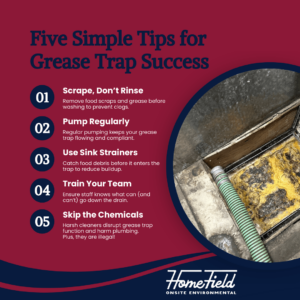
Grease traps are designed to capture fats, oils, and grease (FOG) before they enter your plumbing system. Even in bakeries where you may not be frying food, butter, dairy, and oily ingredients still add up fast. Without a functioning grease trap, those materials can solidify in your pipes, cause major clogs, and lead to costly plumbing issues. They can also result in non-compliance with local health and wastewater codes.
By understanding what your system is catching and how it operates, you’re in a better position to prevent slowdowns or shutdowns.
Stick to a Consistent Cleaning Schedule
Grease traps need to be pumped and cleaned regularly. For most cafés and bakeries, the right schedule depends on your volume, the type of ingredients you use, and local regulations. Waiting too long between cleanings can lead to backups, strong odors, and violations during inspections.
At HomeField, we help you determine the right cleaning frequency based on your operation’s specific needs. We also offer recurring service plans so you don’t have to worry about remembering when it’s time to schedule your next cleaning.
Train Staff on What Not to Dump
Even the best grease trap can’t keep up if staff are sending everything down the drain. Make sure your team understands what should and should not go into sinks and floor drains. Avoid pouring oils, batters, dairy-heavy liquids, or leftover sauces directly into the system. Scrape plates and utensils into trash or compost bins before rinsing and be sure to empty strainers regularly.
Posting signage in prep and dish areas helps reinforce the message and keeps best practices top of mind.
Watch for Warning Signs
If your kitchen starts to smell funky or your sinks are draining slowly, your grease trap may already be overdue for service. Bubbling drains, frequent clogs, or visible grease buildup are all signs that it’s time for a pump-out.
Don’t wait for an emergency. A clogged grease trap during your morning rush or weekend brunch can grind your kitchen to a halt.
Partner with a Provider You Trust
Your grease trap deserves the same level of attention as your ovens and mixers. With HomeField, you get a team that understands the demands of food service and shows up when it counts. We offer quick response times, transparent service, and expert recommendations to keep your kitchen clean and compliant.
You take pride in your pastries and your people. We take pride in making sure nothing gets in the way of that.

Heidi
Heidi is the marketing and business development powerhouse at HomeField Onsite Environmental. She’s all about bringing the onsite wastewater world to life with knowledge, humor, and straight-up valuable insights—helping customers make the best decisions for their systems!
Other Top Posts:

Tanya Wilson Entreprenista 100
Being named to the Entreprenista 100 is not about hype or titles….
Restaurants and Grease Pumping
Why Restaurants Can’t Skip Grease Pumping Restaurant grease pumping plays a critical…
Sign Up For Our Newsletter
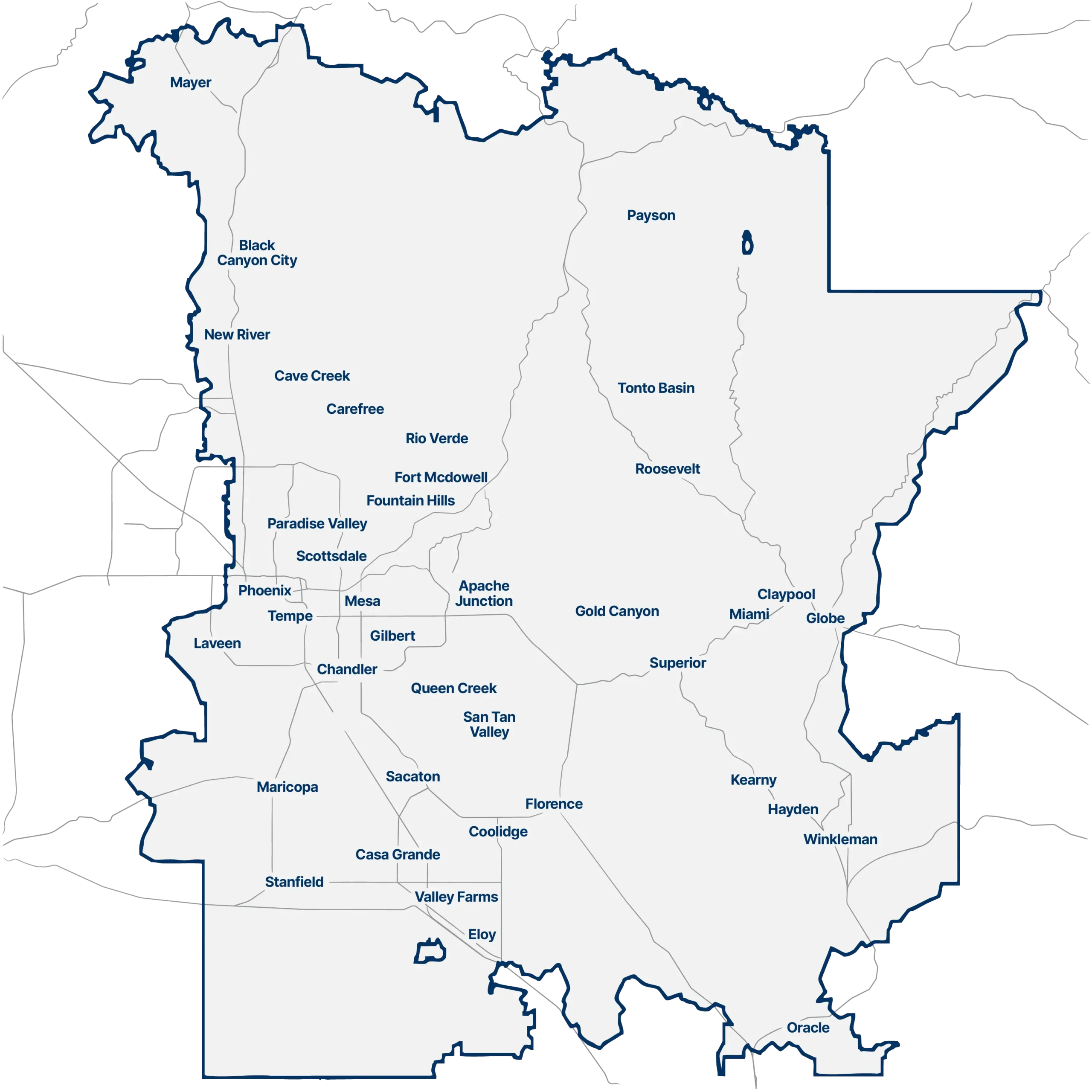
OUR SERVICE AREA
WE LOVE THE EAST VALLEY
We make the East Valley our home base, and proudly serve the cities and areas on this side of town, including: