
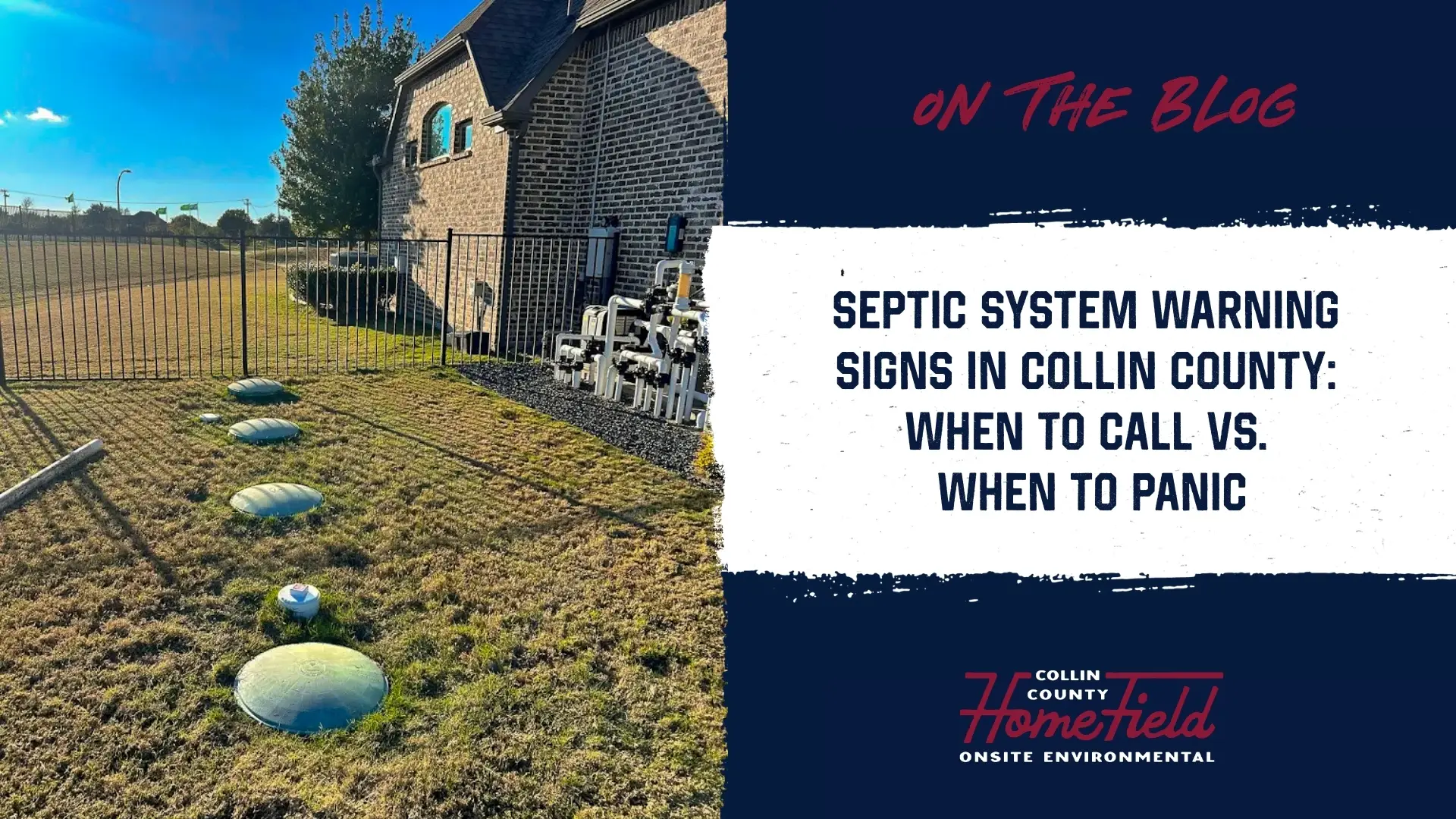
Septic System Warning Signs in Collin County: When to Call vs. When to Panic
March 6, 2026
You’ve noticed something. Maybe it’s a smell drifting up from the master bathroom. Maybe the kitchen sink is draining slower than it used to. Maybe you walked out back after yesterday’s rain and saw a soft, spongy patch of grass over where you think the drain field is. Your stomach tightens. You don’t know if you’re looking at a $500 phone call or a $15,000 emergency. You’re not even sure where your septic tank is, or what “normal” looks like for a system like this.
If you’re nodding…welcome to the club. You’re not alone. Here in Collin County, we see this all the time, especially among new homeowners who moved from city sewer service to a septic system. The anxiety is real. The good news? Most of what you’re seeing is probably not an emergency. But some things absolutely are. The trick is knowing the difference before you call, or before you wait too long.
📄 Want a quick reference you can keep? Download our free Field Guide to Septic Warning Signs — a one-page summary of everything in this post.
Here’s the Quick Version First
Not every sign means your system is failing. If your pump was last serviced years ago, or you’ve just moved into a new construction home and you’re unsure of maintenance history, call for a routine inspection. We’ll schedule it at your convenience within the month. But if you’re seeing sewage backing into your home, raw sewage in the yard, or your system is completely blocked and unusable, stop using water and call us now. Everything else falls somewhere in between. Keep reading to figure out exactly where your situation lands.
The HomeField Four Flags: 4 Levels of Septic Warning Signs
Most septic problems don’t announce themselves as emergencies. They whisper first. Then they talk. Then they yell. Knowing which stage you’re in is everything. It’s the difference between a routine maintenance call and a genuinely urgent situation.
We’ve put together a simple framework to help you figure out exactly where you stand. We call it the HomeField Four Flags: 🟢 Green Flag (routine), 🟡 Yellow Flag (caution), 🟠 Orange Flag (urgent), 🔴 Red Flag (emergency). Here’s how to read which one you’re flying.
🟢🟡 Green & Yellow Flags: The Don’t-Panic Situations
Let’s start with the stuff that sounds alarming but usually isn’t.
🟢 Green Flag: Schedule Within 30 Days
This is the “everything is working, but you need maintenance” category. These signs mean your system is functioning but needs professional attention on a normal timeline.
- Your pumping interval has come up. If your tank was last pumped 3–5 years ago (depending on household size), it’s simply time. No symptoms needed.
- You smell something musty or earthy near the tank or riser only. Not inside your home. Just outside, maybe when you lift the riser cover. That’s often normal. It’s a septic tank, after all.
- Your drainage is slightly slower than normal, but only 1–2 days after heavy rain. Here in Collin County, we have clay soil — the kind that hardens like concrete in summer and turns to soup in spring. When we get a big rain, it takes time for the ground to drain. Your drain field can take 3–5 days to fully absorb water. If everything clears up after that? Not an emergency.
- Your grass is slightly greener over the drain field after it rains. That’s nutrients from the effluent. It’s not ideal long-term, but it’s not a crisis signal either.
- Your aerobic system’s alarm sounds once, then resets normally. Aerobic systems (common in newer Frisco, Prosper, and Celina homes) have water-level sensors. A single alarm can mean the pump cycled during peak water use. If it resets and doesn’t come back, you’re fine. If it keeps going off, that’s a Yellow Flag.
What to do: Call us during business hours. We’ll schedule a pumping or inspection at your convenience. No emergency dispatch needed.
🟡 Yellow Flag: Act Soon, Within 1–2 Weeks
Your system is showing real signs of strain, but you’re not in immediate danger. The difference? These stick around. They’re not one-off quirks.
- Drainage is slow for more than 3 days after the rain has stopped. The soil has had time to drain. If water is still backing up in your sink or tub, something needs attention.
- You’re noticing a mild sewage smell inside your home (weak and intermittent). Not overwhelming, but definitely there. This could mean gases are escaping from the system instead of staying in the tank.
- Your pipes are gurgling or bubbling 1–2 times a day. That’s air trying to escape because the system is under pressure.
- You see wet spots over your drain field that are still spongy 4+ days after rain, or they haven’t dried in a week. The soil should absorb and dry. If it’s staying wet indefinitely, the drain field isn’t absorbing properly.
- Your aerobic system’s alarm is lighting up repeatedly, or the red light stays on for hours. This isn’t the one-time reset. This is the alarm saying something is actually wrong. It could be a rising water level, a pump problem, or a control panel issue. Either way, a pro needs to look.
- Your toilet is sluggish when you flush. Not backing up, but clearly working harder than it should.
What to do: Call us this week. We’ll come out, assess what’s happening, and either pump the tank or run diagnostics. You can keep using your system normally — you’re not in “stop using water” territory yet. But don’t let this sit for two weeks.
🟠🔴 Orange & Red Flags: The Act-Now Situations
These are the ones where the conversation changes.
🟠 Orange Flag: Urgent, Call Within 24–48 Hours
Your system is stressed, and waiting could tip you into a full failure.
- Multiple fixtures draining slowly at the same time. Not just one sink or shower. When everything in your home is sluggish, the problem is probably in the main line or the tank.
- A persistent, strong sewage smell inside your home. Not the faint, intermittent smell. This is real, present, and it means raw sewage gas is entering your living space.
- Constant gurgling in your pipes throughout the day. Every time water goes down, you hear it. That’s system pressure.
- Standing water over your drain field during dry conditions. If there’s been no rain and you still see wet spots or standing water, the drain field has failed or the system is severely backed up.
- Your aerobic system’s alarm is buzzing for an hour or more continuously, or the red light won’t reset. This is the system saying it needs help now.
- Multiple toilets are flushing weakly or incompletely. They’re not backing up yet, but they’re struggling.
What to do: Call us tomorrow morning. Explain what you’re seeing. We’ll likely schedule an urgent appointment within 24–48 hours. You can still use your system, but limit water use, no laundry marathons, no filling the hot tub. The goal is to get a professional out before things get worse.
🔴 Red Flag: Emergency. Call Now, Stop Using Water
Stop here.
- Sewage is backing up into your home. Into toilets, sinks, showers, or tubs. If you see dark water or smell raw sewage coming back into your fixtures, your system has failed.
- Raw sewage is visible in your yard. On the surface, in pools, spraying out. This is not a cosmetic issue.
- The smell is overwhelming, inside or outside. This isn’t a “maybe I should call” smell. This is an “oh my God, what is that” smell.
- Multiple drains are completely blocked. Nothing is going down.
- Floor drains are backing up. If you have a basement or crawl space with a floor drain and sewage is coming up through it, the system is full or blocked.
- You’re seeing dark or black water in sinks or tubs when you use them. Not just slow, but visibly contaminated.
- Your aerobic spray system is spraying sewage across your yard instead of treated effluent. Or the spray heads have stopped working entirely and raw sewage is pooling. This is an immediate health hazard.
What to do: Stop using water immediately. No toilets, no showers, no laundry. Call us right now. We have emergency response available. We’ll get someone out as quickly as possible. If you can’t reach us immediately, this may also warrant a call to your health department, depending on the severity.
Why Collin County Septic Systems Show Warning Signs Differently
Here’s something most generic septic advice misses: Collin County isn’t like everywhere else. We have specific soil conditions, newer construction with aerobic systems, and seasonal weather patterns that change how warning signs appear.
The Clay Soil Factor
North Texas clay is thick, heavy, and slow-draining in most of Collin County, dramatically slower than other regions. What this means in practice: your drain field can stay wet for days after rain, and that’s often normal.
After a big spring rain, it’s completely ordinary to see soggy patches over your drain field for 3–5 days. Homeowners sometimes panic and call us thinking the system has failed. It hasn’t. The clay is just doing what clay does: holding water while it slowly percolates down.
The practical call: If you see wet spots or slow drainage right after heavy rain, wait 3–5 days. Let the ground dry out. If everything clears up? You’re fine. If the wet spots persist for a week, or if the drainage doesn’t improve after 5 days, that’s when you call.
During summer drought conditions, clay compacts further and becomes almost concrete-like. This can actually create the appearance of drainage problems even when your tank is fine. Slow drains might appear, or you might see minor backed-up water — but it’s the soil, not the septic. A professional inspection will tell you whether the tank needs pumping or whether you’re just dealing with seasonal soil behavior.
Aerobic vs. Conventional Systems: They Don’t Warn You the Same Way
If you bought new construction in Frisco, Prosper, Celina, or other newer developments, you might have an aerobic system instead of a conventional septic tank. These are common in Collin County because of our clay soils. But here’s the thing: they have completely different warning signs.
A conventional system mostly just gets slower over time — slow drains, minor backups, smells. An aerobic system talks to you through a control panel and an alarm. Here’s what to watch for:
- Normal sounds: The aerator is constantly humming. That’s expected. Don’t panic.
- Alarm buzzing: Not normal. Means the water level is rising or there’s an electrical fault. Once or twice and it resets? Could be a fluke. Buzzing repeatedly or red light staying on? Call us.
- Alarm won’t reset: If you press the manual reset button and it immediately goes off again, there’s a real problem. Don’t keep hitting that button…just call us.
- No chlorine smell from the spray area: The disinfection tablets might be depleted. The system isn’t disinfecting properly. Call for service.
- Loud grinding or squealing from the pump: Steady humming is normal. Grinding or metallic sounds are not. The pump is wearing out.
- Algae buildup around spray heads: If the spray area is getting green or slimy, treatment isn’t working properly.
- The pump isn’t spraying at all: If you know when the pump cycles and nothing is happening, the pump may have failed. This is urgent.
Seasonal Patterns in North Texas
Spring (February through May): Our rainy season. Water tables rise, soil is saturated. Slow drains and minor wet spots over the drain field are extremely common and often temporary. Wait 3–5 days for the soil to stabilize before deciding it’s a problem.
Summer (June through October): Drought conditions. The clay hardens. Paradoxically, this can create warning signs even when the system is fine. Slow drains might appear because the soil won’t accept water quickly. Call us, but give it context — we might suggest waiting until fall to pump, depending on what we find.
Fall and Winter (November through January): Your system is usually most stable in fall. Winter can bring occasional rain and rising water tables similar to spring.
The key timing rule: Don’t diagnose your system in the middle of a major weather event. Let the ground stabilize for 48–72 hours before deciding something is wrong. Weather-driven symptoms often self-correct.
FAQ: The Questions We Hear Every Week
I see a wet spot in my yard after it rained. Is that an emergency?
Not necessarily. If it’s spring or just after a big rain, wet spots over the drain field can be completely normal here in Collin County, especially with clay soil. Give it 3–5 days. If it dries out, you’re fine. If it’s still soggy after a week, or if it’s summer with no rain but you’re seeing wet spots anyway, that’s worth a phone call.
What does it mean if my septic alarm is buzzing?
If you have an aerobic system, a buzzing alarm means something’s wrong — usually a rising water level or a pump problem. It’s not a “you have 30 days” situation. It’s a “call this week” situation. Call us, describe what’s happening, and we’ll walk you through whether it’s urgent or routine.
My drains are slow but nothing is backing up. Can I wait?
If it’s just one drain and only for a day or two after rain, probably yes. If multiple drains are slow, or if one drain has been slow for more than 3–4 days after the rain stopped, call us within the week. Slow drainage is your system whispering. If you ignore it long enough, it starts yelling.
How do I know if my septic tank is full without calling a professional?
You can’t, really. You can look for warning signs (slow drains, backups, gurgling, weak flushes), but only a professional with a tank gauge can actually tell you how full it is. If you’re new to septic systems, just call us for an inspection. We’ll check the tank level, review your maintenance history, and let you know when you need your next pumping.
What’s the difference between an aerobic and conventional system, and why does it matter for warning signs?
A conventional system is a tank that holds waste, allowing solids to settle and liquids to drain into a drain field — no moving parts. An aerobic system uses oxygen and beneficial bacteria to treat waste more aggressively before it goes to the drain field. It has a pump, a control panel, and an alarm. For warning signs, the difference is huge: conventional systems mainly show problems through slow drains and smells, while aerobic systems also have electrical alarms and signals.
We just moved to Collin County and bought a new construction home. What signs should I watch for?
First, find out where your tank is and whether you have a conventional or aerobic system. Check your closing documents or ask your builder. Second, get familiar with what “normal” looks and sounds like For instance, the aerator humming sound is normal, one wet spot after a storm is normal, but something like everything draining slowly for two weeks is not. Call us for a baseline inspection within your first month. For aerobic system owners especially, HomeField’s Advantage Plan handles the required inspections, the county paperwork, and proactive maintenance all in one.
When to Call: The Simple Version
🟢 Green Flag (call during business hours): Pumping interval due. Annual inspection. Questions about maintenance.
🟡 Yellow Flag (call this week): Persistent slow drains. Mild sewage smell. Aerobic alarm going off repeatedly. Wet spots still present days after rain ended. Sluggish toilets.
🟠 Orange Flag (call tomorrow or ASAP): Strong sewage smell inside your home. Multiple fixtures draining slowly simultaneously. Constant gurgling. Aerobic alarm won’t reset. Standing water over drain field in dry conditions.
🔴 Red Flag (call now, stop using water): Sewage backing up into your home. Raw sewage visible in your yard. Overwhelming smell. Any combination of the above.
Here in Collin County, we’re here for all of it. Most of the time, when homeowners call with concerns about their septic system, it turns out to be routine maintenance or something that looks scarier than it is. But sometimes, it really is urgent. That’s why it helps to know the difference.
If you’re seeing any warning signs (even the ones that don’t feel like emergencies) don’t wait weeks to call. We’ve helped hundreds of Collin County homeowners figure out what their system is actually telling them. We’ll give you a straight answer, no upselling, no unnecessary alarm.
For routine septic pumping and maintenance, visit our septic pumping page. If you’re experiencing an emergency or urgent situation, go straight to our emergency septic service page or call us immediately.
Written by the HomeField Collin County Team. HomeField is a licensed OSSF service provider operating under TCEQ regulations in Collin County, Texas. Last reviewed: March 6, 2026.
Sources

Collin County Team
We're the home team of HomeField Collin County, and we're here to share our best septic tips, tricks, and knowledge about service in this area.
Other Top Posts:
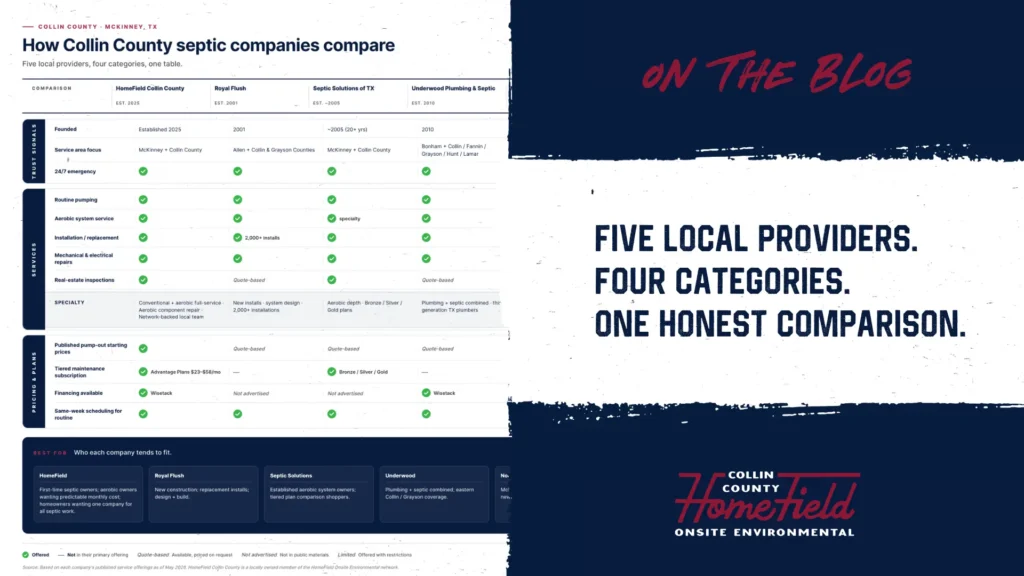
Best Septic Pumping Companies in McKinney, TX (2026)
Last updated: May 2026 · Next scheduled refresh: August 2026 If you’re…

Buying a Home with Septic in Collin County, TX: What to Know
Quick Answer Texas has no statewide mandate for septic inspections, but FHA,…
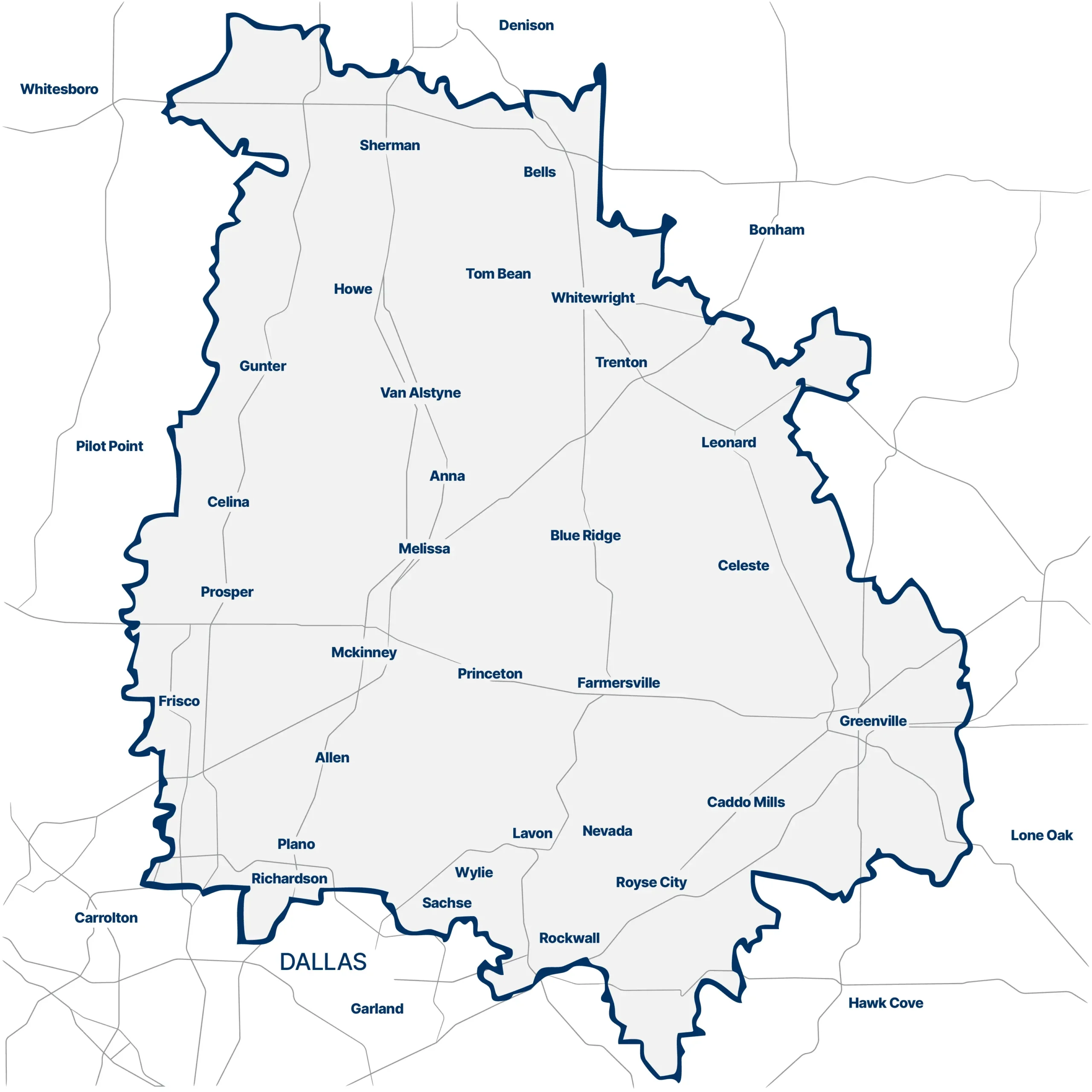
OUR SERVICE AREA
WE LOVE OURHOME TURF
We proudly serve the cities and towns in our home turf of Collin County, including: