
COMMERCIAL SEPTIC PUMPING IN PARKER COUNTY
Keep Your Business Septic Running well
For a business, a septic backup isn't a headache, it's a closed sign: a restroom down at the lunch rush, a smell in the dining room, a kitchen that can't run. HomeField keeps your system pumped on a schedule built around your real usage, so it never quits on your busiest day.
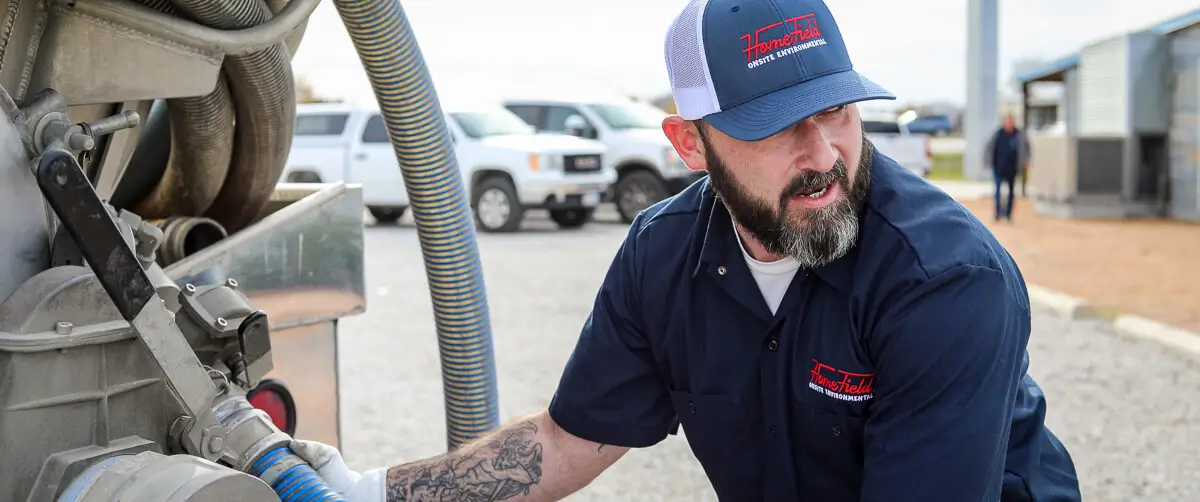
Here's what makes commercial different: volume and grease. A restaurant, a shop, an office with real foot traffic pushes far more through the system than a house, and food service adds grease that hardens and clogs if it isn't managed, which is why most commercial systems need pumping at least yearly and grease traps far more often. So we don't just empty the tank and leave. We work around your hours, pump and inspect the whole system, and leave you documentation for your records and compliance. That's the difference between a hose-and-go outfit and a team that keeps your doors open.

REASONS FOR REGULAR
SEPTIC PUMPING
If you own a commercial septic system here in Parker County, regularly scheduled septic pumping is required to keep your system running smoothly. We’re here to help!
WANT TO AVOID ANY OF THESE?
Non-Compliance With Regulations?
Overloaded System From Too Much Usage?
Slow Drains And Frequent Backups?
Awkward Smells In Customer Spaces?
Your System Not Working When You Need It?
Get A Commercial Tank Pump To Keep Your Septic System Running Smoothly
WHAT YOU SHOULD KNOW ABOUT
Commercial Septic Pumping

How Does A Commercial Septic Tank Pump Work?
Same basic principle as any septic system, just under heavier load. Everything that goes down the drains separates in the tank: solids and grease settle and float into sludge, and that sludge builds until it starts choking the system. A pump-out clears it before it backs up into your business.
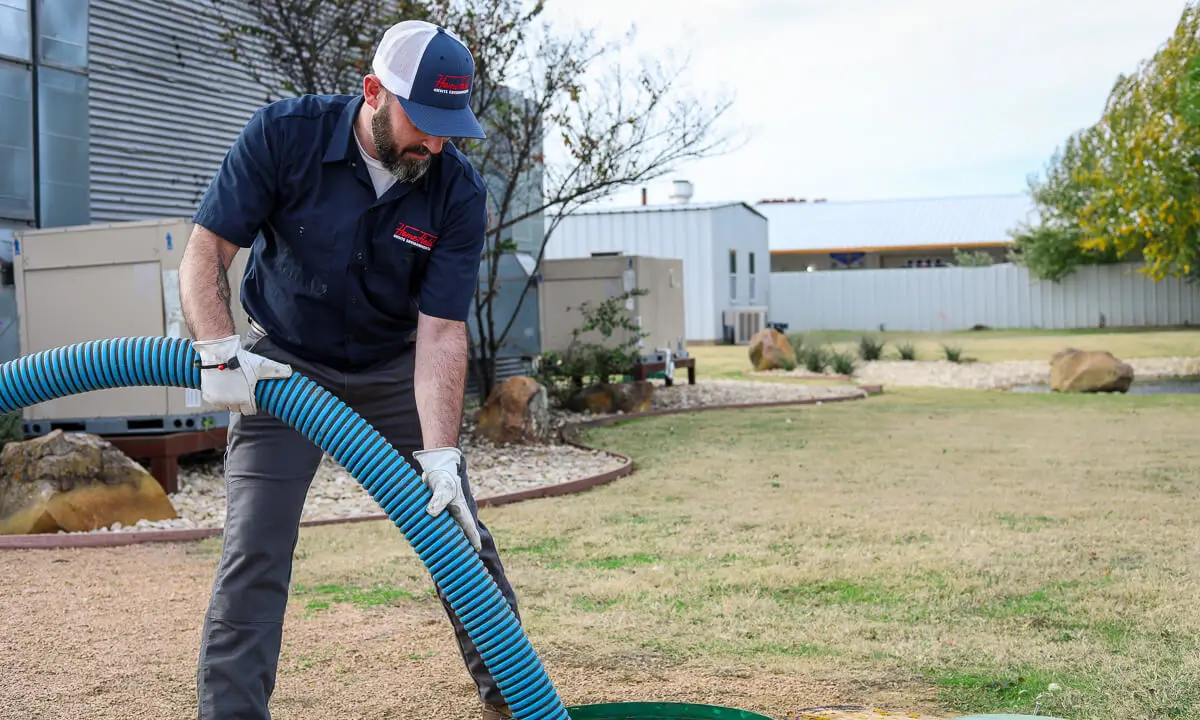
The difference with commercial is volume and grease. A restaurant, a shop, an office with real foot traffic pushes far more through the system than a household, and food service adds grease that hardens and clogs if it isn't managed. When we pump, we don't just empty the tank and leave. We remove and rinse the sludge, then inspect the whole system, including the moving parts on an aerobic unit, so you hear about a worn pump on a Tuesday service call instead of during Friday's rush.
How Often Should I Get A Commercial Septic Tank Pump?
More often than a house, and the real answer is set by your usage, not a calendar. That every-3-to-5-years guideline is a residential number, and it rarely keeps up with a working business. Most commercial systems need pumping at least once a year, and high-volume operations, especially food service, often need it more.
If you run grease traps, those are on their own, more frequent schedule, because grease fills them fast and the state regulates how that waste gets pumped and hauled. The honest move is to match the schedule to your actual flow: a busy restaurant and a low-traffic office shouldn't be on the same plan. We'll look at how you really use your system and build a schedule that keeps you running and compliant, instead of guessing and hoping.

How Are HomeField Commercial Septic Pump Outs Different?
What a business needs from a pump-out is different from what a homeowner needs, so we treat it that way. First, we work around your hours, because the goal is for your customers to never know it happened. Second, we send a trained tech who locates your tanks, removes and rinses the sludge, and inspects the whole system, then leaves you documentation you can keep for your records and compliance.
Depending on your system, we don't always pump the tanks bone-dry, because an aerobic system needs its bacterial colony alive to treat the water properly. That's the kind of detail a rushed, in-and-out outfit skips, and it's the difference between a system that just got emptied and one that's actually running right when we pull away.

Should I Get A Maintenance Plan For My Business?
For most businesses, yes, and not just because we say so. You've got a hundred things to run, and the septic system is the one that stays invisible until it costs you a day of business. A Commercial Advantage Plan takes it off your plate: scheduled pumping and inspections, sized to your usage, so nothing sneaks up on you.
It also makes the expense predictable, which your bookkeeper will appreciate. Instead of surprise emergency bills, you get planned, budgetable maintenance and a documented service history that helps with compliance. We build each commercial plan around the specific business, because a barbecue joint and a self-storage facility don't use their systems anything alike. One call, one plan, one less thing that can shut your doors.
Maintaining an On-Site Sewage Facility (OSSF), commonly known as a septic system, in unincorporated areas of Parker County, Texas, requires adherence to specific operational and maintenance protocols to ensure environmental safety and system efficiency. Below are the key requirements and recommendations: 1. Routine Maintenance: 2. Aerobic Treatment Units (ATUs): Maintenance Contracts: ATUs, which provide advanced treatment of wastewater, require more frequent maintenance. Texas regulations mandate that these systems be covered by a continuous service policy for the first two years after installation. After this period, homeowners must either renew the maintenance contract or, if qualified, maintain the system themselves. Self-Maintenance Eligibility: To personally maintain an ATU, homeowners must complete a Texas Commission on Environmental Quality (TCEQ)-approved course on aerobic system maintenance. This ensures they have the necessary knowledge to manage the system effectively. 3. Reporting and Inspections: Routine Inspections: For systems under a maintenance contract, the service provider is required to perform inspections and submit reports to the local permitting authority. The frequency of these inspections is typically every four months, resulting in three reports per year. Self-Maintained Systems: Homeowners who have opted to maintain their own systems must adhere to the same inspection schedule and are responsible for submitting reports to the Parker County Permitting Department within 14 days of each inspection. 4. Regulatory Compliance: Permitting: Any construction, installation, alteration, extension, or repair of an OSSF requires a permit from the Parker County Permitting Department. Unauthorized work can lead to penalties and potential system failures. Licensed Professionals: All maintenance and repair work should be conducted by professionals licensed by the TCEQ, ensuring that all tasks meet state and local standards. 5. Additional Recommendations: Water Conservation: Implementing water-saving measures reduces the load on your septic system, prolonging its lifespan and efficiency. Proper Waste Disposal: Avoid disposing of non-biodegradable items, grease, or hazardous chemicals down the drain, as they can disrupt the system's operation and lead to contamination. Regular Inspections: Even with routine maintenance, periodic professional inspections can help identify potential issues before they become major problems. By adhering to these guidelines and maintaining open communication with the Parker County Permitting Department, you can ensure the longevity and proper functioning of your septic system, safeguarding both your property and the environment. An aerobic septic system in Parker or Johnson County, Texas, is an on-site sewage facility (OSSF) designed to treat and dispose of wastewater using aerobic (oxygen-loving) bacteria. These systems are often used in areas where traditional septic systems are not feasible due to soil conditions, space limitations, or environmental concerns. When installing or modifying an On-Site Sewage Facility (OSSF) within the city limits of Parker County, Texas, it's essential to adhere to both state regulations and specific municipal ordinances. Here's a comprehensive guide to assist you: 1. Determine the Local Permitting Authority: 2. Application Submission: 3. Supporting Materials: 4. Fees: 5. Review and Approval Process: 6. Additional Considerations: Contact Information: By meticulously following these steps and collaborating closely with your city's permitting department, you can ensure a smooth application process and the successful installation or modification of your septic system. There are 4 treatment component steps of an Aerobic Septic System. The Pretreatment Tank is the initial tank where solids settle, similar to a conventional septic tank. The next treatment step is where air is introduced to the wastewater to promote aerobic bacterial activity. The third step is the disinfection step. This is where treated water is disinfected using chlorine, ltraviolet light or other methods. The final step is where the treated water is either dispersed throughout a surface (spray irrigation ) or a subsurface drain field In Parker County, Texas, maintaining compliance for your on-site sewage facility (OSSF), commonly known as a septic system, involves adhering to specific renewal and reporting requirements. These requirements can vary based on the type of system you have and your specific location within the county. 1. Maintenance Contracts: Aerobic Treatment Units (ATUs): These systems typically require a maintenance contract with a licensed service provider. The Texas Health and Safety Code mandates that aerobic systems be covered by a continuous service policy for the first two years after installation. After this initial period, homeowners must either renew the maintenance contract or, if qualified, maintain the system themselves. Self-maintenance is permissible only if the homeowner has completed a TCEQ-approved course on aerobic system maintenance. Renewal Frequency: Maintenance contracts are typically renewed annually. It's essential to ensure that your system is always under a valid contract to comply with state and local regulations. 2. Reporting Requirements: Routine Inspections: For systems under a maintenance contract, the service provider is required to perform inspections and submit reports to the local permitting authority. The frequency of these inspections and reports is generally every four months, resulting in three reports per year. However, if your system is equipped with advanced electronic monitoring, the reporting frequency may be reduced to every six months. Self-Maintained Systems: If you're maintaining the system yourself, you must adhere to the same inspection and reporting schedule. Reports should detail the system's operational status, any maintenance performed, and any issues identified. These reports must be submitted to the Parker County Permitting Department within 14 days of the inspection. 3. Local Ordinances: Recommendations: Stay Informed: Regularly consult with the Parker County Permitting Department and your local city authorities to stay updated on any changes in regulations or requirements. Maintain Records: Keep detailed records of all maintenance activities, contracts, and reports. This documentation is crucial for compliance and can be beneficial if any issues arise. Engage Licensed Professionals: Ensure that any service providers you hire are licensed and familiar with both state and local regulations pertaining to septic systems. By adhering to these guidelines and maintaining open communication with local authorities, you can ensure your septic system remains compliant and functions efficiently. You can find more information at this link: TCEQ Managing an On-Site Sewage Facility (OSSF), commonly known as a septic system, within the city limits of Parker County, Texas, requires adherence to both state regulations and specific municipal ordinances. Here's a comprehensive guide to assist you: 1. Municipal Regulations: City Authority: Each city within Parker County has the authority to regulate OSSFs within its jurisdiction. For example, the City of Parker mandates that septic system plans, drawings, and final inspection reports be filed with the city prior to the house's final approval. Connection to Municipal Sewer: If a municipal sanitary sewer system is accessible, property owners are typically required to connect to it rather than maintaining a private septic system. The City of Parker, for instance, requires connection to the municipal sewer if a sanitary sewer line is available to the site, at the landowner's cost. 2. State Regulations: Permitting: The Texas Commission on Environmental Quality (TCEQ) requires a permit for the construction, installation, alteration, extension, or repair of an OSSF. While local authorities often handle permitting, it's essential to ensure that all state requirements are met. Design and Maintenance: OSSFs must be designed based on a site evaluation that considers local conditions. Regular maintenance is crucial to ensure the system functions correctly and complies with health standards. Recommendations: Consult Local Authorities: Contact your city's permitting or public works department to obtain specific regulations, permit requirements, and guidelines related to septic systems. Each city may have unique ordinances that affect OSSF installation and maintenance. Engage Licensed Professionals: Ensure that any work on your septic system is performed by licensed installers or maintenance providers, as required by state and local regulations. Stay Informed: Regularly review both state and local regulations to remain compliant, as rules and ordinances can change over time. By adhering to both state and municipal regulations, you can ensure the proper functioning of your septic system and contribute to public health and environmental protection. The system introduces air into the wastewater treatment process to promote the growth of aerobic bacteria, which break down organic matter more effectively than anaerobic bacteria used in conventional systems The Tarrant Regional Water District (TRWD) serves as an authorized agent in Texas, primarily overseeing the regulation of on-site sewage facilities (OSSFs) within its jurisdiction. This authorization empowers TRWD to implement and enforce rules concerning the installation, operation, and maintenance of OSSFs, ensuring they meet or exceed the standards set by the Texas Commission on Environmental Quality (TCEQ). By adopting and enforcing these regulations, TRWD aims to prevent pollution and protect public health within its service areas. In its capacity as an authorized agent, TRWD's responsibilities include: Permitting and Inspection: Issuing permits for the installation and modification of OSSFs and conducting inspections to ensure compliance with established standards. Enforcement: Taking necessary actions to address violations, which may involve fines or other corrective measures to ensure adherence to OSSF regulations. Public Education: Providing information and resources to the community about proper OSSF practices to promote environmental stewardship and public health. Additionally, TRWD's Law Enforcement Division (LED) plays a crucial role in environmental enforcement. Their duties encompass investigating environmental violations such as hazardous material spills, septic violations, and illegal dumping. This proactive approach helps maintain the integrity of water resources and the surrounding environment. Through these combined efforts, TRWD ensures the effective management of water resources and the protection of public health and the environment within its jurisdiction. In Parker County, Texas, the Parker County Permitting Department serves as the Authorized Agent for the Texas Commission on Environmental Quality (TCEQ) concerning On-Site Sewage Facilities (OSSFs), commonly known as septic systems. As the Authorized Agent, the department is responsible for implementing and enforcing state regulations related to the installation, operation, and maintenance of OSSFs within the county. Key Responsibilities of the Parker County Permitting Department as an Authorized Agent: Permitting and Plan Review: Inspections: Enforcement and Compliance: Public Education and Assistance: By fulfilling these responsibilities, the Parker County Permitting Department ensures that on-site sewage systems are designed, installed, and maintained in a manner that safeguards public health and preserves environmental quality. Contact Information: For detailed information on application procedures, required documentation, and other OSSF-related inquiries, it is advisable to contact the department directly or visit their official website. The Tarrant Regional Water District (TRWD) does not oversee all counties in Texas. Instead, it primarily serves Tarrant County and parts of North Texas, managing water resources, flood control, and water conservation. No, TRWD does not regulate septic systems (OSSFs) in all Texas counties. The Texas Commission on Environmental Quality (TCEQ) delegates OSSF regulation to county environmental health departments or regional authorized agents within each county. For example: TRWD is a regional water authority focusing on water supply, flood control, and watershed protection in Tarrant County and surrounding North Texas areas. However, it does not oversee all counties in Texas—each county typically manages its own OSSF (septic) permitting and water regulations through county or municipal agencies. The Tarrant Regional Water District (TRWD) is a significant water resource entity in North Texas, overseeing various projects across multiple counties to ensure reliable water supply, effective flood control, and recreational opportunities. Here's an overview of TRWD's key projects and initiatives by county: 1. Tarrant County: Water Supply and Flood Control: TRWD manages reservoirs and infrastructure to provide water to over 2 million residents and implements flood control measures within Tarrant County. Recreational Facilities: The district maintains and develops recreational areas such as the Trinity Trails, Airfield Falls, Twin Points Park, and Eagle Mountain Park, offering residents various outdoor activities. 2. Dallas County: 3. Henderson and Navarro Counties: Cedar Creek and Richland-Chambers Reservoirs: Located in Henderson and Navarro counties, respectively, these reservoirs are crucial components of TRWD's water supply system, providing significant water resources to the region. George W. Shannon Wetlands: Adjacent to the Richland-Chambers Reservoir in Navarro County, this 2,000-acre wetland project naturally filters water from the Trinity River, enhancing water quality and supply. 4. Anderson County: 5. Wise and Jack Counties: 6. Parker County: Through these projects and collaborations, TRWD plays a pivotal role in managing and safeguarding water resources across multiple North Texas counties, ensuring sustainable water supply, flood protection, and recreational amenities for the region's growing population. The Brazos River Authority (BRA) is a governmental agency responsible for managing the water resources of the Brazos River basin, which spans 42,000 square miles across Texas. The Brazos River is the longest river entirely within Texas, flowing 840 miles from its headwaters in the Texas Panhandle to the Gulf of Mexico. The BRA was created in 1929 as the first river authority in the United States to develop, manage, and protect water resources within a single river basin. The Brazos River Authority (BRA) plays a vital role in water supply management, flood control, water quality, and conservation within the Brazos River Basin. It ensures reliable water resources for cities, businesses, agriculture, and recreation while protecting water quality and ecosystems. Setbacks: Systems must meet distance requirements from property lines, water wells, and surface water. See city specifc questions for more detail. The Brazos River Authority (BRA) is instrumental in managing water resources across the Brazos River basin in Texas. Beyond its primary responsibilities, the BRA oversees several reservoirs and is engaged in numerous projects to enhance water supply, quality, and infrastructure. Key Reservoirs Managed by the BRA: Possum Kingdom Lake: Lake Granbury: Lake Limestone: Allens Creek Reservoir (Proposed): Notable Projects and Initiatives: East Williamson County Regional Water System (EWCRWS) Expansion: Morris Sheppard Dam – Possum Kingdom Lake: Environmental and Special Projects: Through the management of these reservoirs and the execution of various projects, the BRA continues to play a pivotal role in ensuring sustainable water resources, environmental stewardship, and infrastructure development within the Brazos River basin. Managing a septic system within the city limits of Parker County, Texas, requires compliance with both state regulations and specific municipal ordinances. Here are the key considerations: 1. Municipal Regulations: City Authority: Each city within Parker County has the authority to regulate on-site sewage facilities (OSSFs) within its jurisdiction. For example, the City of Reno has established ordinances governing the installation and maintenance of septic systems to prevent health hazards and environmental pollution. These ordinances may include requirements such as obtaining permits for all OSSF-related work, regardless of property size, and mandating that maintenance be performed by licensed professionals or homeowners who have completed approved maintenance courses. Connection to Municipal Sewer: If a municipal sanitary sewer system is accessible, property owners are typically required to connect to it rather than installing or maintaining a private septic system. For instance, the City of Parker mandates connection to the municipal sewer if a sanitary sewer line is available to the site, at the landowner's cost. 2. State Regulations: Permitting: The Texas Commission on Environmental Quality (TCEQ) requires a permit for the construction, installation, alteration, extension, or repair of an OSSF. While local authorities often handle permitting, it's essential to ensure that all state requirements are met. Design and Maintenance: OSSFs must be designed based on a site evaluation that considers local conditions. Regular maintenance is crucial to ensure the system functions correctly and complies with health standards. Recommendations: Consult Local Authorities: Contact your city's permitting or public works department to obtain specific regulations, permit requirements, and guidelines related to septic systems. Each city may have unique ordinances that affect OSSF installation and maintenance. Engage Licensed Professionals: Ensure that any work on your septic system is performed by licensed installers or maintenance providers, as required by state and local regulations. Stay Informed: Regularly review both state and local regulations to remain compliant, as rules and ordinances can change over time. By adhering to both state and municipal regulations, you can ensure the proper functioning of your septic system and contribute to public health and environmental protection. You can find more information at this link: TCEQ Managing a septic system in unincorporated areas of Parker County, Texas, requires adherence to specific regulations to ensure environmental safety and system efficiency. Here are the key considerations: 1. Permitting Requirements: 2. Local Regulations in Parker County: The Parker County Permitting Department oversees OSSFs in unincorporated areas. They regulate and issue permits for septic systems to ensure compliance with health and safety standards. 3. System Design and Maintenance: 4. Emergency Repairs: While emergency repairs (e.g., replacing tank lids, inlet and outlet devices) do not require a permit, they must be reported to the permitting authority in writing within 72 hours after repairs have begun. 5. Compliance and Inspections: For detailed information and assistance, contact the Parker County Permitting Department: Ensuring compliance with these regulations will help maintain the functionality of your septic system and protect the local environment. You can read more about compliance at this link: TCEQ The system introduces air into the wastewater treatment process to promote the growth of aerobic bacteria, which break down organic matter more effectively than anaerobic bacteria used in conventional systems An aerobic septic system in Parker or Johnson County, Texas, is an on-site sewage facility (OSSF) designed to treat and dispose of wastewater using aerobic (oxygen-loving) bacteria. These systems are often used in areas where traditional septic systems are not feasible due to soil conditions, space limitations, or environmental concerns. When installing or modifying an On-Site Sewage Facility (OSSF) within the city limits of Parker County, Texas, it's essential to adhere to both state regulations and specific municipal ordinances. Here's a comprehensive guide to assist you: 1. Determine the Local Permitting Authority: 2. Application Submission: 3. Supporting Materials: 4. Fees: 5. Review and Approval Process: 6. Additional Considerations: Contact Information: By meticulously following these steps and collaborating closely with your city's permitting department, you can ensure a smooth application process and the successful installation or modification of your septic system. There are 4 treatment component steps of an Aerobic Septic System. The Pretreatment Tank is the initial tank where solids settle, similar to a conventional septic tank. The next treatment step is where air is introduced to the wastewater to promote aerobic bacterial activity. The third step is the disinfection step. This is where treated water is disinfected using chlorine, ltraviolet light or other methods. The final step is where the treated water is either dispersed throughout a surface (spray irrigation ) or a subsurface drain field Managing an On-Site Sewage Facility (OSSF), commonly known as a septic system, within the city limits of Parker County, Texas, requires adherence to both state regulations and specific municipal ordinances. Here's a comprehensive guide to assist you: 1. Municipal Regulations: City Authority: Each city within Parker County has the authority to regulate OSSFs within its jurisdiction. For example, the City of Parker mandates that septic system plans, drawings, and final inspection reports be filed with the city prior to the house's final approval. Connection to Municipal Sewer: If a municipal sanitary sewer system is accessible, property owners are typically required to connect to it rather than maintaining a private septic system. The City of Parker, for instance, requires connection to the municipal sewer if a sanitary sewer line is available to the site, at the landowner's cost. 2. State Regulations: Permitting: The Texas Commission on Environmental Quality (TCEQ) requires a permit for the construction, installation, alteration, extension, or repair of an OSSF. While local authorities often handle permitting, it's essential to ensure that all state requirements are met. Design and Maintenance: OSSFs must be designed based on a site evaluation that considers local conditions. Regular maintenance is crucial to ensure the system functions correctly and complies with health standards. Recommendations: Consult Local Authorities: Contact your city's permitting or public works department to obtain specific regulations, permit requirements, and guidelines related to septic systems. Each city may have unique ordinances that affect OSSF installation and maintenance. Engage Licensed Professionals: Ensure that any work on your septic system is performed by licensed installers or maintenance providers, as required by state and local regulations. Stay Informed: Regularly review both state and local regulations to remain compliant, as rules and ordinances can change over time. By adhering to both state and municipal regulations, you can ensure the proper functioning of your septic system and contribute to public health and environmental protection. The system introduces air into the wastewater treatment process to promote the growth of aerobic bacteria, which break down organic matter more effectively than anaerobic bacteria used in conventional systems The Tarrant Regional Water District (TRWD) serves as an authorized agent in Texas, primarily overseeing the regulation of on-site sewage facilities (OSSFs) within its jurisdiction. This authorization empowers TRWD to implement and enforce rules concerning the installation, operation, and maintenance of OSSFs, ensuring they meet or exceed the standards set by the Texas Commission on Environmental Quality (TCEQ). By adopting and enforcing these regulations, TRWD aims to prevent pollution and protect public health within its service areas. In its capacity as an authorized agent, TRWD's responsibilities include: Permitting and Inspection: Issuing permits for the installation and modification of OSSFs and conducting inspections to ensure compliance with established standards. Enforcement: Taking necessary actions to address violations, which may involve fines or other corrective measures to ensure adherence to OSSF regulations. Public Education: Providing information and resources to the community about proper OSSF practices to promote environmental stewardship and public health. Additionally, TRWD's Law Enforcement Division (LED) plays a crucial role in environmental enforcement. Their duties encompass investigating environmental violations such as hazardous material spills, septic violations, and illegal dumping. This proactive approach helps maintain the integrity of water resources and the surrounding environment. Through these combined efforts, TRWD ensures the effective management of water resources and the protection of public health and the environment within its jurisdiction. The Tarrant Regional Water District (TRWD) does not oversee all counties in Texas. Instead, it primarily serves Tarrant County and parts of North Texas, managing water resources, flood control, and water conservation. No, TRWD does not regulate septic systems (OSSFs) in all Texas counties. The Texas Commission on Environmental Quality (TCEQ) delegates OSSF regulation to county environmental health departments or regional authorized agents within each county. For example: TRWD is a regional water authority focusing on water supply, flood control, and watershed protection in Tarrant County and surrounding North Texas areas. However, it does not oversee all counties in Texas—each county typically manages its own OSSF (septic) permitting and water regulations through county or municipal agencies. The Tarrant Regional Water District (TRWD) is a significant water resource entity in North Texas, overseeing various projects across multiple counties to ensure reliable water supply, effective flood control, and recreational opportunities. Here's an overview of TRWD's key projects and initiatives by county: 1. Tarrant County: Water Supply and Flood Control: TRWD manages reservoirs and infrastructure to provide water to over 2 million residents and implements flood control measures within Tarrant County. Recreational Facilities: The district maintains and develops recreational areas such as the Trinity Trails, Airfield Falls, Twin Points Park, and Eagle Mountain Park, offering residents various outdoor activities. 2. Dallas County: 3. Henderson and Navarro Counties: Cedar Creek and Richland-Chambers Reservoirs: Located in Henderson and Navarro counties, respectively, these reservoirs are crucial components of TRWD's water supply system, providing significant water resources to the region. George W. Shannon Wetlands: Adjacent to the Richland-Chambers Reservoir in Navarro County, this 2,000-acre wetland project naturally filters water from the Trinity River, enhancing water quality and supply. 4. Anderson County: 5. Wise and Jack Counties: 6. Parker County: Through these projects and collaborations, TRWD plays a pivotal role in managing and safeguarding water resources across multiple North Texas counties, ensuring sustainable water supply, flood protection, and recreational amenities for the region's growing population. The Brazos River Authority (BRA) is a governmental agency responsible for managing the water resources of the Brazos River basin, which spans 42,000 square miles across Texas. The Brazos River is the longest river entirely within Texas, flowing 840 miles from its headwaters in the Texas Panhandle to the Gulf of Mexico. The BRA was created in 1929 as the first river authority in the United States to develop, manage, and protect water resources within a single river basin. The Brazos River Authority (BRA) plays a vital role in water supply management, flood control, water quality, and conservation within the Brazos River Basin. It ensures reliable water resources for cities, businesses, agriculture, and recreation while protecting water quality and ecosystems. Setbacks: Systems must meet distance requirements from property lines, water wells, and surface water. See city specifc questions for more detail. The Brazos River Authority (BRA) is instrumental in managing water resources across the Brazos River basin in Texas. Beyond its primary responsibilities, the BRA oversees several reservoirs and is engaged in numerous projects to enhance water supply, quality, and infrastructure. Key Reservoirs Managed by the BRA: Possum Kingdom Lake: Lake Granbury: Lake Limestone: Allens Creek Reservoir (Proposed): Notable Projects and Initiatives: East Williamson County Regional Water System (EWCRWS) Expansion: Morris Sheppard Dam – Possum Kingdom Lake: Environmental and Special Projects: Through the management of these reservoirs and the execution of various projects, the BRA continues to play a pivotal role in ensuring sustainable water resources, environmental stewardship, and infrastructure development within the Brazos River basin. Managing a septic system within the city limits of Parker County, Texas, requires compliance with both state regulations and specific municipal ordinances. Here are the key considerations: 1. Municipal Regulations: City Authority: Each city within Parker County has the authority to regulate on-site sewage facilities (OSSFs) within its jurisdiction. For example, the City of Reno has established ordinances governing the installation and maintenance of septic systems to prevent health hazards and environmental pollution. These ordinances may include requirements such as obtaining permits for all OSSF-related work, regardless of property size, and mandating that maintenance be performed by licensed professionals or homeowners who have completed approved maintenance courses. Connection to Municipal Sewer: If a municipal sanitary sewer system is accessible, property owners are typically required to connect to it rather than installing or maintaining a private septic system. For instance, the City of Parker mandates connection to the municipal sewer if a sanitary sewer line is available to the site, at the landowner's cost. 2. State Regulations: Permitting: The Texas Commission on Environmental Quality (TCEQ) requires a permit for the construction, installation, alteration, extension, or repair of an OSSF. While local authorities often handle permitting, it's essential to ensure that all state requirements are met. Design and Maintenance: OSSFs must be designed based on a site evaluation that considers local conditions. Regular maintenance is crucial to ensure the system functions correctly and complies with health standards. Recommendations: Consult Local Authorities: Contact your city's permitting or public works department to obtain specific regulations, permit requirements, and guidelines related to septic systems. Each city may have unique ordinances that affect OSSF installation and maintenance. Engage Licensed Professionals: Ensure that any work on your septic system is performed by licensed installers or maintenance providers, as required by state and local regulations. Stay Informed: Regularly review both state and local regulations to remain compliant, as rules and ordinances can change over time. By adhering to both state and municipal regulations, you can ensure the proper functioning of your septic system and contribute to public health and environmental protection. You can find more information at this link: TCEQ The system introduces air into the wastewater treatment process to promote the growth of aerobic bacteria, which break down organic matter more effectively than anaerobic bacteria used in conventional systems An aerobic septic system in Parker or Johnson County, Texas, is an on-site sewage facility (OSSF) designed to treat and dispose of wastewater using aerobic (oxygen-loving) bacteria. These systems are often used in areas where traditional septic systems are not feasible due to soil conditions, space limitations, or environmental concerns. When installing or modifying an On-Site Sewage Facility (OSSF) within the city limits of Parker County, Texas, it's essential to adhere to both state regulations and specific municipal ordinances. Here's a comprehensive guide to assist you: 1. Determine the Local Permitting Authority: 2. Application Submission: 3. Supporting Materials: 4. Fees: 5. Review and Approval Process: 6. Additional Considerations: Contact Information: By meticulously following these steps and collaborating closely with your city's permitting department, you can ensure a smooth application process and the successful installation or modification of your septic system. There are 4 treatment component steps of an Aerobic Septic System. The Pretreatment Tank is the initial tank where solids settle, similar to a conventional septic tank. The next treatment step is where air is introduced to the wastewater to promote aerobic bacterial activity. The third step is the disinfection step. This is where treated water is disinfected using chlorine, ltraviolet light or other methods. The final step is where the treated water is either dispersed throughout a surface (spray irrigation ) or a subsurface drain field In Parker County, Texas, maintaining compliance for your on-site sewage facility (OSSF), commonly known as a septic system, involves adhering to specific renewal and reporting requirements. These requirements can vary based on the type of system you have and your specific location within the county. 1. Maintenance Contracts: Aerobic Treatment Units (ATUs): These systems typically require a maintenance contract with a licensed service provider. The Texas Health and Safety Code mandates that aerobic systems be covered by a continuous service policy for the first two years after installation. After this initial period, homeowners must either renew the maintenance contract or, if qualified, maintain the system themselves. Self-maintenance is permissible only if the homeowner has completed a TCEQ-approved course on aerobic system maintenance. Renewal Frequency: Maintenance contracts are typically renewed annually. It's essential to ensure that your system is always under a valid contract to comply with state and local regulations. 2. Reporting Requirements: Routine Inspections: For systems under a maintenance contract, the service provider is required to perform inspections and submit reports to the local permitting authority. The frequency of these inspections and reports is generally every four months, resulting in three reports per year. However, if your system is equipped with advanced electronic monitoring, the reporting frequency may be reduced to every six months. Self-Maintained Systems: If you're maintaining the system yourself, you must adhere to the same inspection and reporting schedule. Reports should detail the system's operational status, any maintenance performed, and any issues identified. These reports must be submitted to the Parker County Permitting Department within 14 days of the inspection. 3. Local Ordinances: Recommendations: Stay Informed: Regularly consult with the Parker County Permitting Department and your local city authorities to stay updated on any changes in regulations or requirements. Maintain Records: Keep detailed records of all maintenance activities, contracts, and reports. This documentation is crucial for compliance and can be beneficial if any issues arise. Engage Licensed Professionals: Ensure that any service providers you hire are licensed and familiar with both state and local regulations pertaining to septic systems. By adhering to these guidelines and maintaining open communication with local authorities, you can ensure your septic system remains compliant and functions efficiently. You can find more information at this link: TCEQ Managing an On-Site Sewage Facility (OSSF), commonly known as a septic system, within the city limits of Parker County, Texas, requires adherence to both state regulations and specific municipal ordinances. Here's a comprehensive guide to assist you: 1. Municipal Regulations: City Authority: Each city within Parker County has the authority to regulate OSSFs within its jurisdiction. For example, the City of Parker mandates that septic system plans, drawings, and final inspection reports be filed with the city prior to the house's final approval. Connection to Municipal Sewer: If a municipal sanitary sewer system is accessible, property owners are typically required to connect to it rather than maintaining a private septic system. The City of Parker, for instance, requires connection to the municipal sewer if a sanitary sewer line is available to the site, at the landowner's cost. 2. State Regulations: Permitting: The Texas Commission on Environmental Quality (TCEQ) requires a permit for the construction, installation, alteration, extension, or repair of an OSSF. While local authorities often handle permitting, it's essential to ensure that all state requirements are met. Design and Maintenance: OSSFs must be designed based on a site evaluation that considers local conditions. Regular maintenance is crucial to ensure the system functions correctly and complies with health standards. Recommendations: Consult Local Authorities: Contact your city's permitting or public works department to obtain specific regulations, permit requirements, and guidelines related to septic systems. Each city may have unique ordinances that affect OSSF installation and maintenance. Engage Licensed Professionals: Ensure that any work on your septic system is performed by licensed installers or maintenance providers, as required by state and local regulations. Stay Informed: Regularly review both state and local regulations to remain compliant, as rules and ordinances can change over time. By adhering to both state and municipal regulations, you can ensure the proper functioning of your septic system and contribute to public health and environmental protection. The system introduces air into the wastewater treatment process to promote the growth of aerobic bacteria, which break down organic matter more effectively than anaerobic bacteria used in conventional systems The Tarrant Regional Water District (TRWD) serves as an authorized agent in Texas, primarily overseeing the regulation of on-site sewage facilities (OSSFs) within its jurisdiction. This authorization empowers TRWD to implement and enforce rules concerning the installation, operation, and maintenance of OSSFs, ensuring they meet or exceed the standards set by the Texas Commission on Environmental Quality (TCEQ). By adopting and enforcing these regulations, TRWD aims to prevent pollution and protect public health within its service areas. In its capacity as an authorized agent, TRWD's responsibilities include: Permitting and Inspection: Issuing permits for the installation and modification of OSSFs and conducting inspections to ensure compliance with established standards. Enforcement: Taking necessary actions to address violations, which may involve fines or other corrective measures to ensure adherence to OSSF regulations. Public Education: Providing information and resources to the community about proper OSSF practices to promote environmental stewardship and public health. Additionally, TRWD's Law Enforcement Division (LED) plays a crucial role in environmental enforcement. Their duties encompass investigating environmental violations such as hazardous material spills, septic violations, and illegal dumping. This proactive approach helps maintain the integrity of water resources and the surrounding environment. Through these combined efforts, TRWD ensures the effective management of water resources and the protection of public health and the environment within its jurisdiction. In Parker County, Texas, the Parker County Permitting Department serves as the Authorized Agent for the Texas Commission on Environmental Quality (TCEQ) concerning On-Site Sewage Facilities (OSSFs), commonly known as septic systems. As the Authorized Agent, the department is responsible for implementing and enforcing state regulations related to the installation, operation, and maintenance of OSSFs within the county. Key Responsibilities of the Parker County Permitting Department as an Authorized Agent: Permitting and Plan Review: Inspections: Enforcement and Compliance: Public Education and Assistance: By fulfilling these responsibilities, the Parker County Permitting Department ensures that on-site sewage systems are designed, installed, and maintained in a manner that safeguards public health and preserves environmental quality. Contact Information: For detailed information on application procedures, required documentation, and other OSSF-related inquiries, it is advisable to contact the department directly or visit their official website. The Tarrant Regional Water District (TRWD) does not oversee all counties in Texas. Instead, it primarily serves Tarrant County and parts of North Texas, managing water resources, flood control, and water conservation. No, TRWD does not regulate septic systems (OSSFs) in all Texas counties. The Texas Commission on Environmental Quality (TCEQ) delegates OSSF regulation to county environmental health departments or regional authorized agents within each county. For example: TRWD is a regional water authority focusing on water supply, flood control, and watershed protection in Tarrant County and surrounding North Texas areas. However, it does not oversee all counties in Texas—each county typically manages its own OSSF (septic) permitting and water regulations through county or municipal agencies. The Tarrant Regional Water District (TRWD) is a significant water resource entity in North Texas, overseeing various projects across multiple counties to ensure reliable water supply, effective flood control, and recreational opportunities. Here's an overview of TRWD's key projects and initiatives by county: 1. Tarrant County: Water Supply and Flood Control: TRWD manages reservoirs and infrastructure to provide water to over 2 million residents and implements flood control measures within Tarrant County. Recreational Facilities: The district maintains and develops recreational areas such as the Trinity Trails, Airfield Falls, Twin Points Park, and Eagle Mountain Park, offering residents various outdoor activities. 2. Dallas County: 3. Henderson and Navarro Counties: Cedar Creek and Richland-Chambers Reservoirs: Located in Henderson and Navarro counties, respectively, these reservoirs are crucial components of TRWD's water supply system, providing significant water resources to the region. George W. Shannon Wetlands: Adjacent to the Richland-Chambers Reservoir in Navarro County, this 2,000-acre wetland project naturally filters water from the Trinity River, enhancing water quality and supply. 4. Anderson County: 5. Wise and Jack Counties: 6. Parker County: Through these projects and collaborations, TRWD plays a pivotal role in managing and safeguarding water resources across multiple North Texas counties, ensuring sustainable water supply, flood protection, and recreational amenities for the region's growing population. The Brazos River Authority (BRA) is a governmental agency responsible for managing the water resources of the Brazos River basin, which spans 42,000 square miles across Texas. The Brazos River is the longest river entirely within Texas, flowing 840 miles from its headwaters in the Texas Panhandle to the Gulf of Mexico. The BRA was created in 1929 as the first river authority in the United States to develop, manage, and protect water resources within a single river basin. The Brazos River Authority (BRA) plays a vital role in water supply management, flood control, water quality, and conservation within the Brazos River Basin. It ensures reliable water resources for cities, businesses, agriculture, and recreation while protecting water quality and ecosystems. Setbacks: Systems must meet distance requirements from property lines, water wells, and surface water. See city specifc questions for more detail. The Brazos River Authority (BRA) is instrumental in managing water resources across the Brazos River basin in Texas. Beyond its primary responsibilities, the BRA oversees several reservoirs and is engaged in numerous projects to enhance water supply, quality, and infrastructure. Key Reservoirs Managed by the BRA: Possum Kingdom Lake: Lake Granbury: Lake Limestone: Allens Creek Reservoir (Proposed): Notable Projects and Initiatives: East Williamson County Regional Water System (EWCRWS) Expansion: Morris Sheppard Dam – Possum Kingdom Lake: Environmental and Special Projects: Through the management of these reservoirs and the execution of various projects, the BRA continues to play a pivotal role in ensuring sustainable water resources, environmental stewardship, and infrastructure development within the Brazos River basin. Managing a septic system within the city limits of Parker County, Texas, requires compliance with both state regulations and specific municipal ordinances. Here are the key considerations: 1. Municipal Regulations: City Authority: Each city within Parker County has the authority to regulate on-site sewage facilities (OSSFs) within its jurisdiction. For example, the City of Reno has established ordinances governing the installation and maintenance of septic systems to prevent health hazards and environmental pollution. These ordinances may include requirements such as obtaining permits for all OSSF-related work, regardless of property size, and mandating that maintenance be performed by licensed professionals or homeowners who have completed approved maintenance courses. Connection to Municipal Sewer: If a municipal sanitary sewer system is accessible, property owners are typically required to connect to it rather than installing or maintaining a private septic system. For instance, the City of Parker mandates connection to the municipal sewer if a sanitary sewer line is available to the site, at the landowner's cost. 2. State Regulations: Permitting: The Texas Commission on Environmental Quality (TCEQ) requires a permit for the construction, installation, alteration, extension, or repair of an OSSF. While local authorities often handle permitting, it's essential to ensure that all state requirements are met. Design and Maintenance: OSSFs must be designed based on a site evaluation that considers local conditions. Regular maintenance is crucial to ensure the system functions correctly and complies with health standards. Recommendations: Consult Local Authorities: Contact your city's permitting or public works department to obtain specific regulations, permit requirements, and guidelines related to septic systems. Each city may have unique ordinances that affect OSSF installation and maintenance. Engage Licensed Professionals: Ensure that any work on your septic system is performed by licensed installers or maintenance providers, as required by state and local regulations. Stay Informed: Regularly review both state and local regulations to remain compliant, as rules and ordinances can change over time. By adhering to both state and municipal regulations, you can ensure the proper functioning of your septic system and contribute to public health and environmental protection. You can find more information at this link: TCEQ The system introduces air into the wastewater treatment process to promote the growth of aerobic bacteria, which break down organic matter more effectively than anaerobic bacteria used in conventional systems An aerobic septic system in Parker or Johnson County, Texas, is an on-site sewage facility (OSSF) designed to treat and dispose of wastewater using aerobic (oxygen-loving) bacteria. These systems are often used in areas where traditional septic systems are not feasible due to soil conditions, space limitations, or environmental concerns. There are 4 treatment component steps of an Aerobic Septic System. The Pretreatment Tank is the initial tank where solids settle, similar to a conventional septic tank. The next treatment step is where air is introduced to the wastewater to promote aerobic bacterial activity. The third step is the disinfection step. This is where treated water is disinfected using chlorine, ltraviolet light or other methods. The final step is where the treated water is either dispersed throughout a surface (spray irrigation ) or a subsurface drain field The system introduces air into the wastewater treatment process to promote the growth of aerobic bacteria, which break down organic matter more effectively than anaerobic bacteria used in conventional systems The Tarrant Regional Water District (TRWD) serves as an authorized agent in Texas, primarily overseeing the regulation of on-site sewage facilities (OSSFs) within its jurisdiction. This authorization empowers TRWD to implement and enforce rules concerning the installation, operation, and maintenance of OSSFs, ensuring they meet or exceed the standards set by the Texas Commission on Environmental Quality (TCEQ). By adopting and enforcing these regulations, TRWD aims to prevent pollution and protect public health within its service areas. In its capacity as an authorized agent, TRWD's responsibilities include: Permitting and Inspection: Issuing permits for the installation and modification of OSSFs and conducting inspections to ensure compliance with established standards. Enforcement: Taking necessary actions to address violations, which may involve fines or other corrective measures to ensure adherence to OSSF regulations. Public Education: Providing information and resources to the community about proper OSSF practices to promote environmental stewardship and public health. Additionally, TRWD's Law Enforcement Division (LED) plays a crucial role in environmental enforcement. Their duties encompass investigating environmental violations such as hazardous material spills, septic violations, and illegal dumping. This proactive approach helps maintain the integrity of water resources and the surrounding environment. Through these combined efforts, TRWD ensures the effective management of water resources and the protection of public health and the environment within its jurisdiction. In Erath County, Texas, the Environmental Health Department serves as the Authorized Agent for the Texas Commission on Environmental Quality (TCEQ) concerning On-Site Sewage Facilities (OSSFs), commonly known as septic systems. This designation empowers the department to implement and enforce state regulations related to the installation, operation, and maintenance of OSSFs within the county. Key Responsibilities of the Erath County Environmental Health Department as an Authorized Agent: Permitting and Plan Review: Inspections: Enforcement and Compliance: Public Education and Assistance: By fulfilling these responsibilities, the Erath County Environmental Health Department ensures that on-site sewage systems are designed, installed, and maintained in a manner that safeguards public health and preserves environmental quality. Contact Information: For detailed information on application procedures, required documentation, and other OSSF-related inquiries, it is advisable to contact the department directly or visit their official website. The Tarrant Regional Water District (TRWD) does not oversee all counties in Texas. Instead, it primarily serves Tarrant County and parts of North Texas, managing water resources, flood control, and water conservation. No, TRWD does not regulate septic systems (OSSFs) in all Texas counties. The Texas Commission on Environmental Quality (TCEQ) delegates OSSF regulation to county environmental health departments or regional authorized agents within each county. For example: TRWD is a regional water authority focusing on water supply, flood control, and watershed protection in Tarrant County and surrounding North Texas areas. However, it does not oversee all counties in Texas—each county typically manages its own OSSF (septic) permitting and water regulations through county or municipal agencies. The Tarrant Regional Water District (TRWD) is a significant water resource entity in North Texas, overseeing various projects across multiple counties to ensure reliable water supply, effective flood control, and recreational opportunities. Here's an overview of TRWD's key projects and initiatives by county: 1. Tarrant County: Water Supply and Flood Control: TRWD manages reservoirs and infrastructure to provide water to over 2 million residents and implements flood control measures within Tarrant County. Recreational Facilities: The district maintains and develops recreational areas such as the Trinity Trails, Airfield Falls, Twin Points Park, and Eagle Mountain Park, offering residents various outdoor activities. 2. Dallas County: 3. Henderson and Navarro Counties: Cedar Creek and Richland-Chambers Reservoirs: Located in Henderson and Navarro counties, respectively, these reservoirs are crucial components of TRWD's water supply system, providing significant water resources to the region. George W. Shannon Wetlands: Adjacent to the Richland-Chambers Reservoir in Navarro County, this 2,000-acre wetland project naturally filters water from the Trinity River, enhancing water quality and supply. 4. Anderson County: 5. Wise and Jack Counties: 6. Parker County: Through these projects and collaborations, TRWD plays a pivotal role in managing and safeguarding water resources across multiple North Texas counties, ensuring sustainable water supply, flood protection, and recreational amenities for the region's growing population. The Brazos River Authority (BRA) is a governmental agency responsible for managing the water resources of the Brazos River basin, which spans 42,000 square miles across Texas. The Brazos River is the longest river entirely within Texas, flowing 840 miles from its headwaters in the Texas Panhandle to the Gulf of Mexico. The BRA was created in 1929 as the first river authority in the United States to develop, manage, and protect water resources within a single river basin. The Brazos River Authority (BRA) plays a vital role in water supply management, flood control, water quality, and conservation within the Brazos River Basin. It ensures reliable water resources for cities, businesses, agriculture, and recreation while protecting water quality and ecosystems. Setbacks: Systems must meet distance requirements from property lines, water wells, and surface water. See city specifc questions for more detail. The Brazos River Authority (BRA) is instrumental in managing water resources across the Brazos River basin in Texas. Beyond its primary responsibilities, the BRA oversees several reservoirs and is engaged in numerous projects to enhance water supply, quality, and infrastructure. Key Reservoirs Managed by the BRA: Possum Kingdom Lake: Lake Granbury: Lake Limestone: Allens Creek Reservoir (Proposed): Notable Projects and Initiatives: East Williamson County Regional Water System (EWCRWS) Expansion: Morris Sheppard Dam – Possum Kingdom Lake: Environmental and Special Projects: Through the management of these reservoirs and the execution of various projects, the BRA continues to play a pivotal role in ensuring sustainable water resources, environmental stewardship, and infrastructure development within the Brazos River basin. The system introduces air into the wastewater treatment process to promote the growth of aerobic bacteria, which break down organic matter more effectively than anaerobic bacteria used in conventional systems An aerobic septic system in Parker or Johnson County, Texas, is an on-site sewage facility (OSSF) designed to treat and dispose of wastewater using aerobic (oxygen-loving) bacteria. These systems are often used in areas where traditional septic systems are not feasible due to soil conditions, space limitations, or environmental concerns. There are 4 treatment component steps of an Aerobic Septic System. The Pretreatment Tank is the initial tank where solids settle, similar to a conventional septic tank. The next treatment step is where air is introduced to the wastewater to promote aerobic bacterial activity. The third step is the disinfection step. This is where treated water is disinfected using chlorine, ltraviolet light or other methods. The final step is where the treated water is either dispersed throughout a surface (spray irrigation ) or a subsurface drain field The system introduces air into the wastewater treatment process to promote the growth of aerobic bacteria, which break down organic matter more effectively than anaerobic bacteria used in conventional systems The Tarrant Regional Water District (TRWD) serves as an authorized agent in Texas, primarily overseeing the regulation of on-site sewage facilities (OSSFs) within its jurisdiction. This authorization empowers TRWD to implement and enforce rules concerning the installation, operation, and maintenance of OSSFs, ensuring they meet or exceed the standards set by the Texas Commission on Environmental Quality (TCEQ). By adopting and enforcing these regulations, TRWD aims to prevent pollution and protect public health within its service areas. In its capacity as an authorized agent, TRWD's responsibilities include: Permitting and Inspection: Issuing permits for the installation and modification of OSSFs and conducting inspections to ensure compliance with established standards. Enforcement: Taking necessary actions to address violations, which may involve fines or other corrective measures to ensure adherence to OSSF regulations. Public Education: Providing information and resources to the community about proper OSSF practices to promote environmental stewardship and public health. Additionally, TRWD's Law Enforcement Division (LED) plays a crucial role in environmental enforcement. Their duties encompass investigating environmental violations such as hazardous material spills, septic violations, and illegal dumping. This proactive approach helps maintain the integrity of water resources and the surrounding environment. Through these combined efforts, TRWD ensures the effective management of water resources and the protection of public health and the environment within its jurisdiction. In Palo Pinto County, Texas, the Public Works Department serves as the Authorized Agent for the Texas Commission on Environmental Quality (TCEQ) concerning On-Site Sewage Facilities (OSSFs), commonly known as septic systems. This designation empowers the department to implement and enforce state regulations related to the installation, operation, and maintenance of OSSFs within the county. Key Responsibilities of the Palo Pinto County Public Works Department as an Authorized Agent: Permitting and Plan Review: Inspections: Enforcement and Compliance: Public Education and Assistance: By fulfilling these responsibilities, the Palo Pinto County Public Works Department ensures that on-site sewage systems are designed, installed, and maintained in a manner that safeguards public health and preserves environmental quality. Contact Information: For detailed information on application procedures, required documentation, and other OSSF-related inquiries, it is advisable to contact the department directly or visit their official website. The Tarrant Regional Water District (TRWD) does not oversee all counties in Texas. Instead, it primarily serves Tarrant County and parts of North Texas, managing water resources, flood control, and water conservation. No, TRWD does not regulate septic systems (OSSFs) in all Texas counties. The Texas Commission on Environmental Quality (TCEQ) delegates OSSF regulation to county environmental health departments or regional authorized agents within each county. For example: TRWD is a regional water authority focusing on water supply, flood control, and watershed protection in Tarrant County and surrounding North Texas areas. However, it does not oversee all counties in Texas—each county typically manages its own OSSF (septic) permitting and water regulations through county or municipal agencies. The Tarrant Regional Water District (TRWD) is a significant water resource entity in North Texas, overseeing various projects across multiple counties to ensure reliable water supply, effective flood control, and recreational opportunities. Here's an overview of TRWD's key projects and initiatives by county: 1. Tarrant County: Water Supply and Flood Control: TRWD manages reservoirs and infrastructure to provide water to over 2 million residents and implements flood control measures within Tarrant County. Recreational Facilities: The district maintains and develops recreational areas such as the Trinity Trails, Airfield Falls, Twin Points Park, and Eagle Mountain Park, offering residents various outdoor activities. 2. Dallas County: 3. Henderson and Navarro Counties: Cedar Creek and Richland-Chambers Reservoirs: Located in Henderson and Navarro counties, respectively, these reservoirs are crucial components of TRWD's water supply system, providing significant water resources to the region. George W. Shannon Wetlands: Adjacent to the Richland-Chambers Reservoir in Navarro County, this 2,000-acre wetland project naturally filters water from the Trinity River, enhancing water quality and supply. 4. Anderson County: 5. Wise and Jack Counties: 6. Parker County: Through these projects and collaborations, TRWD plays a pivotal role in managing and safeguarding water resources across multiple North Texas counties, ensuring sustainable water supply, flood protection, and recreational amenities for the region's growing population. The Brazos River Authority (BRA) is a governmental agency responsible for managing the water resources of the Brazos River basin, which spans 42,000 square miles across Texas. The Brazos River is the longest river entirely within Texas, flowing 840 miles from its headwaters in the Texas Panhandle to the Gulf of Mexico. The BRA was created in 1929 as the first river authority in the United States to develop, manage, and protect water resources within a single river basin. The Brazos River Authority (BRA) plays a vital role in water supply management, flood control, water quality, and conservation within the Brazos River Basin. It ensures reliable water resources for cities, businesses, agriculture, and recreation while protecting water quality and ecosystems. Setbacks: Systems must meet distance requirements from property lines, water wells, and surface water. See city specifc questions for more detail. The Brazos River Authority (BRA) is instrumental in managing water resources across the Brazos River basin in Texas. Beyond its primary responsibilities, the BRA oversees several reservoirs and is engaged in numerous projects to enhance water supply, quality, and infrastructure. Key Reservoirs Managed by the BRA: Possum Kingdom Lake: Lake Granbury: Lake Limestone: Allens Creek Reservoir (Proposed): Notable Projects and Initiatives: East Williamson County Regional Water System (EWCRWS) Expansion: Morris Sheppard Dam – Possum Kingdom Lake: Environmental and Special Projects: Through the management of these reservoirs and the execution of various projects, the BRA continues to play a pivotal role in ensuring sustainable water resources, environmental stewardship, and infrastructure development within the Brazos River basin. The system introduces air into the wastewater treatment process to promote the growth of aerobic bacteria, which break down organic matter more effectively than anaerobic bacteria used in conventional systems An aerobic septic system in Parker or Johnson County, Texas, is an on-site sewage facility (OSSF) designed to treat and dispose of wastewater using aerobic (oxygen-loving) bacteria. These systems are often used in areas where traditional septic systems are not feasible due to soil conditions, space limitations, or environmental concerns. When installing or modifying an On-Site Sewage Facility (OSSF) within the city limits of Parker County, Texas, it's essential to adhere to both state regulations and specific municipal ordinances. Here's a comprehensive guide to assist you: 1. Determine the Local Permitting Authority: 2. Application Submission: 3. Supporting Materials: 4. Fees: 5. Review and Approval Process: 6. Additional Considerations: Contact Information: By meticulously following these steps and collaborating closely with your city's permitting department, you can ensure a smooth application process and the successful installation or modification of your septic system. There are 4 treatment component steps of an Aerobic Septic System. The Pretreatment Tank is the initial tank where solids settle, similar to a conventional septic tank. The next treatment step is where air is introduced to the wastewater to promote aerobic bacterial activity. The third step is the disinfection step. This is where treated water is disinfected using chlorine, ltraviolet light or other methods. The final step is where the treated water is either dispersed throughout a surface (spray irrigation ) or a subsurface drain field The system introduces air into the wastewater treatment process to promote the growth of aerobic bacteria, which break down organic matter more effectively than anaerobic bacteria used in conventional systems The Tarrant Regional Water District (TRWD) serves as an authorized agent in Texas, primarily overseeing the regulation of on-site sewage facilities (OSSFs) within its jurisdiction. This authorization empowers TRWD to implement and enforce rules concerning the installation, operation, and maintenance of OSSFs, ensuring they meet or exceed the standards set by the Texas Commission on Environmental Quality (TCEQ). By adopting and enforcing these regulations, TRWD aims to prevent pollution and protect public health within its service areas. In its capacity as an authorized agent, TRWD's responsibilities include: Permitting and Inspection: Issuing permits for the installation and modification of OSSFs and conducting inspections to ensure compliance with established standards. Enforcement: Taking necessary actions to address violations, which may involve fines or other corrective measures to ensure adherence to OSSF regulations. Public Education: Providing information and resources to the community about proper OSSF practices to promote environmental stewardship and public health. Additionally, TRWD's Law Enforcement Division (LED) plays a crucial role in environmental enforcement. Their duties encompass investigating environmental violations such as hazardous material spills, septic violations, and illegal dumping. This proactive approach helps maintain the integrity of water resources and the surrounding environment. Through these combined efforts, TRWD ensures the effective management of water resources and the protection of public health and the environment within its jurisdiction. In Hood County, Texas, the Environmental Health Department serves as the Authorized Agent for the Texas Commission on Environmental Quality (TCEQ) concerning On-Site Sewage Facilities (OSSFs), commonly known as septic systems. This designation empowers the department to implement and enforce state regulations related to the installation, operation, and maintenance of OSSFs within the county. Key Responsibilities of the Hood County Environmental Health Department as an Authorized Agent: Permitting and Plan Review: Inspections: Enforcement and Compliance: Public Education and Assistance: By fulfilling these responsibilities, the Hood County Environmental Health Department ensures that on-site sewage systems are designed, installed, and maintained in a manner that safeguards public health and preserves environmental quality. Contact Information: For detailed information on application procedures, required documentation, and other OSSF-related inquiries, it is advisable to contact the department directly or visit their official website. The Tarrant Regional Water District (TRWD) does not oversee all counties in Texas. Instead, it primarily serves Tarrant County and parts of North Texas, managing water resources, flood control, and water conservation. No, TRWD does not regulate septic systems (OSSFs) in all Texas counties. The Texas Commission on Environmental Quality (TCEQ) delegates OSSF regulation to county environmental health departments or regional authorized agents within each county. For example: TRWD is a regional water authority focusing on water supply, flood control, and watershed protection in Tarrant County and surrounding North Texas areas. However, it does not oversee all counties in Texas—each county typically manages its own OSSF (septic) permitting and water regulations through county or municipal agencies. The Tarrant Regional Water District (TRWD) is a significant water resource entity in North Texas, overseeing various projects across multiple counties to ensure reliable water supply, effective flood control, and recreational opportunities. Here's an overview of TRWD's key projects and initiatives by county: 1. Tarrant County: Water Supply and Flood Control: TRWD manages reservoirs and infrastructure to provide water to over 2 million residents and implements flood control measures within Tarrant County. Recreational Facilities: The district maintains and develops recreational areas such as the Trinity Trails, Airfield Falls, Twin Points Park, and Eagle Mountain Park, offering residents various outdoor activities. 2. Dallas County: 3. Henderson and Navarro Counties: Cedar Creek and Richland-Chambers Reservoirs: Located in Henderson and Navarro counties, respectively, these reservoirs are crucial components of TRWD's water supply system, providing significant water resources to the region. George W. Shannon Wetlands: Adjacent to the Richland-Chambers Reservoir in Navarro County, this 2,000-acre wetland project naturally filters water from the Trinity River, enhancing water quality and supply. 4. Anderson County: 5. Wise and Jack Counties: 6. Parker County: Through these projects and collaborations, TRWD plays a pivotal role in managing and safeguarding water resources across multiple North Texas counties, ensuring sustainable water supply, flood protection, and recreational amenities for the region's growing population. The Brazos River Authority (BRA) is a governmental agency responsible for managing the water resources of the Brazos River basin, which spans 42,000 square miles across Texas. The Brazos River is the longest river entirely within Texas, flowing 840 miles from its headwaters in the Texas Panhandle to the Gulf of Mexico. The BRA was created in 1929 as the first river authority in the United States to develop, manage, and protect water resources within a single river basin. The Brazos River Authority (BRA) plays a vital role in water supply management, flood control, water quality, and conservation within the Brazos River Basin. It ensures reliable water resources for cities, businesses, agriculture, and recreation while protecting water quality and ecosystems. Setbacks: Systems must meet distance requirements from property lines, water wells, and surface water. See city specifc questions for more detail. The Brazos River Authority (BRA) is instrumental in managing water resources across the Brazos River basin in Texas. Beyond its primary responsibilities, the BRA oversees several reservoirs and is engaged in numerous projects to enhance water supply, quality, and infrastructure. Key Reservoirs Managed by the BRA: Possum Kingdom Lake: Lake Granbury: Lake Limestone: Allens Creek Reservoir (Proposed): Notable Projects and Initiatives: East Williamson County Regional Water System (EWCRWS) Expansion: Morris Sheppard Dam – Possum Kingdom Lake: Environmental and Special Projects: Through the management of these reservoirs and the execution of various projects, the BRA continues to play a pivotal role in ensuring sustainable water resources, environmental stewardship, and infrastructure development within the Brazos River basin. Managing a septic system within the city limits of Parker County, Texas, requires compliance with both state regulations and specific municipal ordinances. Here are the key considerations: 1. Municipal Regulations: City Authority: Each city within Parker County has the authority to regulate on-site sewage facilities (OSSFs) within its jurisdiction. For example, the City of Reno has established ordinances governing the installation and maintenance of septic systems to prevent health hazards and environmental pollution. These ordinances may include requirements such as obtaining permits for all OSSF-related work, regardless of property size, and mandating that maintenance be performed by licensed professionals or homeowners who have completed approved maintenance courses. Connection to Municipal Sewer: If a municipal sanitary sewer system is accessible, property owners are typically required to connect to it rather than installing or maintaining a private septic system. For instance, the City of Parker mandates connection to the municipal sewer if a sanitary sewer line is available to the site, at the landowner's cost. 2. State Regulations: Permitting: The Texas Commission on Environmental Quality (TCEQ) requires a permit for the construction, installation, alteration, extension, or repair of an OSSF. While local authorities often handle permitting, it's essential to ensure that all state requirements are met. Design and Maintenance: OSSFs must be designed based on a site evaluation that considers local conditions. Regular maintenance is crucial to ensure the system functions correctly and complies with health standards. Recommendations: Consult Local Authorities: Contact your city's permitting or public works department to obtain specific regulations, permit requirements, and guidelines related to septic systems. Each city may have unique ordinances that affect OSSF installation and maintenance. Engage Licensed Professionals: Ensure that any work on your septic system is performed by licensed installers or maintenance providers, as required by state and local regulations. Stay Informed: Regularly review both state and local regulations to remain compliant, as rules and ordinances can change over time. By adhering to both state and municipal regulations, you can ensure the proper functioning of your septic system and contribute to public health and environmental protection. You can find more information at this link: TCEQ The system introduces air into the wastewater treatment process to promote the growth of aerobic bacteria, which break down organic matter more effectively than anaerobic bacteria used in conventional systems An aerobic septic system in Parker or Johnson County, Texas, is an on-site sewage facility (OSSF) designed to treat and dispose of wastewater using aerobic (oxygen-loving) bacteria. These systems are often used in areas where traditional septic systems are not feasible due to soil conditions, space limitations, or environmental concerns. There are 4 treatment component steps of an Aerobic Septic System. The Pretreatment Tank is the initial tank where solids settle, similar to a conventional septic tank. The next treatment step is where air is introduced to the wastewater to promote aerobic bacterial activity. The third step is the disinfection step. This is where treated water is disinfected using chlorine, ltraviolet light or other methods. The final step is where the treated water is either dispersed throughout a surface (spray irrigation ) or a subsurface drain field The system introduces air into the wastewater treatment process to promote the growth of aerobic bacteria, which break down organic matter more effectively than anaerobic bacteria used in conventional systems The Tarrant Regional Water District (TRWD) serves as an authorized agent in Texas, primarily overseeing the regulation of on-site sewage facilities (OSSFs) within its jurisdiction. This authorization empowers TRWD to implement and enforce rules concerning the installation, operation, and maintenance of OSSFs, ensuring they meet or exceed the standards set by the Texas Commission on Environmental Quality (TCEQ). By adopting and enforcing these regulations, TRWD aims to prevent pollution and protect public health within its service areas. In its capacity as an authorized agent, TRWD's responsibilities include: Permitting and Inspection: Issuing permits for the installation and modification of OSSFs and conducting inspections to ensure compliance with established standards. Enforcement: Taking necessary actions to address violations, which may involve fines or other corrective measures to ensure adherence to OSSF regulations. Public Education: Providing information and resources to the community about proper OSSF practices to promote environmental stewardship and public health. Additionally, TRWD's Law Enforcement Division (LED) plays a crucial role in environmental enforcement. Their duties encompass investigating environmental violations such as hazardous material spills, septic violations, and illegal dumping. This proactive approach helps maintain the integrity of water resources and the surrounding environment. Through these combined efforts, TRWD ensures the effective management of water resources and the protection of public health and the environment within its jurisdiction. In Hood County, Texas, the Environmental Health Department serves as the Authorized Agent for the Texas Commission on Environmental Quality (TCEQ) concerning On-Site Sewage Facilities (OSSFs), commonly known as septic systems. This designation empowers the department to implement and enforce state regulations related to the installation, operation, and maintenance of OSSFs within the county. Key Responsibilities of the Hood County Environmental Health Department as an Authorized Agent: Permitting and Plan Review: Inspections: Enforcement and Compliance: Public Education and Assistance: By fulfilling these responsibilities, the Hood County Environmental Health Department ensures that on-site sewage systems are designed, installed, and maintained in a manner that safeguards public health and preserves environmental quality. Contact Information: For detailed information on application procedures, required documentation, and other OSSF-related inquiries, it is advisable to contact the department directly or visit their official website. The Tarrant Regional Water District (TRWD) does not oversee all counties in Texas. Instead, it primarily serves Tarrant County and parts of North Texas, managing water resources, flood control, and water conservation. No, TRWD does not regulate septic systems (OSSFs) in all Texas counties. The Texas Commission on Environmental Quality (TCEQ) delegates OSSF regulation to county environmental health departments or regional authorized agents within each county. For example: TRWD is a regional water authority focusing on water supply, flood control, and watershed protection in Tarrant County and surrounding North Texas areas. However, it does not oversee all counties in Texas—each county typically manages its own OSSF (septic) permitting and water regulations through county or municipal agencies. The Tarrant Regional Water District (TRWD) is a significant water resource entity in North Texas, overseeing various projects across multiple counties to ensure reliable water supply, effective flood control, and recreational opportunities. Here's an overview of TRWD's key projects and initiatives by county: 1. Tarrant County: Water Supply and Flood Control: TRWD manages reservoirs and infrastructure to provide water to over 2 million residents and implements flood control measures within Tarrant County. Recreational Facilities: The district maintains and develops recreational areas such as the Trinity Trails, Airfield Falls, Twin Points Park, and Eagle Mountain Park, offering residents various outdoor activities. 2. Dallas County: 3. Henderson and Navarro Counties: Cedar Creek and Richland-Chambers Reservoirs: Located in Henderson and Navarro counties, respectively, these reservoirs are crucial components of TRWD's water supply system, providing significant water resources to the region. George W. Shannon Wetlands: Adjacent to the Richland-Chambers Reservoir in Navarro County, this 2,000-acre wetland project naturally filters water from the Trinity River, enhancing water quality and supply. 4. Anderson County: 5. Wise and Jack Counties: 6. Parker County: Through these projects and collaborations, TRWD plays a pivotal role in managing and safeguarding water resources across multiple North Texas counties, ensuring sustainable water supply, flood protection, and recreational amenities for the region's growing population. The Brazos River Authority (BRA) is a governmental agency responsible for managing the water resources of the Brazos River basin, which spans 42,000 square miles across Texas. The Brazos River is the longest river entirely within Texas, flowing 840 miles from its headwaters in the Texas Panhandle to the Gulf of Mexico. The BRA was created in 1929 as the first river authority in the United States to develop, manage, and protect water resources within a single river basin. The Brazos River Authority (BRA) plays a vital role in water supply management, flood control, water quality, and conservation within the Brazos River Basin. It ensures reliable water resources for cities, businesses, agriculture, and recreation while protecting water quality and ecosystems. Setbacks: Systems must meet distance requirements from property lines, water wells, and surface water. See city specifc questions for more detail. The Brazos River Authority (BRA) is instrumental in managing water resources across the Brazos River basin in Texas. Beyond its primary responsibilities, the BRA oversees several reservoirs and is engaged in numerous projects to enhance water supply, quality, and infrastructure. Key Reservoirs Managed by the BRA: Possum Kingdom Lake: Lake Granbury: Lake Limestone: Allens Creek Reservoir (Proposed): Notable Projects and Initiatives: East Williamson County Regional Water System (EWCRWS) Expansion: Morris Sheppard Dam – Possum Kingdom Lake: Environmental and Special Projects: Through the management of these reservoirs and the execution of various projects, the BRA continues to play a pivotal role in ensuring sustainable water resources, environmental stewardship, and infrastructure development within the Brazos River basin. The system introduces air into the wastewater treatment process to promote the growth of aerobic bacteria, which break down organic matter more effectively than anaerobic bacteria used in conventional systems An aerobic septic system in Parker or Johnson County, Texas, is an on-site sewage facility (OSSF) designed to treat and dispose of wastewater using aerobic (oxygen-loving) bacteria. These systems are often used in areas where traditional septic systems are not feasible due to soil conditions, space limitations, or environmental concerns. When installing or modifying an On-Site Sewage Facility (OSSF) within the city limits of Parker County, Texas, it's essential to adhere to both state regulations and specific municipal ordinances. Here's a comprehensive guide to assist you: 1. Determine the Local Permitting Authority: 2. Application Submission: 3. Supporting Materials: 4. Fees: 5. Review and Approval Process: 6. Additional Considerations: Contact Information: By meticulously following these steps and collaborating closely with your city's permitting department, you can ensure a smooth application process and the successful installation or modification of your septic system. There are 4 treatment component steps of an Aerobic Septic System. The Pretreatment Tank is the initial tank where solids settle, similar to a conventional septic tank. The next treatment step is where air is introduced to the wastewater to promote aerobic bacterial activity. The third step is the disinfection step. This is where treated water is disinfected using chlorine, ltraviolet light or other methods. The final step is where the treated water is either dispersed throughout a surface (spray irrigation ) or a subsurface drain field The system introduces air into the wastewater treatment process to promote the growth of aerobic bacteria, which break down organic matter more effectively than anaerobic bacteria used in conventional systems The Tarrant Regional Water District (TRWD) serves as an authorized agent in Texas, primarily overseeing the regulation of on-site sewage facilities (OSSFs) within its jurisdiction. This authorization empowers TRWD to implement and enforce rules concerning the installation, operation, and maintenance of OSSFs, ensuring they meet or exceed the standards set by the Texas Commission on Environmental Quality (TCEQ). By adopting and enforcing these regulations, TRWD aims to prevent pollution and protect public health within its service areas. In its capacity as an authorized agent, TRWD's responsibilities include: Permitting and Inspection: Issuing permits for the installation and modification of OSSFs and conducting inspections to ensure compliance with established standards. Enforcement: Taking necessary actions to address violations, which may involve fines or other corrective measures to ensure adherence to OSSF regulations. Public Education: Providing information and resources to the community about proper OSSF practices to promote environmental stewardship and public health. Additionally, TRWD's Law Enforcement Division (LED) plays a crucial role in environmental enforcement. Their duties encompass investigating environmental violations such as hazardous material spills, septic violations, and illegal dumping. This proactive approach helps maintain the integrity of water resources and the surrounding environment. Through these combined efforts, TRWD ensures the effective management of water resources and the protection of public health and the environment within its jurisdiction. In Johnson County, Texas, the Public Works Department serves as the Authorized Agent for the Texas Commission on Environmental Quality (TCEQ) concerning On-Site Sewage Facilities (OSSFs), commonly known as septic systems. In this capacity, the department is responsible for implementing and enforcing state regulations related to the installation, operation, and maintenance of OSSFs within the county. Key Responsibilities of the Johnson County Public Works Department as an Authorized Agent: Permitting and Plan Review: Inspections: Enforcement and Compliance: Public Education and Assistance: By fulfilling these responsibilities, the Johnson County Public Works Department ensures that on-site sewage systems are designed, installed, and maintained in a manner that safeguards public health and preserves environmental quality. Contact Information: For detailed information on application procedures, required documentation, and other OSSF-related inquiries, it is advisable to contact the department directly or visit their official website. The Tarrant Regional Water District (TRWD) does not oversee all counties in Texas. Instead, it primarily serves Tarrant County and parts of North Texas, managing water resources, flood control, and water conservation. No, TRWD does not regulate septic systems (OSSFs) in all Texas counties. The Texas Commission on Environmental Quality (TCEQ) delegates OSSF regulation to county environmental health departments or regional authorized agents within each county. For example: TRWD is a regional water authority focusing on water supply, flood control, and watershed protection in Tarrant County and surrounding North Texas areas. However, it does not oversee all counties in Texas—each county typically manages its own OSSF (septic) permitting and water regulations through county or municipal agencies. The Tarrant Regional Water District (TRWD) is a significant water resource entity in North Texas, overseeing various projects across multiple counties to ensure reliable water supply, effective flood control, and recreational opportunities. Here's an overview of TRWD's key projects and initiatives by county: 1. Tarrant County: Water Supply and Flood Control: TRWD manages reservoirs and infrastructure to provide water to over 2 million residents and implements flood control measures within Tarrant County. Recreational Facilities: The district maintains and develops recreational areas such as the Trinity Trails, Airfield Falls, Twin Points Park, and Eagle Mountain Park, offering residents various outdoor activities. 2. Dallas County: 3. Henderson and Navarro Counties: Cedar Creek and Richland-Chambers Reservoirs: Located in Henderson and Navarro counties, respectively, these reservoirs are crucial components of TRWD's water supply system, providing significant water resources to the region. George W. Shannon Wetlands: Adjacent to the Richland-Chambers Reservoir in Navarro County, this 2,000-acre wetland project naturally filters water from the Trinity River, enhancing water quality and supply. 4. Anderson County: 5. Wise and Jack Counties: 6. Parker County: Through these projects and collaborations, TRWD plays a pivotal role in managing and safeguarding water resources across multiple North Texas counties, ensuring sustainable water supply, flood protection, and recreational amenities for the region's growing population. The Brazos River Authority (BRA) is a governmental agency responsible for managing the water resources of the Brazos River basin, which spans 42,000 square miles across Texas. The Brazos River is the longest river entirely within Texas, flowing 840 miles from its headwaters in the Texas Panhandle to the Gulf of Mexico. The BRA was created in 1929 as the first river authority in the United States to develop, manage, and protect water resources within a single river basin. The Brazos River Authority (BRA) plays a vital role in water supply management, flood control, water quality, and conservation within the Brazos River Basin. It ensures reliable water resources for cities, businesses, agriculture, and recreation while protecting water quality and ecosystems. Setbacks: Systems must meet distance requirements from property lines, water wells, and surface water. See city specifc questions for more detail. The Brazos River Authority (BRA) is instrumental in managing water resources across the Brazos River basin in Texas. Beyond its primary responsibilities, the BRA oversees several reservoirs and is engaged in numerous projects to enhance water supply, quality, and infrastructure. Key Reservoirs Managed by the BRA: Possum Kingdom Lake: Lake Granbury: Lake Limestone: Allens Creek Reservoir (Proposed): Notable Projects and Initiatives: East Williamson County Regional Water System (EWCRWS) Expansion: Morris Sheppard Dam – Possum Kingdom Lake: Environmental and Special Projects: Through the management of these reservoirs and the execution of various projects, the BRA continues to play a pivotal role in ensuring sustainable water resources, environmental stewardship, and infrastructure development within the Brazos River basin. Managing a septic system within the city limits of Parker County, Texas, requires compliance with both state regulations and specific municipal ordinances. Here are the key considerations: 1. Municipal Regulations: City Authority: Each city within Parker County has the authority to regulate on-site sewage facilities (OSSFs) within its jurisdiction. For example, the City of Reno has established ordinances governing the installation and maintenance of septic systems to prevent health hazards and environmental pollution. These ordinances may include requirements such as obtaining permits for all OSSF-related work, regardless of property size, and mandating that maintenance be performed by licensed professionals or homeowners who have completed approved maintenance courses. Connection to Municipal Sewer: If a municipal sanitary sewer system is accessible, property owners are typically required to connect to it rather than installing or maintaining a private septic system. For instance, the City of Parker mandates connection to the municipal sewer if a sanitary sewer line is available to the site, at the landowner's cost. 2. State Regulations: Permitting: The Texas Commission on Environmental Quality (TCEQ) requires a permit for the construction, installation, alteration, extension, or repair of an OSSF. While local authorities often handle permitting, it's essential to ensure that all state requirements are met. Design and Maintenance: OSSFs must be designed based on a site evaluation that considers local conditions. Regular maintenance is crucial to ensure the system functions correctly and complies with health standards. Recommendations: Consult Local Authorities: Contact your city's permitting or public works department to obtain specific regulations, permit requirements, and guidelines related to septic systems. Each city may have unique ordinances that affect OSSF installation and maintenance. Engage Licensed Professionals: Ensure that any work on your septic system is performed by licensed installers or maintenance providers, as required by state and local regulations. Stay Informed: Regularly review both state and local regulations to remain compliant, as rules and ordinances can change over time. By adhering to both state and municipal regulations, you can ensure the proper functioning of your septic system and contribute to public health and environmental protection. You can find more information at this link: TCEQ The system introduces air into the wastewater treatment process to promote the growth of aerobic bacteria, which break down organic matter more effectively than anaerobic bacteria used in conventional systems An aerobic septic system in Parker or Johnson County, Texas, is an on-site sewage facility (OSSF) designed to treat and dispose of wastewater using aerobic (oxygen-loving) bacteria. These systems are often used in areas where traditional septic systems are not feasible due to soil conditions, space limitations, or environmental concerns. There are 4 treatment component steps of an Aerobic Septic System. The Pretreatment Tank is the initial tank where solids settle, similar to a conventional septic tank. The next treatment step is where air is introduced to the wastewater to promote aerobic bacterial activity. The third step is the disinfection step. This is where treated water is disinfected using chlorine, ltraviolet light or other methods. The final step is where the treated water is either dispersed throughout a surface (spray irrigation ) or a subsurface drain field The system introduces air into the wastewater treatment process to promote the growth of aerobic bacteria, which break down organic matter more effectively than anaerobic bacteria used in conventional systems The Tarrant Regional Water District (TRWD) serves as an authorized agent in Texas, primarily overseeing the regulation of on-site sewage facilities (OSSFs) within its jurisdiction. This authorization empowers TRWD to implement and enforce rules concerning the installation, operation, and maintenance of OSSFs, ensuring they meet or exceed the standards set by the Texas Commission on Environmental Quality (TCEQ). By adopting and enforcing these regulations, TRWD aims to prevent pollution and protect public health within its service areas. In its capacity as an authorized agent, TRWD's responsibilities include: Permitting and Inspection: Issuing permits for the installation and modification of OSSFs and conducting inspections to ensure compliance with established standards. Enforcement: Taking necessary actions to address violations, which may involve fines or other corrective measures to ensure adherence to OSSF regulations. Public Education: Providing information and resources to the community about proper OSSF practices to promote environmental stewardship and public health. Additionally, TRWD's Law Enforcement Division (LED) plays a crucial role in environmental enforcement. Their duties encompass investigating environmental violations such as hazardous material spills, septic violations, and illegal dumping. This proactive approach helps maintain the integrity of water resources and the surrounding environment. Through these combined efforts, TRWD ensures the effective management of water resources and the protection of public health and the environment within its jurisdiction. In Johnson County, Texas, the Public Works Department serves as the Authorized Agent for the Texas Commission on Environmental Quality (TCEQ) concerning On-Site Sewage Facilities (OSSFs), commonly known as septic systems. In this capacity, the department is responsible for implementing and enforcing state regulations related to the installation, operation, and maintenance of OSSFs within the county. Key Responsibilities of the Johnson County Public Works Department as an Authorized Agent: Permitting and Plan Review: Inspections: Enforcement and Compliance: Public Education and Assistance: By fulfilling these responsibilities, the Johnson County Public Works Department ensures that on-site sewage systems are designed, installed, and maintained in a manner that safeguards public health and preserves environmental quality. Contact Information: For detailed information on application procedures, required documentation, and other OSSF-related inquiries, it is advisable to contact the department directly or visit their official website. The Tarrant Regional Water District (TRWD) does not oversee all counties in Texas. Instead, it primarily serves Tarrant County and parts of North Texas, managing water resources, flood control, and water conservation. No, TRWD does not regulate septic systems (OSSFs) in all Texas counties. The Texas Commission on Environmental Quality (TCEQ) delegates OSSF regulation to county environmental health departments or regional authorized agents within each county. For example: TRWD is a regional water authority focusing on water supply, flood control, and watershed protection in Tarrant County and surrounding North Texas areas. However, it does not oversee all counties in Texas—each county typically manages its own OSSF (septic) permitting and water regulations through county or municipal agencies. The Tarrant Regional Water District (TRWD) is a significant water resource entity in North Texas, overseeing various projects across multiple counties to ensure reliable water supply, effective flood control, and recreational opportunities. Here's an overview of TRWD's key projects and initiatives by county: 1. Tarrant County: Water Supply and Flood Control: TRWD manages reservoirs and infrastructure to provide water to over 2 million residents and implements flood control measures within Tarrant County. Recreational Facilities: The district maintains and develops recreational areas such as the Trinity Trails, Airfield Falls, Twin Points Park, and Eagle Mountain Park, offering residents various outdoor activities. 2. Dallas County: 3. Henderson and Navarro Counties: Cedar Creek and Richland-Chambers Reservoirs: Located in Henderson and Navarro counties, respectively, these reservoirs are crucial components of TRWD's water supply system, providing significant water resources to the region. George W. Shannon Wetlands: Adjacent to the Richland-Chambers Reservoir in Navarro County, this 2,000-acre wetland project naturally filters water from the Trinity River, enhancing water quality and supply. 4. Anderson County: 5. Wise and Jack Counties: 6. Parker County: Through these projects and collaborations, TRWD plays a pivotal role in managing and safeguarding water resources across multiple North Texas counties, ensuring sustainable water supply, flood protection, and recreational amenities for the region's growing population. The Brazos River Authority (BRA) is a governmental agency responsible for managing the water resources of the Brazos River basin, which spans 42,000 square miles across Texas. The Brazos River is the longest river entirely within Texas, flowing 840 miles from its headwaters in the Texas Panhandle to the Gulf of Mexico. The BRA was created in 1929 as the first river authority in the United States to develop, manage, and protect water resources within a single river basin. The Brazos River Authority (BRA) plays a vital role in water supply management, flood control, water quality, and conservation within the Brazos River Basin. It ensures reliable water resources for cities, businesses, agriculture, and recreation while protecting water quality and ecosystems. Setbacks: Systems must meet distance requirements from property lines, water wells, and surface water. See city specifc questions for more detail. The Brazos River Authority (BRA) is instrumental in managing water resources across the Brazos River basin in Texas. Beyond its primary responsibilities, the BRA oversees several reservoirs and is engaged in numerous projects to enhance water supply, quality, and infrastructure. Key Reservoirs Managed by the BRA: Possum Kingdom Lake: Lake Granbury: Lake Limestone: Allens Creek Reservoir (Proposed): Notable Projects and Initiatives: East Williamson County Regional Water System (EWCRWS) Expansion: Morris Sheppard Dam – Possum Kingdom Lake: Environmental and Special Projects: Through the management of these reservoirs and the execution of various projects, the BRA continues to play a pivotal role in ensuring sustainable water resources, environmental stewardship, and infrastructure development within the Brazos River basin. The system introduces air into the wastewater treatment process to promote the growth of aerobic bacteria, which break down organic matter more effectively than anaerobic bacteria used in conventional systems An aerobic septic system in Parker or Johnson County, Texas, is an on-site sewage facility (OSSF) designed to treat and dispose of wastewater using aerobic (oxygen-loving) bacteria. These systems are often used in areas where traditional septic systems are not feasible due to soil conditions, space limitations, or environmental concerns. When installing or modifying an On-Site Sewage Facility (OSSF) within the city limits of Parker County, Texas, it's essential to adhere to both state regulations and specific municipal ordinances. Here's a comprehensive guide to assist you: 1. Determine the Local Permitting Authority: 2. Application Submission: 3. Supporting Materials: 4. Fees: 5. Review and Approval Process: 6. Additional Considerations: Contact Information: By meticulously following these steps and collaborating closely with your city's permitting department, you can ensure a smooth application process and the successful installation or modification of your septic system. There are 4 treatment component steps of an Aerobic Septic System. The Pretreatment Tank is the initial tank where solids settle, similar to a conventional septic tank. The next treatment step is where air is introduced to the wastewater to promote aerobic bacterial activity. The third step is the disinfection step. This is where treated water is disinfected using chlorine, ltraviolet light or other methods. The final step is where the treated water is either dispersed throughout a surface (spray irrigation ) or a subsurface drain field The system introduces air into the wastewater treatment process to promote the growth of aerobic bacteria, which break down organic matter more effectively than anaerobic bacteria used in conventional systems The Tarrant Regional Water District (TRWD) serves as an authorized agent in Texas, primarily overseeing the regulation of on-site sewage facilities (OSSFs) within its jurisdiction. This authorization empowers TRWD to implement and enforce rules concerning the installation, operation, and maintenance of OSSFs, ensuring they meet or exceed the standards set by the Texas Commission on Environmental Quality (TCEQ). By adopting and enforcing these regulations, TRWD aims to prevent pollution and protect public health within its service areas. In its capacity as an authorized agent, TRWD's responsibilities include: Permitting and Inspection: Issuing permits for the installation and modification of OSSFs and conducting inspections to ensure compliance with established standards. Enforcement: Taking necessary actions to address violations, which may involve fines or other corrective measures to ensure adherence to OSSF regulations. Public Education: Providing information and resources to the community about proper OSSF practices to promote environmental stewardship and public health. Additionally, TRWD's Law Enforcement Division (LED) plays a crucial role in environmental enforcement. Their duties encompass investigating environmental violations such as hazardous material spills, septic violations, and illegal dumping. This proactive approach helps maintain the integrity of water resources and the surrounding environment. Through these combined efforts, TRWD ensures the effective management of water resources and the protection of public health and the environment within its jurisdiction. In Johnson County, Texas, the Public Works Department serves as the Authorized Agent for the Texas Commission on Environmental Quality (TCEQ) concerning On-Site Sewage Facilities (OSSFs), commonly known as septic systems. In this capacity, the department is responsible for implementing and enforcing state regulations related to the installation, operation, and maintenance of OSSFs within the county. Key Responsibilities of the Johnson County Public Works Department as an Authorized Agent: Permitting and Plan Review: Inspections: Enforcement and Compliance: Public Education and Assistance: By fulfilling these responsibilities, the Johnson County Public Works Department ensures that on-site sewage systems are designed, installed, and maintained in a manner that safeguards public health and preserves environmental quality. Contact Information: For detailed information on application procedures, required documentation, and other OSSF-related inquiries, it is advisable to contact the department directly or visit their official website. The Tarrant Regional Water District (TRWD) does not oversee all counties in Texas. Instead, it primarily serves Tarrant County and parts of North Texas, managing water resources, flood control, and water conservation. No, TRWD does not regulate septic systems (OSSFs) in all Texas counties. The Texas Commission on Environmental Quality (TCEQ) delegates OSSF regulation to county environmental health departments or regional authorized agents within each county. For example: TRWD is a regional water authority focusing on water supply, flood control, and watershed protection in Tarrant County and surrounding North Texas areas. However, it does not oversee all counties in Texas—each county typically manages its own OSSF (septic) permitting and water regulations through county or municipal agencies. The Tarrant Regional Water District (TRWD) is a significant water resource entity in North Texas, overseeing various projects across multiple counties to ensure reliable water supply, effective flood control, and recreational opportunities. Here's an overview of TRWD's key projects and initiatives by county: 1. Tarrant County: Water Supply and Flood Control: TRWD manages reservoirs and infrastructure to provide water to over 2 million residents and implements flood control measures within Tarrant County. Recreational Facilities: The district maintains and develops recreational areas such as the Trinity Trails, Airfield Falls, Twin Points Park, and Eagle Mountain Park, offering residents various outdoor activities. 2. Dallas County: 3. Henderson and Navarro Counties: Cedar Creek and Richland-Chambers Reservoirs: Located in Henderson and Navarro counties, respectively, these reservoirs are crucial components of TRWD's water supply system, providing significant water resources to the region. George W. Shannon Wetlands: Adjacent to the Richland-Chambers Reservoir in Navarro County, this 2,000-acre wetland project naturally filters water from the Trinity River, enhancing water quality and supply. 4. Anderson County: 5. Wise and Jack Counties: 6. Parker County: Through these projects and collaborations, TRWD plays a pivotal role in managing and safeguarding water resources across multiple North Texas counties, ensuring sustainable water supply, flood protection, and recreational amenities for the region's growing population. The Brazos River Authority (BRA) is a governmental agency responsible for managing the water resources of the Brazos River basin, which spans 42,000 square miles across Texas. The Brazos River is the longest river entirely within Texas, flowing 840 miles from its headwaters in the Texas Panhandle to the Gulf of Mexico. The BRA was created in 1929 as the first river authority in the United States to develop, manage, and protect water resources within a single river basin. The Brazos River Authority (BRA) plays a vital role in water supply management, flood control, water quality, and conservation within the Brazos River Basin. It ensures reliable water resources for cities, businesses, agriculture, and recreation while protecting water quality and ecosystems. Setbacks: Systems must meet distance requirements from property lines, water wells, and surface water. See city specifc questions for more detail. The Brazos River Authority (BRA) is instrumental in managing water resources across the Brazos River basin in Texas. Beyond its primary responsibilities, the BRA oversees several reservoirs and is engaged in numerous projects to enhance water supply, quality, and infrastructure. Key Reservoirs Managed by the BRA: Possum Kingdom Lake: Lake Granbury: Lake Limestone: Allens Creek Reservoir (Proposed): Notable Projects and Initiatives: East Williamson County Regional Water System (EWCRWS) Expansion: Morris Sheppard Dam – Possum Kingdom Lake: Environmental and Special Projects: Through the management of these reservoirs and the execution of various projects, the BRA continues to play a pivotal role in ensuring sustainable water resources, environmental stewardship, and infrastructure development within the Brazos River basin. Managing a septic system within the city limits of Parker County, Texas, requires compliance with both state regulations and specific municipal ordinances. Here are the key considerations: 1. Municipal Regulations: City Authority: Each city within Parker County has the authority to regulate on-site sewage facilities (OSSFs) within its jurisdiction. For example, the City of Reno has established ordinances governing the installation and maintenance of septic systems to prevent health hazards and environmental pollution. These ordinances may include requirements such as obtaining permits for all OSSF-related work, regardless of property size, and mandating that maintenance be performed by licensed professionals or homeowners who have completed approved maintenance courses. Connection to Municipal Sewer: If a municipal sanitary sewer system is accessible, property owners are typically required to connect to it rather than installing or maintaining a private septic system. For instance, the City of Parker mandates connection to the municipal sewer if a sanitary sewer line is available to the site, at the landowner's cost. 2. State Regulations: Permitting: The Texas Commission on Environmental Quality (TCEQ) requires a permit for the construction, installation, alteration, extension, or repair of an OSSF. While local authorities often handle permitting, it's essential to ensure that all state requirements are met. Design and Maintenance: OSSFs must be designed based on a site evaluation that considers local conditions. Regular maintenance is crucial to ensure the system functions correctly and complies with health standards. Recommendations: Consult Local Authorities: Contact your city's permitting or public works department to obtain specific regulations, permit requirements, and guidelines related to septic systems. Each city may have unique ordinances that affect OSSF installation and maintenance. Engage Licensed Professionals: Ensure that any work on your septic system is performed by licensed installers or maintenance providers, as required by state and local regulations. Stay Informed: Regularly review both state and local regulations to remain compliant, as rules and ordinances can change over time. By adhering to both state and municipal regulations, you can ensure the proper functioning of your septic system and contribute to public health and environmental protection. You can find more information at this link: TCEQ The system introduces air into the wastewater treatment process to promote the growth of aerobic bacteria, which break down organic matter more effectively than anaerobic bacteria used in conventional systems An aerobic septic system in Parker or Johnson County, Texas, is an on-site sewage facility (OSSF) designed to treat and dispose of wastewater using aerobic (oxygen-loving) bacteria. These systems are often used in areas where traditional septic systems are not feasible due to soil conditions, space limitations, or environmental concerns. When installing or modifying an On-Site Sewage Facility (OSSF) within the city limits of Parker County, Texas, it's essential to adhere to both state regulations and specific municipal ordinances. Here's a comprehensive guide to assist you: 1. Determine the Local Permitting Authority: 2. Application Submission: 3. Supporting Materials: 4. Fees: 5. Review and Approval Process: 6. Additional Considerations: Contact Information: By meticulously following these steps and collaborating closely with your city's permitting department, you can ensure a smooth application process and the successful installation or modification of your septic system. There are 4 treatment component steps of an Aerobic Septic System. The Pretreatment Tank is the initial tank where solids settle, similar to a conventional septic tank. The next treatment step is where air is introduced to the wastewater to promote aerobic bacterial activity. The third step is the disinfection step. This is where treated water is disinfected using chlorine, ltraviolet light or other methods. The final step is where the treated water is either dispersed throughout a surface (spray irrigation ) or a subsurface drain field In Parker County, Texas, maintaining compliance for your on-site sewage facility (OSSF), commonly known as a septic system, involves adhering to specific renewal and reporting requirements. These requirements can vary based on the type of system you have and your specific location within the county. 1. Maintenance Contracts: Aerobic Treatment Units (ATUs): These systems typically require a maintenance contract with a licensed service provider. The Texas Health and Safety Code mandates that aerobic systems be covered by a continuous service policy for the first two years after installation. After this initial period, homeowners must either renew the maintenance contract or, if qualified, maintain the system themselves. Self-maintenance is permissible only if the homeowner has completed a TCEQ-approved course on aerobic system maintenance. Renewal Frequency: Maintenance contracts are typically renewed annually. It's essential to ensure that your system is always under a valid contract to comply with state and local regulations. 2. Reporting Requirements: Routine Inspections: For systems under a maintenance contract, the service provider is required to perform inspections and submit reports to the local permitting authority. The frequency of these inspections and reports is generally every four months, resulting in three reports per year. However, if your system is equipped with advanced electronic monitoring, the reporting frequency may be reduced to every six months. Self-Maintained Systems: If you're maintaining the system yourself, you must adhere to the same inspection and reporting schedule. Reports should detail the system's operational status, any maintenance performed, and any issues identified. These reports must be submitted to the Parker County Permitting Department within 14 days of the inspection. 3. Local Ordinances: Recommendations: Stay Informed: Regularly consult with the Parker County Permitting Department and your local city authorities to stay updated on any changes in regulations or requirements. Maintain Records: Keep detailed records of all maintenance activities, contracts, and reports. This documentation is crucial for compliance and can be beneficial if any issues arise. Engage Licensed Professionals: Ensure that any service providers you hire are licensed and familiar with both state and local regulations pertaining to septic systems. By adhering to these guidelines and maintaining open communication with local authorities, you can ensure your septic system remains compliant and functions efficiently. You can find more information at this link: TCEQ Managing an On-Site Sewage Facility (OSSF), commonly known as a septic system, within the city limits of Parker County, Texas, requires adherence to both state regulations and specific municipal ordinances. Here's a comprehensive guide to assist you: 1. Municipal Regulations: City Authority: Each city within Parker County has the authority to regulate OSSFs within its jurisdiction. For example, the City of Parker mandates that septic system plans, drawings, and final inspection reports be filed with the city prior to the house's final approval. Connection to Municipal Sewer: If a municipal sanitary sewer system is accessible, property owners are typically required to connect to it rather than maintaining a private septic system. The City of Parker, for instance, requires connection to the municipal sewer if a sanitary sewer line is available to the site, at the landowner's cost. 2. State Regulations: Permitting: The Texas Commission on Environmental Quality (TCEQ) requires a permit for the construction, installation, alteration, extension, or repair of an OSSF. While local authorities often handle permitting, it's essential to ensure that all state requirements are met. Design and Maintenance: OSSFs must be designed based on a site evaluation that considers local conditions. Regular maintenance is crucial to ensure the system functions correctly and complies with health standards. Recommendations: Consult Local Authorities: Contact your city's permitting or public works department to obtain specific regulations, permit requirements, and guidelines related to septic systems. Each city may have unique ordinances that affect OSSF installation and maintenance. Engage Licensed Professionals: Ensure that any work on your septic system is performed by licensed installers or maintenance providers, as required by state and local regulations. Stay Informed: Regularly review both state and local regulations to remain compliant, as rules and ordinances can change over time. By adhering to both state and municipal regulations, you can ensure the proper functioning of your septic system and contribute to public health and environmental protection. The system introduces air into the wastewater treatment process to promote the growth of aerobic bacteria, which break down organic matter more effectively than anaerobic bacteria used in conventional systems The Tarrant Regional Water District (TRWD) serves as an authorized agent in Texas, primarily overseeing the regulation of on-site sewage facilities (OSSFs) within its jurisdiction. This authorization empowers TRWD to implement and enforce rules concerning the installation, operation, and maintenance of OSSFs, ensuring they meet or exceed the standards set by the Texas Commission on Environmental Quality (TCEQ). By adopting and enforcing these regulations, TRWD aims to prevent pollution and protect public health within its service areas. In its capacity as an authorized agent, TRWD's responsibilities include: Permitting and Inspection: Issuing permits for the installation and modification of OSSFs and conducting inspections to ensure compliance with established standards. Enforcement: Taking necessary actions to address violations, which may involve fines or other corrective measures to ensure adherence to OSSF regulations. Public Education: Providing information and resources to the community about proper OSSF practices to promote environmental stewardship and public health. Additionally, TRWD's Law Enforcement Division (LED) plays a crucial role in environmental enforcement. Their duties encompass investigating environmental violations such as hazardous material spills, septic violations, and illegal dumping. This proactive approach helps maintain the integrity of water resources and the surrounding environment. Through these combined efforts, TRWD ensures the effective management of water resources and the protection of public health and the environment within its jurisdiction. In Parker County, Texas, the Parker County Permitting Department serves as the Authorized Agent for the Texas Commission on Environmental Quality (TCEQ) concerning On-Site Sewage Facilities (OSSFs), commonly known as septic systems. As the Authorized Agent, the department is responsible for implementing and enforcing state regulations related to the installation, operation, and maintenance of OSSFs within the county. Key Responsibilities of the Parker County Permitting Department as an Authorized Agent: Permitting and Plan Review: Inspections: Enforcement and Compliance: Public Education and Assistance: By fulfilling these responsibilities, the Parker County Permitting Department ensures that on-site sewage systems are designed, installed, and maintained in a manner that safeguards public health and preserves environmental quality. Contact Information: For detailed information on application procedures, required documentation, and other OSSF-related inquiries, it is advisable to contact the department directly or visit their official website. The Tarrant Regional Water District (TRWD) does not oversee all counties in Texas. Instead, it primarily serves Tarrant County and parts of North Texas, managing water resources, flood control, and water conservation. No, TRWD does not regulate septic systems (OSSFs) in all Texas counties. The Texas Commission on Environmental Quality (TCEQ) delegates OSSF regulation to county environmental health departments or regional authorized agents within each county. For example: TRWD is a regional water authority focusing on water supply, flood control, and watershed protection in Tarrant County and surrounding North Texas areas. However, it does not oversee all counties in Texas—each county typically manages its own OSSF (septic) permitting and water regulations through county or municipal agencies. The Tarrant Regional Water District (TRWD) is a significant water resource entity in North Texas, overseeing various projects across multiple counties to ensure reliable water supply, effective flood control, and recreational opportunities. Here's an overview of TRWD's key projects and initiatives by county: 1. Tarrant County: Water Supply and Flood Control: TRWD manages reservoirs and infrastructure to provide water to over 2 million residents and implements flood control measures within Tarrant County. Recreational Facilities: The district maintains and develops recreational areas such as the Trinity Trails, Airfield Falls, Twin Points Park, and Eagle Mountain Park, offering residents various outdoor activities. 2. Dallas County: 3. Henderson and Navarro Counties: Cedar Creek and Richland-Chambers Reservoirs: Located in Henderson and Navarro counties, respectively, these reservoirs are crucial components of TRWD's water supply system, providing significant water resources to the region. George W. Shannon Wetlands: Adjacent to the Richland-Chambers Reservoir in Navarro County, this 2,000-acre wetland project naturally filters water from the Trinity River, enhancing water quality and supply. 4. Anderson County: 5. Wise and Jack Counties: 6. Parker County: Through these projects and collaborations, TRWD plays a pivotal role in managing and safeguarding water resources across multiple North Texas counties, ensuring sustainable water supply, flood protection, and recreational amenities for the region's growing population. The Brazos River Authority (BRA) is a governmental agency responsible for managing the water resources of the Brazos River basin, which spans 42,000 square miles across Texas. The Brazos River is the longest river entirely within Texas, flowing 840 miles from its headwaters in the Texas Panhandle to the Gulf of Mexico. The BRA was created in 1929 as the first river authority in the United States to develop, manage, and protect water resources within a single river basin. The Brazos River Authority (BRA) plays a vital role in water supply management, flood control, water quality, and conservation within the Brazos River Basin. It ensures reliable water resources for cities, businesses, agriculture, and recreation while protecting water quality and ecosystems. Setbacks: Systems must meet distance requirements from property lines, water wells, and surface water. See city specifc questions for more detail. The Brazos River Authority (BRA) is instrumental in managing water resources across the Brazos River basin in Texas. Beyond its primary responsibilities, the BRA oversees several reservoirs and is engaged in numerous projects to enhance water supply, quality, and infrastructure. Key Reservoirs Managed by the BRA: Possum Kingdom Lake: Lake Granbury: Lake Limestone: Allens Creek Reservoir (Proposed): Notable Projects and Initiatives: East Williamson County Regional Water System (EWCRWS) Expansion: Morris Sheppard Dam – Possum Kingdom Lake: Environmental and Special Projects: Through the management of these reservoirs and the execution of various projects, the BRA continues to play a pivotal role in ensuring sustainable water resources, environmental stewardship, and infrastructure development within the Brazos River basin. Managing a septic system within the city limits of Parker County, Texas, requires compliance with both state regulations and specific municipal ordinances. Here are the key considerations: 1. Municipal Regulations: City Authority: Each city within Parker County has the authority to regulate on-site sewage facilities (OSSFs) within its jurisdiction. For example, the City of Reno has established ordinances governing the installation and maintenance of septic systems to prevent health hazards and environmental pollution. These ordinances may include requirements such as obtaining permits for all OSSF-related work, regardless of property size, and mandating that maintenance be performed by licensed professionals or homeowners who have completed approved maintenance courses. Connection to Municipal Sewer: If a municipal sanitary sewer system is accessible, property owners are typically required to connect to it rather than installing or maintaining a private septic system. For instance, the City of Parker mandates connection to the municipal sewer if a sanitary sewer line is available to the site, at the landowner's cost. 2. State Regulations: Permitting: The Texas Commission on Environmental Quality (TCEQ) requires a permit for the construction, installation, alteration, extension, or repair of an OSSF. While local authorities often handle permitting, it's essential to ensure that all state requirements are met. Design and Maintenance: OSSFs must be designed based on a site evaluation that considers local conditions. Regular maintenance is crucial to ensure the system functions correctly and complies with health standards. Recommendations: Consult Local Authorities: Contact your city's permitting or public works department to obtain specific regulations, permit requirements, and guidelines related to septic systems. Each city may have unique ordinances that affect OSSF installation and maintenance. Engage Licensed Professionals: Ensure that any work on your septic system is performed by licensed installers or maintenance providers, as required by state and local regulations. Stay Informed: Regularly review both state and local regulations to remain compliant, as rules and ordinances can change over time. By adhering to both state and municipal regulations, you can ensure the proper functioning of your septic system and contribute to public health and environmental protection. You can find more information at this link: TCEQ The system introduces air into the wastewater treatment process to promote the growth of aerobic bacteria, which break down organic matter more effectively than anaerobic bacteria used in conventional systems An aerobic septic system in Parker or Johnson County, Texas, is an on-site sewage facility (OSSF) designed to treat and dispose of wastewater using aerobic (oxygen-loving) bacteria. These systems are often used in areas where traditional septic systems are not feasible due to soil conditions, space limitations, or environmental concerns. There are 4 treatment component steps of an Aerobic Septic System. The Pretreatment Tank is the initial tank where solids settle, similar to a conventional septic tank. The next treatment step is where air is introduced to the wastewater to promote aerobic bacterial activity. The third step is the disinfection step. This is where treated water is disinfected using chlorine, ltraviolet light or other methods. The final step is where the treated water is either dispersed throughout a surface (spray irrigation ) or a subsurface drain field The system introduces air into the wastewater treatment process to promote the growth of aerobic bacteria, which break down organic matter more effectively than anaerobic bacteria used in conventional systems The Tarrant Regional Water District (TRWD) serves as an authorized agent in Texas, primarily overseeing the regulation of on-site sewage facilities (OSSFs) within its jurisdiction. This authorization empowers TRWD to implement and enforce rules concerning the installation, operation, and maintenance of OSSFs, ensuring they meet or exceed the standards set by the Texas Commission on Environmental Quality (TCEQ). By adopting and enforcing these regulations, TRWD aims to prevent pollution and protect public health within its service areas. In its capacity as an authorized agent, TRWD's responsibilities include: Permitting and Inspection: Issuing permits for the installation and modification of OSSFs and conducting inspections to ensure compliance with established standards. Enforcement: Taking necessary actions to address violations, which may involve fines or other corrective measures to ensure adherence to OSSF regulations. Public Education: Providing information and resources to the community about proper OSSF practices to promote environmental stewardship and public health. Additionally, TRWD's Law Enforcement Division (LED) plays a crucial role in environmental enforcement. Their duties encompass investigating environmental violations such as hazardous material spills, septic violations, and illegal dumping. This proactive approach helps maintain the integrity of water resources and the surrounding environment. Through these combined efforts, TRWD ensures the effective management of water resources and the protection of public health and the environment within its jurisdiction. The Tarrant Regional Water District (TRWD) does not oversee all counties in Texas. Instead, it primarily serves Tarrant County and parts of North Texas, managing water resources, flood control, and water conservation. No, TRWD does not regulate septic systems (OSSFs) in all Texas counties. The Texas Commission on Environmental Quality (TCEQ) delegates OSSF regulation to county environmental health departments or regional authorized agents within each county. For example: TRWD is a regional water authority focusing on water supply, flood control, and watershed protection in Tarrant County and surrounding North Texas areas. However, it does not oversee all counties in Texas—each county typically manages its own OSSF (septic) permitting and water regulations through county or municipal agencies. The Tarrant Regional Water District (TRWD) is a significant water resource entity in North Texas, overseeing various projects across multiple counties to ensure reliable water supply, effective flood control, and recreational opportunities. Here's an overview of TRWD's key projects and initiatives by county: 1. Tarrant County: Water Supply and Flood Control: TRWD manages reservoirs and infrastructure to provide water to over 2 million residents and implements flood control measures within Tarrant County. Recreational Facilities: The district maintains and develops recreational areas such as the Trinity Trails, Airfield Falls, Twin Points Park, and Eagle Mountain Park, offering residents various outdoor activities. 2. Dallas County: 3. Henderson and Navarro Counties: Cedar Creek and Richland-Chambers Reservoirs: Located in Henderson and Navarro counties, respectively, these reservoirs are crucial components of TRWD's water supply system, providing significant water resources to the region. George W. Shannon Wetlands: Adjacent to the Richland-Chambers Reservoir in Navarro County, this 2,000-acre wetland project naturally filters water from the Trinity River, enhancing water quality and supply. 4. Anderson County: 5. Wise and Jack Counties: 6. Parker County: Through these projects and collaborations, TRWD plays a pivotal role in managing and safeguarding water resources across multiple North Texas counties, ensuring sustainable water supply, flood protection, and recreational amenities for the region's growing population. The Brazos River Authority (BRA) is a governmental agency responsible for managing the water resources of the Brazos River basin, which spans 42,000 square miles across Texas. The Brazos River is the longest river entirely within Texas, flowing 840 miles from its headwaters in the Texas Panhandle to the Gulf of Mexico. The BRA was created in 1929 as the first river authority in the United States to develop, manage, and protect water resources within a single river basin. The Brazos River Authority (BRA) plays a vital role in water supply management, flood control, water quality, and conservation within the Brazos River Basin. It ensures reliable water resources for cities, businesses, agriculture, and recreation while protecting water quality and ecosystems. Setbacks: Systems must meet distance requirements from property lines, water wells, and surface water. See city specifc questions for more detail. The Brazos River Authority (BRA) is instrumental in managing water resources across the Brazos River basin in Texas. Beyond its primary responsibilities, the BRA oversees several reservoirs and is engaged in numerous projects to enhance water supply, quality, and infrastructure. Key Reservoirs Managed by the BRA: Possum Kingdom Lake: Lake Granbury: Lake Limestone: Allens Creek Reservoir (Proposed): Notable Projects and Initiatives: East Williamson County Regional Water System (EWCRWS) Expansion: Morris Sheppard Dam – Possum Kingdom Lake: Environmental and Special Projects: Through the management of these reservoirs and the execution of various projects, the BRA continues to play a pivotal role in ensuring sustainable water resources, environmental stewardship, and infrastructure development within the Brazos River basin. Managing a septic system within the city limits of Parker County, Texas, requires compliance with both state regulations and specific municipal ordinances. Here are the key considerations: 1. Municipal Regulations: City Authority: Each city within Parker County has the authority to regulate on-site sewage facilities (OSSFs) within its jurisdiction. For example, the City of Reno has established ordinances governing the installation and maintenance of septic systems to prevent health hazards and environmental pollution. These ordinances may include requirements such as obtaining permits for all OSSF-related work, regardless of property size, and mandating that maintenance be performed by licensed professionals or homeowners who have completed approved maintenance courses. Connection to Municipal Sewer: If a municipal sanitary sewer system is accessible, property owners are typically required to connect to it rather than installing or maintaining a private septic system. For instance, the City of Parker mandates connection to the municipal sewer if a sanitary sewer line is available to the site, at the landowner's cost. 2. State Regulations: Permitting: The Texas Commission on Environmental Quality (TCEQ) requires a permit for the construction, installation, alteration, extension, or repair of an OSSF. While local authorities often handle permitting, it's essential to ensure that all state requirements are met. Design and Maintenance: OSSFs must be designed based on a site evaluation that considers local conditions. Regular maintenance is crucial to ensure the system functions correctly and complies with health standards. Recommendations: Consult Local Authorities: Contact your city's permitting or public works department to obtain specific regulations, permit requirements, and guidelines related to septic systems. Each city may have unique ordinances that affect OSSF installation and maintenance. Engage Licensed Professionals: Ensure that any work on your septic system is performed by licensed installers or maintenance providers, as required by state and local regulations. Stay Informed: Regularly review both state and local regulations to remain compliant, as rules and ordinances can change over time. By adhering to both state and municipal regulations, you can ensure the proper functioning of your septic system and contribute to public health and environmental protection. You can find more information at this link: TCEQ The system introduces air into the wastewater treatment process to promote the growth of aerobic bacteria, which break down organic matter more effectively than anaerobic bacteria used in conventional systems An aerobic septic system in Parker or Johnson County, Texas, is an on-site sewage facility (OSSF) designed to treat and dispose of wastewater using aerobic (oxygen-loving) bacteria. These systems are often used in areas where traditional septic systems are not feasible due to soil conditions, space limitations, or environmental concerns. When installing or modifying an On-Site Sewage Facility (OSSF) within the city limits of Parker County, Texas, it's essential to adhere to both state regulations and specific municipal ordinances. Here's a comprehensive guide to assist you: 1. Determine the Local Permitting Authority: 2. Application Submission: 3. Supporting Materials: 4. Fees: 5. Review and Approval Process: 6. Additional Considerations: Contact Information: By meticulously following these steps and collaborating closely with your city's permitting department, you can ensure a smooth application process and the successful installation or modification of your septic system. There are 4 treatment component steps of an Aerobic Septic System. The Pretreatment Tank is the initial tank where solids settle, similar to a conventional septic tank. The next treatment step is where air is introduced to the wastewater to promote aerobic bacterial activity. The third step is the disinfection step. This is where treated water is disinfected using chlorine, ltraviolet light or other methods. The final step is where the treated water is either dispersed throughout a surface (spray irrigation ) or a subsurface drain field In Parker County, Texas, maintaining compliance for your on-site sewage facility (OSSF), commonly known as a septic system, involves adhering to specific renewal and reporting requirements. These requirements can vary based on the type of system you have and your specific location within the county. 1. Maintenance Contracts: Aerobic Treatment Units (ATUs): These systems typically require a maintenance contract with a licensed service provider. The Texas Health and Safety Code mandates that aerobic systems be covered by a continuous service policy for the first two years after installation. After this initial period, homeowners must either renew the maintenance contract or, if qualified, maintain the system themselves. Self-maintenance is permissible only if the homeowner has completed a TCEQ-approved course on aerobic system maintenance. Renewal Frequency: Maintenance contracts are typically renewed annually. It's essential to ensure that your system is always under a valid contract to comply with state and local regulations. 2. Reporting Requirements: Routine Inspections: For systems under a maintenance contract, the service provider is required to perform inspections and submit reports to the local permitting authority. The frequency of these inspections and reports is generally every four months, resulting in three reports per year. However, if your system is equipped with advanced electronic monitoring, the reporting frequency may be reduced to every six months. Self-Maintained Systems: If you're maintaining the system yourself, you must adhere to the same inspection and reporting schedule. Reports should detail the system's operational status, any maintenance performed, and any issues identified. These reports must be submitted to the Parker County Permitting Department within 14 days of the inspection. 3. Local Ordinances: Recommendations: Stay Informed: Regularly consult with the Parker County Permitting Department and your local city authorities to stay updated on any changes in regulations or requirements. Maintain Records: Keep detailed records of all maintenance activities, contracts, and reports. This documentation is crucial for compliance and can be beneficial if any issues arise. Engage Licensed Professionals: Ensure that any service providers you hire are licensed and familiar with both state and local regulations pertaining to septic systems. By adhering to these guidelines and maintaining open communication with local authorities, you can ensure your septic system remains compliant and functions efficiently. You can find more information at this link: TCEQ Managing an On-Site Sewage Facility (OSSF), commonly known as a septic system, within the city limits of Parker County, Texas, requires adherence to both state regulations and specific municipal ordinances. Here's a comprehensive guide to assist you: 1. Municipal Regulations: City Authority: Each city within Parker County has the authority to regulate OSSFs within its jurisdiction. For example, the City of Parker mandates that septic system plans, drawings, and final inspection reports be filed with the city prior to the house's final approval. Connection to Municipal Sewer: If a municipal sanitary sewer system is accessible, property owners are typically required to connect to it rather than maintaining a private septic system. The City of Parker, for instance, requires connection to the municipal sewer if a sanitary sewer line is available to the site, at the landowner's cost. 2. State Regulations: Permitting: The Texas Commission on Environmental Quality (TCEQ) requires a permit for the construction, installation, alteration, extension, or repair of an OSSF. While local authorities often handle permitting, it's essential to ensure that all state requirements are met. Design and Maintenance: OSSFs must be designed based on a site evaluation that considers local conditions. Regular maintenance is crucial to ensure the system functions correctly and complies with health standards. Recommendations: Consult Local Authorities: Contact your city's permitting or public works department to obtain specific regulations, permit requirements, and guidelines related to septic systems. Each city may have unique ordinances that affect OSSF installation and maintenance. Engage Licensed Professionals: Ensure that any work on your septic system is performed by licensed installers or maintenance providers, as required by state and local regulations. Stay Informed: Regularly review both state and local regulations to remain compliant, as rules and ordinances can change over time. By adhering to both state and municipal regulations, you can ensure the proper functioning of your septic system and contribute to public health and environmental protection. The system introduces air into the wastewater treatment process to promote the growth of aerobic bacteria, which break down organic matter more effectively than anaerobic bacteria used in conventional systems The Tarrant Regional Water District (TRWD) serves as an authorized agent in Texas, primarily overseeing the regulation of on-site sewage facilities (OSSFs) within its jurisdiction. This authorization empowers TRWD to implement and enforce rules concerning the installation, operation, and maintenance of OSSFs, ensuring they meet or exceed the standards set by the Texas Commission on Environmental Quality (TCEQ). By adopting and enforcing these regulations, TRWD aims to prevent pollution and protect public health within its service areas. In its capacity as an authorized agent, TRWD's responsibilities include: Permitting and Inspection: Issuing permits for the installation and modification of OSSFs and conducting inspections to ensure compliance with established standards. Enforcement: Taking necessary actions to address violations, which may involve fines or other corrective measures to ensure adherence to OSSF regulations. Public Education: Providing information and resources to the community about proper OSSF practices to promote environmental stewardship and public health. Additionally, TRWD's Law Enforcement Division (LED) plays a crucial role in environmental enforcement. Their duties encompass investigating environmental violations such as hazardous material spills, septic violations, and illegal dumping. This proactive approach helps maintain the integrity of water resources and the surrounding environment. Through these combined efforts, TRWD ensures the effective management of water resources and the protection of public health and the environment within its jurisdiction. In Parker County, Texas, the Parker County Permitting Department serves as the Authorized Agent for the Texas Commission on Environmental Quality (TCEQ) concerning On-Site Sewage Facilities (OSSFs), commonly known as septic systems. As the Authorized Agent, the department is responsible for implementing and enforcing state regulations related to the installation, operation, and maintenance of OSSFs within the county. Key Responsibilities of the Parker County Permitting Department as an Authorized Agent: Permitting and Plan Review: Inspections: Enforcement and Compliance: Public Education and Assistance: By fulfilling these responsibilities, the Parker County Permitting Department ensures that on-site sewage systems are designed, installed, and maintained in a manner that safeguards public health and preserves environmental quality. Contact Information: For detailed information on application procedures, required documentation, and other OSSF-related inquiries, it is advisable to contact the department directly or visit their official website. The Tarrant Regional Water District (TRWD) does not oversee all counties in Texas. Instead, it primarily serves Tarrant County and parts of North Texas, managing water resources, flood control, and water conservation. No, TRWD does not regulate septic systems (OSSFs) in all Texas counties. The Texas Commission on Environmental Quality (TCEQ) delegates OSSF regulation to county environmental health departments or regional authorized agents within each county. For example: TRWD is a regional water authority focusing on water supply, flood control, and watershed protection in Tarrant County and surrounding North Texas areas. However, it does not oversee all counties in Texas—each county typically manages its own OSSF (septic) permitting and water regulations through county or municipal agencies. The Tarrant Regional Water District (TRWD) is a significant water resource entity in North Texas, overseeing various projects across multiple counties to ensure reliable water supply, effective flood control, and recreational opportunities. Here's an overview of TRWD's key projects and initiatives by county: 1. Tarrant County: Water Supply and Flood Control: TRWD manages reservoirs and infrastructure to provide water to over 2 million residents and implements flood control measures within Tarrant County. Recreational Facilities: The district maintains and develops recreational areas such as the Trinity Trails, Airfield Falls, Twin Points Park, and Eagle Mountain Park, offering residents various outdoor activities. 2. Dallas County: 3. Henderson and Navarro Counties: Cedar Creek and Richland-Chambers Reservoirs: Located in Henderson and Navarro counties, respectively, these reservoirs are crucial components of TRWD's water supply system, providing significant water resources to the region. George W. Shannon Wetlands: Adjacent to the Richland-Chambers Reservoir in Navarro County, this 2,000-acre wetland project naturally filters water from the Trinity River, enhancing water quality and supply. 4. Anderson County: 5. Wise and Jack Counties: 6. Parker County: Through these projects and collaborations, TRWD plays a pivotal role in managing and safeguarding water resources across multiple North Texas counties, ensuring sustainable water supply, flood protection, and recreational amenities for the region's growing population. The Brazos River Authority (BRA) is a governmental agency responsible for managing the water resources of the Brazos River basin, which spans 42,000 square miles across Texas. The Brazos River is the longest river entirely within Texas, flowing 840 miles from its headwaters in the Texas Panhandle to the Gulf of Mexico. The BRA was created in 1929 as the first river authority in the United States to develop, manage, and protect water resources within a single river basin. The Brazos River Authority (BRA) plays a vital role in water supply management, flood control, water quality, and conservation within the Brazos River Basin. It ensures reliable water resources for cities, businesses, agriculture, and recreation while protecting water quality and ecosystems. Setbacks: Systems must meet distance requirements from property lines, water wells, and surface water. See city specifc questions for more detail. The Brazos River Authority (BRA) is instrumental in managing water resources across the Brazos River basin in Texas. Beyond its primary responsibilities, the BRA oversees several reservoirs and is engaged in numerous projects to enhance water supply, quality, and infrastructure. Key Reservoirs Managed by the BRA: Possum Kingdom Lake: Lake Granbury: Lake Limestone: Allens Creek Reservoir (Proposed): Notable Projects and Initiatives: East Williamson County Regional Water System (EWCRWS) Expansion: Morris Sheppard Dam – Possum Kingdom Lake: Environmental and Special Projects: Through the management of these reservoirs and the execution of various projects, the BRA continues to play a pivotal role in ensuring sustainable water resources, environmental stewardship, and infrastructure development within the Brazos River basin. Managing a septic system within the city limits of Parker County, Texas, requires compliance with both state regulations and specific municipal ordinances. Here are the key considerations: 1. Municipal Regulations: City Authority: Each city within Parker County has the authority to regulate on-site sewage facilities (OSSFs) within its jurisdiction. For example, the City of Reno has established ordinances governing the installation and maintenance of septic systems to prevent health hazards and environmental pollution. These ordinances may include requirements such as obtaining permits for all OSSF-related work, regardless of property size, and mandating that maintenance be performed by licensed professionals or homeowners who have completed approved maintenance courses. Connection to Municipal Sewer: If a municipal sanitary sewer system is accessible, property owners are typically required to connect to it rather than installing or maintaining a private septic system. For instance, the City of Parker mandates connection to the municipal sewer if a sanitary sewer line is available to the site, at the landowner's cost. 2. State Regulations: Permitting: The Texas Commission on Environmental Quality (TCEQ) requires a permit for the construction, installation, alteration, extension, or repair of an OSSF. While local authorities often handle permitting, it's essential to ensure that all state requirements are met. Design and Maintenance: OSSFs must be designed based on a site evaluation that considers local conditions. Regular maintenance is crucial to ensure the system functions correctly and complies with health standards. Recommendations: Consult Local Authorities: Contact your city's permitting or public works department to obtain specific regulations, permit requirements, and guidelines related to septic systems. Each city may have unique ordinances that affect OSSF installation and maintenance. Engage Licensed Professionals: Ensure that any work on your septic system is performed by licensed installers or maintenance providers, as required by state and local regulations. Stay Informed: Regularly review both state and local regulations to remain compliant, as rules and ordinances can change over time. By adhering to both state and municipal regulations, you can ensure the proper functioning of your septic system and contribute to public health and environmental protection. You can find more information at this link: TCEQ The system introduces air into the wastewater treatment process to promote the growth of aerobic bacteria, which break down organic matter more effectively than anaerobic bacteria used in conventional systems An aerobic septic system in Parker or Johnson County, Texas, is an on-site sewage facility (OSSF) designed to treat and dispose of wastewater using aerobic (oxygen-loving) bacteria. These systems are often used in areas where traditional septic systems are not feasible due to soil conditions, space limitations, or environmental concerns. When installing or modifying an On-Site Sewage Facility (OSSF) within the city limits of Parker County, Texas, it's essential to adhere to both state regulations and specific municipal ordinances. Here's a comprehensive guide to assist you: 1. Determine the Local Permitting Authority: 2. Application Submission: 3. Supporting Materials: 4. Fees: 5. Review and Approval Process: 6. Additional Considerations: Contact Information: By meticulously following these steps and collaborating closely with your city's permitting department, you can ensure a smooth application process and the successful installation or modification of your septic system. There are 4 treatment component steps of an Aerobic Septic System. The Pretreatment Tank is the initial tank where solids settle, similar to a conventional septic tank. The next treatment step is where air is introduced to the wastewater to promote aerobic bacterial activity. The third step is the disinfection step. This is where treated water is disinfected using chlorine, ltraviolet light or other methods. The final step is where the treated water is either dispersed throughout a surface (spray irrigation ) or a subsurface drain field In Parker County, Texas, maintaining compliance for your on-site sewage facility (OSSF), commonly known as a septic system, involves adhering to specific renewal and reporting requirements. These requirements can vary based on the type of system you have and your specific location within the county. 1. Maintenance Contracts: Aerobic Treatment Units (ATUs): These systems typically require a maintenance contract with a licensed service provider. The Texas Health and Safety Code mandates that aerobic systems be covered by a continuous service policy for the first two years after installation. After this initial period, homeowners must either renew the maintenance contract or, if qualified, maintain the system themselves. Self-maintenance is permissible only if the homeowner has completed a TCEQ-approved course on aerobic system maintenance. Renewal Frequency: Maintenance contracts are typically renewed annually. It's essential to ensure that your system is always under a valid contract to comply with state and local regulations. 2. Reporting Requirements: Routine Inspections: For systems under a maintenance contract, the service provider is required to perform inspections and submit reports to the local permitting authority. The frequency of these inspections and reports is generally every four months, resulting in three reports per year. However, if your system is equipped with advanced electronic monitoring, the reporting frequency may be reduced to every six months. Self-Maintained Systems: If you're maintaining the system yourself, you must adhere to the same inspection and reporting schedule. Reports should detail the system's operational status, any maintenance performed, and any issues identified. These reports must be submitted to the Parker County Permitting Department within 14 days of the inspection. 3. Local Ordinances: Recommendations: Stay Informed: Regularly consult with the Parker County Permitting Department and your local city authorities to stay updated on any changes in regulations or requirements. Maintain Records: Keep detailed records of all maintenance activities, contracts, and reports. This documentation is crucial for compliance and can be beneficial if any issues arise. Engage Licensed Professionals: Ensure that any service providers you hire are licensed and familiar with both state and local regulations pertaining to septic systems. By adhering to these guidelines and maintaining open communication with local authorities, you can ensure your septic system remains compliant and functions efficiently. You can find more information at this link: TCEQ Managing an On-Site Sewage Facility (OSSF), commonly known as a septic system, within the city limits of Parker County, Texas, requires adherence to both state regulations and specific municipal ordinances. Here's a comprehensive guide to assist you: 1. Municipal Regulations: City Authority: Each city within Parker County has the authority to regulate OSSFs within its jurisdiction. For example, the City of Parker mandates that septic system plans, drawings, and final inspection reports be filed with the city prior to the house's final approval. Connection to Municipal Sewer: If a municipal sanitary sewer system is accessible, property owners are typically required to connect to it rather than maintaining a private septic system. The City of Parker, for instance, requires connection to the municipal sewer if a sanitary sewer line is available to the site, at the landowner's cost. 2. State Regulations: Permitting: The Texas Commission on Environmental Quality (TCEQ) requires a permit for the construction, installation, alteration, extension, or repair of an OSSF. While local authorities often handle permitting, it's essential to ensure that all state requirements are met. Design and Maintenance: OSSFs must be designed based on a site evaluation that considers local conditions. Regular maintenance is crucial to ensure the system functions correctly and complies with health standards. Recommendations: Consult Local Authorities: Contact your city's permitting or public works department to obtain specific regulations, permit requirements, and guidelines related to septic systems. Each city may have unique ordinances that affect OSSF installation and maintenance. Engage Licensed Professionals: Ensure that any work on your septic system is performed by licensed installers or maintenance providers, as required by state and local regulations. Stay Informed: Regularly review both state and local regulations to remain compliant, as rules and ordinances can change over time. By adhering to both state and municipal regulations, you can ensure the proper functioning of your septic system and contribute to public health and environmental protection. The system introduces air into the wastewater treatment process to promote the growth of aerobic bacteria, which break down organic matter more effectively than anaerobic bacteria used in conventional systems The Tarrant Regional Water District (TRWD) serves as an authorized agent in Texas, primarily overseeing the regulation of on-site sewage facilities (OSSFs) within its jurisdiction. This authorization empowers TRWD to implement and enforce rules concerning the installation, operation, and maintenance of OSSFs, ensuring they meet or exceed the standards set by the Texas Commission on Environmental Quality (TCEQ). By adopting and enforcing these regulations, TRWD aims to prevent pollution and protect public health within its service areas. In its capacity as an authorized agent, TRWD's responsibilities include: Permitting and Inspection: Issuing permits for the installation and modification of OSSFs and conducting inspections to ensure compliance with established standards. Enforcement: Taking necessary actions to address violations, which may involve fines or other corrective measures to ensure adherence to OSSF regulations. Public Education: Providing information and resources to the community about proper OSSF practices to promote environmental stewardship and public health. Additionally, TRWD's Law Enforcement Division (LED) plays a crucial role in environmental enforcement. Their duties encompass investigating environmental violations such as hazardous material spills, septic violations, and illegal dumping. This proactive approach helps maintain the integrity of water resources and the surrounding environment. Through these combined efforts, TRWD ensures the effective management of water resources and the protection of public health and the environment within its jurisdiction. In Parker County, Texas, the Parker County Permitting Department serves as the Authorized Agent for the Texas Commission on Environmental Quality (TCEQ) concerning On-Site Sewage Facilities (OSSFs), commonly known as septic systems. As the Authorized Agent, the department is responsible for implementing and enforcing state regulations related to the installation, operation, and maintenance of OSSFs within the county. Key Responsibilities of the Parker County Permitting Department as an Authorized Agent: Permitting and Plan Review: Inspections: Enforcement and Compliance: Public Education and Assistance: By fulfilling these responsibilities, the Parker County Permitting Department ensures that on-site sewage systems are designed, installed, and maintained in a manner that safeguards public health and preserves environmental quality. Contact Information: For detailed information on application procedures, required documentation, and other OSSF-related inquiries, it is advisable to contact the department directly or visit their official website. The Tarrant Regional Water District (TRWD) does not oversee all counties in Texas. Instead, it primarily serves Tarrant County and parts of North Texas, managing water resources, flood control, and water conservation. No, TRWD does not regulate septic systems (OSSFs) in all Texas counties. The Texas Commission on Environmental Quality (TCEQ) delegates OSSF regulation to county environmental health departments or regional authorized agents within each county. For example: TRWD is a regional water authority focusing on water supply, flood control, and watershed protection in Tarrant County and surrounding North Texas areas. However, it does not oversee all counties in Texas—each county typically manages its own OSSF (septic) permitting and water regulations through county or municipal agencies. The Tarrant Regional Water District (TRWD) is a significant water resource entity in North Texas, overseeing various projects across multiple counties to ensure reliable water supply, effective flood control, and recreational opportunities. Here's an overview of TRWD's key projects and initiatives by county: 1. Tarrant County: Water Supply and Flood Control: TRWD manages reservoirs and infrastructure to provide water to over 2 million residents and implements flood control measures within Tarrant County. Recreational Facilities: The district maintains and develops recreational areas such as the Trinity Trails, Airfield Falls, Twin Points Park, and Eagle Mountain Park, offering residents various outdoor activities. 2. Dallas County: 3. Henderson and Navarro Counties: Cedar Creek and Richland-Chambers Reservoirs: Located in Henderson and Navarro counties, respectively, these reservoirs are crucial components of TRWD's water supply system, providing significant water resources to the region. George W. Shannon Wetlands: Adjacent to the Richland-Chambers Reservoir in Navarro County, this 2,000-acre wetland project naturally filters water from the Trinity River, enhancing water quality and supply. 4. Anderson County: 5. Wise and Jack Counties: 6. Parker County: Through these projects and collaborations, TRWD plays a pivotal role in managing and safeguarding water resources across multiple North Texas counties, ensuring sustainable water supply, flood protection, and recreational amenities for the region's growing population. The Brazos River Authority (BRA) is a governmental agency responsible for managing the water resources of the Brazos River basin, which spans 42,000 square miles across Texas. The Brazos River is the longest river entirely within Texas, flowing 840 miles from its headwaters in the Texas Panhandle to the Gulf of Mexico. The BRA was created in 1929 as the first river authority in the United States to develop, manage, and protect water resources within a single river basin. The Brazos River Authority (BRA) plays a vital role in water supply management, flood control, water quality, and conservation within the Brazos River Basin. It ensures reliable water resources for cities, businesses, agriculture, and recreation while protecting water quality and ecosystems. Setbacks: Systems must meet distance requirements from property lines, water wells, and surface water. See city specifc questions for more detail. The Brazos River Authority (BRA) is instrumental in managing water resources across the Brazos River basin in Texas. Beyond its primary responsibilities, the BRA oversees several reservoirs and is engaged in numerous projects to enhance water supply, quality, and infrastructure. Key Reservoirs Managed by the BRA: Possum Kingdom Lake: Lake Granbury: Lake Limestone: Allens Creek Reservoir (Proposed): Notable Projects and Initiatives: East Williamson County Regional Water System (EWCRWS) Expansion: Morris Sheppard Dam – Possum Kingdom Lake: Environmental and Special Projects: Through the management of these reservoirs and the execution of various projects, the BRA continues to play a pivotal role in ensuring sustainable water resources, environmental stewardship, and infrastructure development within the Brazos River basin. Managing a septic system within the city limits of Parker County, Texas, requires compliance with both state regulations and specific municipal ordinances. Here are the key considerations: 1. Municipal Regulations: City Authority: Each city within Parker County has the authority to regulate on-site sewage facilities (OSSFs) within its jurisdiction. For example, the City of Reno has established ordinances governing the installation and maintenance of septic systems to prevent health hazards and environmental pollution. These ordinances may include requirements such as obtaining permits for all OSSF-related work, regardless of property size, and mandating that maintenance be performed by licensed professionals or homeowners who have completed approved maintenance courses. Connection to Municipal Sewer: If a municipal sanitary sewer system is accessible, property owners are typically required to connect to it rather than installing or maintaining a private septic system. For instance, the City of Parker mandates connection to the municipal sewer if a sanitary sewer line is available to the site, at the landowner's cost. 2. State Regulations: Permitting: The Texas Commission on Environmental Quality (TCEQ) requires a permit for the construction, installation, alteration, extension, or repair of an OSSF. While local authorities often handle permitting, it's essential to ensure that all state requirements are met. Design and Maintenance: OSSFs must be designed based on a site evaluation that considers local conditions. Regular maintenance is crucial to ensure the system functions correctly and complies with health standards. Recommendations: Consult Local Authorities: Contact your city's permitting or public works department to obtain specific regulations, permit requirements, and guidelines related to septic systems. Each city may have unique ordinances that affect OSSF installation and maintenance. Engage Licensed Professionals: Ensure that any work on your septic system is performed by licensed installers or maintenance providers, as required by state and local regulations. Stay Informed: Regularly review both state and local regulations to remain compliant, as rules and ordinances can change over time. By adhering to both state and municipal regulations, you can ensure the proper functioning of your septic system and contribute to public health and environmental protection. You can find more information at this link: TCEQ The system introduces air into the wastewater treatment process to promote the growth of aerobic bacteria, which break down organic matter more effectively than anaerobic bacteria used in conventional systems An aerobic septic system in Parker or Johnson County, Texas, is an on-site sewage facility (OSSF) designed to treat and dispose of wastewater using aerobic (oxygen-loving) bacteria. These systems are often used in areas where traditional septic systems are not feasible due to soil conditions, space limitations, or environmental concerns. When installing or modifying an On-Site Sewage Facility (OSSF) within the city limits of Parker County, Texas, it's essential to adhere to both state regulations and specific municipal ordinances. Here's a comprehensive guide to assist you: 1. Determine the Local Permitting Authority: 2. Application Submission: 3. Supporting Materials: 4. Fees: 5. Review and Approval Process: 6. Additional Considerations: Contact Information: By meticulously following these steps and collaborating closely with your city's permitting department, you can ensure a smooth application process and the successful installation or modification of your septic system. There are 4 treatment component steps of an Aerobic Septic System. The Pretreatment Tank is the initial tank where solids settle, similar to a conventional septic tank. The next treatment step is where air is introduced to the wastewater to promote aerobic bacterial activity. The third step is the disinfection step. This is where treated water is disinfected using chlorine, ltraviolet light or other methods. The final step is where the treated water is either dispersed throughout a surface (spray irrigation ) or a subsurface drain field In Parker County, Texas, maintaining compliance for your on-site sewage facility (OSSF), commonly known as a septic system, involves adhering to specific renewal and reporting requirements. These requirements can vary based on the type of system you have and your specific location within the county. 1. Maintenance Contracts: Aerobic Treatment Units (ATUs): These systems typically require a maintenance contract with a licensed service provider. The Texas Health and Safety Code mandates that aerobic systems be covered by a continuous service policy for the first two years after installation. After this initial period, homeowners must either renew the maintenance contract or, if qualified, maintain the system themselves. Self-maintenance is permissible only if the homeowner has completed a TCEQ-approved course on aerobic system maintenance. Renewal Frequency: Maintenance contracts are typically renewed annually. It's essential to ensure that your system is always under a valid contract to comply with state and local regulations. 2. Reporting Requirements: Routine Inspections: For systems under a maintenance contract, the service provider is required to perform inspections and submit reports to the local permitting authority. The frequency of these inspections and reports is generally every four months, resulting in three reports per year. However, if your system is equipped with advanced electronic monitoring, the reporting frequency may be reduced to every six months. Self-Maintained Systems: If you're maintaining the system yourself, you must adhere to the same inspection and reporting schedule. Reports should detail the system's operational status, any maintenance performed, and any issues identified. These reports must be submitted to the Parker County Permitting Department within 14 days of the inspection. 3. Local Ordinances: Recommendations: Stay Informed: Regularly consult with the Parker County Permitting Department and your local city authorities to stay updated on any changes in regulations or requirements. Maintain Records: Keep detailed records of all maintenance activities, contracts, and reports. This documentation is crucial for compliance and can be beneficial if any issues arise. Engage Licensed Professionals: Ensure that any service providers you hire are licensed and familiar with both state and local regulations pertaining to septic systems. By adhering to these guidelines and maintaining open communication with local authorities, you can ensure your septic system remains compliant and functions efficiently. You can find more information at this link: TCEQ Managing an On-Site Sewage Facility (OSSF), commonly known as a septic system, within the city limits of Parker County, Texas, requires adherence to both state regulations and specific municipal ordinances. Here's a comprehensive guide to assist you: 1. Municipal Regulations: City Authority: Each city within Parker County has the authority to regulate OSSFs within its jurisdiction. For example, the City of Parker mandates that septic system plans, drawings, and final inspection reports be filed with the city prior to the house's final approval. Connection to Municipal Sewer: If a municipal sanitary sewer system is accessible, property owners are typically required to connect to it rather than maintaining a private septic system. The City of Parker, for instance, requires connection to the municipal sewer if a sanitary sewer line is available to the site, at the landowner's cost. 2. State Regulations: Permitting: The Texas Commission on Environmental Quality (TCEQ) requires a permit for the construction, installation, alteration, extension, or repair of an OSSF. While local authorities often handle permitting, it's essential to ensure that all state requirements are met. Design and Maintenance: OSSFs must be designed based on a site evaluation that considers local conditions. Regular maintenance is crucial to ensure the system functions correctly and complies with health standards. Recommendations: Consult Local Authorities: Contact your city's permitting or public works department to obtain specific regulations, permit requirements, and guidelines related to septic systems. Each city may have unique ordinances that affect OSSF installation and maintenance. Engage Licensed Professionals: Ensure that any work on your septic system is performed by licensed installers or maintenance providers, as required by state and local regulations. Stay Informed: Regularly review both state and local regulations to remain compliant, as rules and ordinances can change over time. By adhering to both state and municipal regulations, you can ensure the proper functioning of your septic system and contribute to public health and environmental protection. The system introduces air into the wastewater treatment process to promote the growth of aerobic bacteria, which break down organic matter more effectively than anaerobic bacteria used in conventional systems The Tarrant Regional Water District (TRWD) serves as an authorized agent in Texas, primarily overseeing the regulation of on-site sewage facilities (OSSFs) within its jurisdiction. This authorization empowers TRWD to implement and enforce rules concerning the installation, operation, and maintenance of OSSFs, ensuring they meet or exceed the standards set by the Texas Commission on Environmental Quality (TCEQ). By adopting and enforcing these regulations, TRWD aims to prevent pollution and protect public health within its service areas. In its capacity as an authorized agent, TRWD's responsibilities include: Permitting and Inspection: Issuing permits for the installation and modification of OSSFs and conducting inspections to ensure compliance with established standards. Enforcement: Taking necessary actions to address violations, which may involve fines or other corrective measures to ensure adherence to OSSF regulations. Public Education: Providing information and resources to the community about proper OSSF practices to promote environmental stewardship and public health. Additionally, TRWD's Law Enforcement Division (LED) plays a crucial role in environmental enforcement. Their duties encompass investigating environmental violations such as hazardous material spills, septic violations, and illegal dumping. This proactive approach helps maintain the integrity of water resources and the surrounding environment. Through these combined efforts, TRWD ensures the effective management of water resources and the protection of public health and the environment within its jurisdiction. In Parker County, Texas, the Parker County Permitting Department serves as the Authorized Agent for the Texas Commission on Environmental Quality (TCEQ) concerning On-Site Sewage Facilities (OSSFs), commonly known as septic systems. As the Authorized Agent, the department is responsible for implementing and enforcing state regulations related to the installation, operation, and maintenance of OSSFs within the county. Key Responsibilities of the Parker County Permitting Department as an Authorized Agent: Permitting and Plan Review: Inspections: Enforcement and Compliance: Public Education and Assistance: By fulfilling these responsibilities, the Parker County Permitting Department ensures that on-site sewage systems are designed, installed, and maintained in a manner that safeguards public health and preserves environmental quality. Contact Information: For detailed information on application procedures, required documentation, and other OSSF-related inquiries, it is advisable to contact the department directly or visit their official website. The Tarrant Regional Water District (TRWD) does not oversee all counties in Texas. Instead, it primarily serves Tarrant County and parts of North Texas, managing water resources, flood control, and water conservation. No, TRWD does not regulate septic systems (OSSFs) in all Texas counties. The Texas Commission on Environmental Quality (TCEQ) delegates OSSF regulation to county environmental health departments or regional authorized agents within each county. For example: TRWD is a regional water authority focusing on water supply, flood control, and watershed protection in Tarrant County and surrounding North Texas areas. However, it does not oversee all counties in Texas—each county typically manages its own OSSF (septic) permitting and water regulations through county or municipal agencies. The Tarrant Regional Water District (TRWD) is a significant water resource entity in North Texas, overseeing various projects across multiple counties to ensure reliable water supply, effective flood control, and recreational opportunities. Here's an overview of TRWD's key projects and initiatives by county: 1. Tarrant County: Water Supply and Flood Control: TRWD manages reservoirs and infrastructure to provide water to over 2 million residents and implements flood control measures within Tarrant County. Recreational Facilities: The district maintains and develops recreational areas such as the Trinity Trails, Airfield Falls, Twin Points Park, and Eagle Mountain Park, offering residents various outdoor activities. 2. Dallas County: 3. Henderson and Navarro Counties: Cedar Creek and Richland-Chambers Reservoirs: Located in Henderson and Navarro counties, respectively, these reservoirs are crucial components of TRWD's water supply system, providing significant water resources to the region. George W. Shannon Wetlands: Adjacent to the Richland-Chambers Reservoir in Navarro County, this 2,000-acre wetland project naturally filters water from the Trinity River, enhancing water quality and supply. 4. Anderson County: 5. Wise and Jack Counties: 6. Parker County: Through these projects and collaborations, TRWD plays a pivotal role in managing and safeguarding water resources across multiple North Texas counties, ensuring sustainable water supply, flood protection, and recreational amenities for the region's growing population. The Brazos River Authority (BRA) is a governmental agency responsible for managing the water resources of the Brazos River basin, which spans 42,000 square miles across Texas. The Brazos River is the longest river entirely within Texas, flowing 840 miles from its headwaters in the Texas Panhandle to the Gulf of Mexico. The BRA was created in 1929 as the first river authority in the United States to develop, manage, and protect water resources within a single river basin. The Brazos River Authority (BRA) plays a vital role in water supply management, flood control, water quality, and conservation within the Brazos River Basin. It ensures reliable water resources for cities, businesses, agriculture, and recreation while protecting water quality and ecosystems. Setbacks: Systems must meet distance requirements from property lines, water wells, and surface water. See city specifc questions for more detail. The Brazos River Authority (BRA) is instrumental in managing water resources across the Brazos River basin in Texas. Beyond its primary responsibilities, the BRA oversees several reservoirs and is engaged in numerous projects to enhance water supply, quality, and infrastructure. Key Reservoirs Managed by the BRA: Possum Kingdom Lake: Lake Granbury: Lake Limestone: Allens Creek Reservoir (Proposed): Notable Projects and Initiatives: East Williamson County Regional Water System (EWCRWS) Expansion: Morris Sheppard Dam – Possum Kingdom Lake: Environmental and Special Projects: Through the management of these reservoirs and the execution of various projects, the BRA continues to play a pivotal role in ensuring sustainable water resources, environmental stewardship, and infrastructure development within the Brazos River basin. Managing a septic system within the city limits of Parker County, Texas, requires compliance with both state regulations and specific municipal ordinances. Here are the key considerations: 1. Municipal Regulations: City Authority: Each city within Parker County has the authority to regulate on-site sewage facilities (OSSFs) within its jurisdiction. For example, the City of Reno has established ordinances governing the installation and maintenance of septic systems to prevent health hazards and environmental pollution. These ordinances may include requirements such as obtaining permits for all OSSF-related work, regardless of property size, and mandating that maintenance be performed by licensed professionals or homeowners who have completed approved maintenance courses. Connection to Municipal Sewer: If a municipal sanitary sewer system is accessible, property owners are typically required to connect to it rather than installing or maintaining a private septic system. For instance, the City of Parker mandates connection to the municipal sewer if a sanitary sewer line is available to the site, at the landowner's cost. 2. State Regulations: Permitting: The Texas Commission on Environmental Quality (TCEQ) requires a permit for the construction, installation, alteration, extension, or repair of an OSSF. While local authorities often handle permitting, it's essential to ensure that all state requirements are met. Design and Maintenance: OSSFs must be designed based on a site evaluation that considers local conditions. Regular maintenance is crucial to ensure the system functions correctly and complies with health standards. Recommendations: Consult Local Authorities: Contact your city's permitting or public works department to obtain specific regulations, permit requirements, and guidelines related to septic systems. Each city may have unique ordinances that affect OSSF installation and maintenance. Engage Licensed Professionals: Ensure that any work on your septic system is performed by licensed installers or maintenance providers, as required by state and local regulations. Stay Informed: Regularly review both state and local regulations to remain compliant, as rules and ordinances can change over time. By adhering to both state and municipal regulations, you can ensure the proper functioning of your septic system and contribute to public health and environmental protection. You can find more information at this link: TCEQ Maintaining an On-Site Sewage Facility (OSSF), commonly known as a septic system, in unincorporated areas of Parker County, Texas, requires adherence to specific operational and maintenance protocols to ensure environmental safety and system efficiency. Below are the key requirements and recommendations: 1. Routine Maintenance: 2. Aerobic Treatment Units (ATUs): Maintenance Contracts: ATUs, which provide advanced treatment of wastewater, require more frequent maintenance. Texas regulations mandate that these systems be covered by a continuous service policy for the first two years after installation. After this period, homeowners must either renew the maintenance contract or, if qualified, maintain the system themselves. Self-Maintenance Eligibility: To personally maintain an ATU, homeowners must complete a Texas Commission on Environmental Quality (TCEQ)-approved course on aerobic system maintenance. This ensures they have the necessary knowledge to manage the system effectively. 3. Reporting and Inspections: Routine Inspections: For systems under a maintenance contract, the service provider is required to perform inspections and submit reports to the local permitting authority. The frequency of these inspections is typically every four months, resulting in three reports per year. Self-Maintained Systems: Homeowners who have opted to maintain their own systems must adhere to the same inspection schedule and are responsible for submitting reports to the Parker County Permitting Department within 14 days of each inspection. 4. Regulatory Compliance: Permitting: Any construction, installation, alteration, extension, or repair of an OSSF requires a permit from the Parker County Permitting Department. Unauthorized work can lead to penalties and potential system failures. Licensed Professionals: All maintenance and repair work should be conducted by professionals licensed by the TCEQ, ensuring that all tasks meet state and local standards. 5. Additional Recommendations: Water Conservation: Implementing water-saving measures reduces the load on your septic system, prolonging its lifespan and efficiency. Proper Waste Disposal: Avoid disposing of non-biodegradable items, grease, or hazardous chemicals down the drain, as they can disrupt the system's operation and lead to contamination. Regular Inspections: Even with routine maintenance, periodic professional inspections can help identify potential issues before they become major problems. By adhering to these guidelines and maintaining open communication with the Parker County Permitting Department, you can ensure the longevity and proper functioning of your septic system, safeguarding both your property and the environment. An aerobic septic system in Parker or Johnson County, Texas, is an on-site sewage facility (OSSF) designed to treat and dispose of wastewater using aerobic (oxygen-loving) bacteria. These systems are often used in areas where traditional septic systems are not feasible due to soil conditions, space limitations, or environmental concerns. When installing or modifying an On-Site Sewage Facility (OSSF) within the city limits of Parker County, Texas, it's essential to adhere to both state regulations and specific municipal ordinances. Here's a comprehensive guide to assist you: 1. Determine the Local Permitting Authority: 2. Application Submission: 3. Supporting Materials: 4. Fees: 5. Review and Approval Process: 6. Additional Considerations: Contact Information: By meticulously following these steps and collaborating closely with your city's permitting department, you can ensure a smooth application process and the successful installation or modification of your septic system. There are 4 treatment component steps of an Aerobic Septic System. The Pretreatment Tank is the initial tank where solids settle, similar to a conventional septic tank. The next treatment step is where air is introduced to the wastewater to promote aerobic bacterial activity. The third step is the disinfection step. This is where treated water is disinfected using chlorine, ltraviolet light or other methods. The final step is where the treated water is either dispersed throughout a surface (spray irrigation ) or a subsurface drain field In Parker County, Texas, maintaining compliance for your on-site sewage facility (OSSF), commonly known as a septic system, involves adhering to specific renewal and reporting requirements. These requirements can vary based on the type of system you have and your specific location within the county. 1. Maintenance Contracts: Aerobic Treatment Units (ATUs): These systems typically require a maintenance contract with a licensed service provider. The Texas Health and Safety Code mandates that aerobic systems be covered by a continuous service policy for the first two years after installation. After this initial period, homeowners must either renew the maintenance contract or, if qualified, maintain the system themselves. Self-maintenance is permissible only if the homeowner has completed a TCEQ-approved course on aerobic system maintenance. Renewal Frequency: Maintenance contracts are typically renewed annually. It's essential to ensure that your system is always under a valid contract to comply with state and local regulations. 2. Reporting Requirements: Routine Inspections: For systems under a maintenance contract, the service provider is required to perform inspections and submit reports to the local permitting authority. The frequency of these inspections and reports is generally every four months, resulting in three reports per year. However, if your system is equipped with advanced electronic monitoring, the reporting frequency may be reduced to every six months. Self-Maintained Systems: If you're maintaining the system yourself, you must adhere to the same inspection and reporting schedule. Reports should detail the system's operational status, any maintenance performed, and any issues identified. These reports must be submitted to the Parker County Permitting Department within 14 days of the inspection. 3. Local Ordinances: Recommendations: Stay Informed: Regularly consult with the Parker County Permitting Department and your local city authorities to stay updated on any changes in regulations or requirements. Maintain Records: Keep detailed records of all maintenance activities, contracts, and reports. This documentation is crucial for compliance and can be beneficial if any issues arise. Engage Licensed Professionals: Ensure that any service providers you hire are licensed and familiar with both state and local regulations pertaining to septic systems. By adhering to these guidelines and maintaining open communication with local authorities, you can ensure your septic system remains compliant and functions efficiently. You can find more information at this link: TCEQ Managing an On-Site Sewage Facility (OSSF), commonly known as a septic system, within the city limits of Parker County, Texas, requires adherence to both state regulations and specific municipal ordinances. Here's a comprehensive guide to assist you: 1. Municipal Regulations: City Authority: Each city within Parker County has the authority to regulate OSSFs within its jurisdiction. For example, the City of Parker mandates that septic system plans, drawings, and final inspection reports be filed with the city prior to the house's final approval. Connection to Municipal Sewer: If a municipal sanitary sewer system is accessible, property owners are typically required to connect to it rather than maintaining a private septic system. The City of Parker, for instance, requires connection to the municipal sewer if a sanitary sewer line is available to the site, at the landowner's cost. 2. State Regulations: Permitting: The Texas Commission on Environmental Quality (TCEQ) requires a permit for the construction, installation, alteration, extension, or repair of an OSSF. While local authorities often handle permitting, it's essential to ensure that all state requirements are met. Design and Maintenance: OSSFs must be designed based on a site evaluation that considers local conditions. Regular maintenance is crucial to ensure the system functions correctly and complies with health standards. Recommendations: Consult Local Authorities: Contact your city's permitting or public works department to obtain specific regulations, permit requirements, and guidelines related to septic systems. Each city may have unique ordinances that affect OSSF installation and maintenance. Engage Licensed Professionals: Ensure that any work on your septic system is performed by licensed installers or maintenance providers, as required by state and local regulations. Stay Informed: Regularly review both state and local regulations to remain compliant, as rules and ordinances can change over time. By adhering to both state and municipal regulations, you can ensure the proper functioning of your septic system and contribute to public health and environmental protection. The system introduces air into the wastewater treatment process to promote the growth of aerobic bacteria, which break down organic matter more effectively than anaerobic bacteria used in conventional systems The Tarrant Regional Water District (TRWD) serves as an authorized agent in Texas, primarily overseeing the regulation of on-site sewage facilities (OSSFs) within its jurisdiction. This authorization empowers TRWD to implement and enforce rules concerning the installation, operation, and maintenance of OSSFs, ensuring they meet or exceed the standards set by the Texas Commission on Environmental Quality (TCEQ). By adopting and enforcing these regulations, TRWD aims to prevent pollution and protect public health within its service areas. In its capacity as an authorized agent, TRWD's responsibilities include: Permitting and Inspection: Issuing permits for the installation and modification of OSSFs and conducting inspections to ensure compliance with established standards. Enforcement: Taking necessary actions to address violations, which may involve fines or other corrective measures to ensure adherence to OSSF regulations. Public Education: Providing information and resources to the community about proper OSSF practices to promote environmental stewardship and public health. Additionally, TRWD's Law Enforcement Division (LED) plays a crucial role in environmental enforcement. Their duties encompass investigating environmental violations such as hazardous material spills, septic violations, and illegal dumping. This proactive approach helps maintain the integrity of water resources and the surrounding environment. Through these combined efforts, TRWD ensures the effective management of water resources and the protection of public health and the environment within its jurisdiction. In Parker County, Texas, the Parker County Permitting Department serves as the Authorized Agent for the Texas Commission on Environmental Quality (TCEQ) concerning On-Site Sewage Facilities (OSSFs), commonly known as septic systems. As the Authorized Agent, the department is responsible for implementing and enforcing state regulations related to the installation, operation, and maintenance of OSSFs within the county. Key Responsibilities of the Parker County Permitting Department as an Authorized Agent: Permitting and Plan Review: Inspections: Enforcement and Compliance: Public Education and Assistance: By fulfilling these responsibilities, the Parker County Permitting Department ensures that on-site sewage systems are designed, installed, and maintained in a manner that safeguards public health and preserves environmental quality. Contact Information: For detailed information on application procedures, required documentation, and other OSSF-related inquiries, it is advisable to contact the department directly or visit their official website. The Tarrant Regional Water District (TRWD) does not oversee all counties in Texas. Instead, it primarily serves Tarrant County and parts of North Texas, managing water resources, flood control, and water conservation. No, TRWD does not regulate septic systems (OSSFs) in all Texas counties. The Texas Commission on Environmental Quality (TCEQ) delegates OSSF regulation to county environmental health departments or regional authorized agents within each county. For example: TRWD is a regional water authority focusing on water supply, flood control, and watershed protection in Tarrant County and surrounding North Texas areas. However, it does not oversee all counties in Texas—each county typically manages its own OSSF (septic) permitting and water regulations through county or municipal agencies. The Tarrant Regional Water District (TRWD) is a significant water resource entity in North Texas, overseeing various projects across multiple counties to ensure reliable water supply, effective flood control, and recreational opportunities. Here's an overview of TRWD's key projects and initiatives by county: 1. Tarrant County: Water Supply and Flood Control: TRWD manages reservoirs and infrastructure to provide water to over 2 million residents and implements flood control measures within Tarrant County. Recreational Facilities: The district maintains and develops recreational areas such as the Trinity Trails, Airfield Falls, Twin Points Park, and Eagle Mountain Park, offering residents various outdoor activities. 2. Dallas County: 3. Henderson and Navarro Counties: Cedar Creek and Richland-Chambers Reservoirs: Located in Henderson and Navarro counties, respectively, these reservoirs are crucial components of TRWD's water supply system, providing significant water resources to the region. George W. Shannon Wetlands: Adjacent to the Richland-Chambers Reservoir in Navarro County, this 2,000-acre wetland project naturally filters water from the Trinity River, enhancing water quality and supply. 4. Anderson County: 5. Wise and Jack Counties: 6. Parker County: Through these projects and collaborations, TRWD plays a pivotal role in managing and safeguarding water resources across multiple North Texas counties, ensuring sustainable water supply, flood protection, and recreational amenities for the region's growing population. The Brazos River Authority (BRA) is a governmental agency responsible for managing the water resources of the Brazos River basin, which spans 42,000 square miles across Texas. The Brazos River is the longest river entirely within Texas, flowing 840 miles from its headwaters in the Texas Panhandle to the Gulf of Mexico. The BRA was created in 1929 as the first river authority in the United States to develop, manage, and protect water resources within a single river basin. The Brazos River Authority (BRA) plays a vital role in water supply management, flood control, water quality, and conservation within the Brazos River Basin. It ensures reliable water resources for cities, businesses, agriculture, and recreation while protecting water quality and ecosystems. Setbacks: Systems must meet distance requirements from property lines, water wells, and surface water. See city specifc questions for more detail. The Brazos River Authority (BRA) is instrumental in managing water resources across the Brazos River basin in Texas. Beyond its primary responsibilities, the BRA oversees several reservoirs and is engaged in numerous projects to enhance water supply, quality, and infrastructure. Key Reservoirs Managed by the BRA: Possum Kingdom Lake: Lake Granbury: Lake Limestone: Allens Creek Reservoir (Proposed): Notable Projects and Initiatives: East Williamson County Regional Water System (EWCRWS) Expansion: Morris Sheppard Dam – Possum Kingdom Lake: Environmental and Special Projects: Through the management of these reservoirs and the execution of various projects, the BRA continues to play a pivotal role in ensuring sustainable water resources, environmental stewardship, and infrastructure development within the Brazos River basin. Managing a septic system within the city limits of Parker County, Texas, requires compliance with both state regulations and specific municipal ordinances. Here are the key considerations: 1. Municipal Regulations: City Authority: Each city within Parker County has the authority to regulate on-site sewage facilities (OSSFs) within its jurisdiction. For example, the City of Reno has established ordinances governing the installation and maintenance of septic systems to prevent health hazards and environmental pollution. These ordinances may include requirements such as obtaining permits for all OSSF-related work, regardless of property size, and mandating that maintenance be performed by licensed professionals or homeowners who have completed approved maintenance courses. Connection to Municipal Sewer: If a municipal sanitary sewer system is accessible, property owners are typically required to connect to it rather than installing or maintaining a private septic system. For instance, the City of Parker mandates connection to the municipal sewer if a sanitary sewer line is available to the site, at the landowner's cost. 2. State Regulations: Permitting: The Texas Commission on Environmental Quality (TCEQ) requires a permit for the construction, installation, alteration, extension, or repair of an OSSF. While local authorities often handle permitting, it's essential to ensure that all state requirements are met. Design and Maintenance: OSSFs must be designed based on a site evaluation that considers local conditions. Regular maintenance is crucial to ensure the system functions correctly and complies with health standards. Recommendations: Consult Local Authorities: Contact your city's permitting or public works department to obtain specific regulations, permit requirements, and guidelines related to septic systems. Each city may have unique ordinances that affect OSSF installation and maintenance. Engage Licensed Professionals: Ensure that any work on your septic system is performed by licensed installers or maintenance providers, as required by state and local regulations. Stay Informed: Regularly review both state and local regulations to remain compliant, as rules and ordinances can change over time. By adhering to both state and municipal regulations, you can ensure the proper functioning of your septic system and contribute to public health and environmental protection. You can find more information at this link: TCEQ Managing a septic system in unincorporated areas of Parker County, Texas, requires adherence to specific regulations to ensure environmental safety and system efficiency. Here are the key considerations: 1. Permitting Requirements: 2. Local Regulations in Parker County: The Parker County Permitting Department oversees OSSFs in unincorporated areas. They regulate and issue permits for septic systems to ensure compliance with health and safety standards. 3. System Design and Maintenance: 4. Emergency Repairs: While emergency repairs (e.g., replacing tank lids, inlet and outlet devices) do not require a permit, they must be reported to the permitting authority in writing within 72 hours after repairs have begun. 5. Compliance and Inspections: For detailed information and assistance, contact the Parker County Permitting Department: Ensuring compliance with these regulations will help maintain the functionality of your septic system and protect the local environment. You can read more about compliance at this link: TCEQState & Local Requirements
How Does Your Region Affect Septic Pumping?
Considerations For Parker County
Jurisdiction and Responsibilities of TRWD:
Does TRWD Regulate On-Site Sewage (OSSFs) in Other Counties?
Conclusion:
Key Responsibilities of the Brazos River Authority:
1. Water Supply Management
2. Flood Control and Drought Management
3. Water Quality Protection
4. Permitting and Water Rights
5. Recreational and Environmental Stewardship
Service Area of the Brazos River Authority
Governance of the Brazos River Authority
Conclusion
Floodplains: Additional regulations may apply if the property is in a floodplain.
Variances: May be required for non-standard installations or properties with unique conditions. Routine pumping and maintenance are the homeowner's responsibility. Keep records of pumping and any repairs. Aerobic Systems must have a continuous maintenance contract with a licensed provide. Maintenance providers are required to submit inspection reports to the permitting authority.Considerations For City of Willow
Jurisdiction and Responsibilities of TRWD:
Does TRWD Regulate On-Site Sewage (OSSFs) in Other Counties?
Conclusion:
Key Responsibilities of the Brazos River Authority:
1. Water Supply Management
2. Flood Control and Drought Management
3. Water Quality Protection
4. Permitting and Water Rights
5. Recreational and Environmental Stewardship
Service Area of the Brazos River Authority
Governance of the Brazos River Authority
Conclusion
Floodplains: Additional regulations may apply if the property is in a floodplain.
Variances: May be required for non-standard installations or properties with unique conditions. Routine pumping and maintenance are the homeowner's responsibility. Keep records of pumping and any repairs. Aerobic Systems must have a continuous maintenance contract with a licensed provide. Maintenance providers are required to submit inspection reports to the permitting authority.Considerations For City of Hudson Oaks
Jurisdiction and Responsibilities of TRWD:
Does TRWD Regulate On-Site Sewage (OSSFs) in Other Counties?
Conclusion:
Key Responsibilities of the Brazos River Authority:
1. Water Supply Management
2. Flood Control and Drought Management
3. Water Quality Protection
4. Permitting and Water Rights
5. Recreational and Environmental Stewardship
Service Area of the Brazos River Authority
Governance of the Brazos River Authority
Conclusion
Floodplains: Additional regulations may apply if the property is in a floodplain.
Variances: May be required for non-standard installations or properties with unique conditions. Routine pumping and maintenance are the homeowner's responsibility. Keep records of pumping and any repairs. Aerobic Systems must have a continuous maintenance contract with a licensed provide. Maintenance providers are required to submit inspection reports to the permitting authority.Considerations For Erath County
Jurisdiction and Responsibilities of TRWD:
Does TRWD Regulate On-Site Sewage (OSSFs) in Other Counties?
Conclusion:
Key Responsibilities of the Brazos River Authority:
1. Water Supply Management
2. Flood Control and Drought Management
3. Water Quality Protection
4. Permitting and Water Rights
5. Recreational and Environmental Stewardship
Service Area of the Brazos River Authority
Governance of the Brazos River Authority
Conclusion
Floodplains: Additional regulations may apply if the property is in a floodplain.
Variances: May be required for non-standard installations or properties with unique conditions. Routine pumping and maintenance are the homeowner's responsibility. Keep records of pumping and any repairs. Aerobic Systems must have a continuous maintenance contract with a licensed provide. Maintenance providers are required to submit inspection reports to the permitting authority.Considerations For Palo Pinto County
Jurisdiction and Responsibilities of TRWD:
Does TRWD Regulate On-Site Sewage (OSSFs) in Other Counties?
Conclusion:
Key Responsibilities of the Brazos River Authority:
1. Water Supply Management
2. Flood Control and Drought Management
3. Water Quality Protection
4. Permitting and Water Rights
5. Recreational and Environmental Stewardship
Service Area of the Brazos River Authority
Governance of the Brazos River Authority
Conclusion
Floodplains: Additional regulations may apply if the property is in a floodplain.
Variances: May be required for non-standard installations or properties with unique conditions. Routine pumping and maintenance are the homeowner's responsibility. Keep records of pumping and any repairs. Aerobic Systems must have a continuous maintenance contract with a licensed provide. Maintenance providers are required to submit inspection reports to the permitting authority.Considerations For Granbury
Jurisdiction and Responsibilities of TRWD:
Does TRWD Regulate On-Site Sewage (OSSFs) in Other Counties?
Conclusion:
Key Responsibilities of the Brazos River Authority:
1. Water Supply Management
2. Flood Control and Drought Management
3. Water Quality Protection
4. Permitting and Water Rights
5. Recreational and Environmental Stewardship
Service Area of the Brazos River Authority
Governance of the Brazos River Authority
Conclusion
Floodplains: Additional regulations may apply if the property is in a floodplain.
Variances: May be required for non-standard installations or properties with unique conditions. Routine pumping and maintenance are the homeowner's responsibility. Keep records of pumping and any repairs. Aerobic Systems must have a continuous maintenance contract with a licensed provide. Maintenance providers are required to submit inspection reports to the permitting authority.Considerations For Hood County
Jurisdiction and Responsibilities of TRWD:
Does TRWD Regulate On-Site Sewage (OSSFs) in Other Counties?
Conclusion:
Key Responsibilities of the Brazos River Authority:
1. Water Supply Management
2. Flood Control and Drought Management
3. Water Quality Protection
4. Permitting and Water Rights
5. Recreational and Environmental Stewardship
Service Area of the Brazos River Authority
Governance of the Brazos River Authority
Conclusion
Floodplains: Additional regulations may apply if the property is in a floodplain.
Variances: May be required for non-standard installations or properties with unique conditions. Routine pumping and maintenance are the homeowner's responsibility. Keep records of pumping and any repairs. Aerobic Systems must have a continuous maintenance contract with a licensed provide. Maintenance providers are required to submit inspection reports to the permitting authority.Considerations For City of Joshua
Jurisdiction and Responsibilities of TRWD:
Does TRWD Regulate On-Site Sewage (OSSFs) in Other Counties?
Conclusion:
Key Responsibilities of the Brazos River Authority:
1. Water Supply Management
2. Flood Control and Drought Management
3. Water Quality Protection
4. Permitting and Water Rights
5. Recreational and Environmental Stewardship
Service Area of the Brazos River Authority
Governance of the Brazos River Authority
Conclusion
Floodplains: Additional regulations may apply if the property is in a floodplain.
Variances: May be required for non-standard installations or properties with unique conditions. Routine pumping and maintenance are the homeowner's responsibility. Keep records of pumping and any repairs. Aerobic Systems must have a continuous maintenance contract with a licensed provide. Maintenance providers are required to submit inspection reports to the permitting authority.Considerations For Johnson County
Jurisdiction and Responsibilities of TRWD:
Does TRWD Regulate On-Site Sewage (OSSFs) in Other Counties?
Conclusion:
Key Responsibilities of the Brazos River Authority:
1. Water Supply Management
2. Flood Control and Drought Management
3. Water Quality Protection
4. Permitting and Water Rights
5. Recreational and Environmental Stewardship
Service Area of the Brazos River Authority
Governance of the Brazos River Authority
Conclusion
Floodplains: Additional regulations may apply if the property is in a floodplain.
Variances: May be required for non-standard installations or properties with unique conditions. Routine pumping and maintenance are the homeowner's responsibility. Keep records of pumping and any repairs. Aerobic Systems must have a continuous maintenance contract with a licensed provide. Maintenance providers are required to submit inspection reports to the permitting authority.Considerations For City of Cleburne
Jurisdiction and Responsibilities of TRWD:
Does TRWD Regulate On-Site Sewage (OSSFs) in Other Counties?
Conclusion:
Key Responsibilities of the Brazos River Authority:
1. Water Supply Management
2. Flood Control and Drought Management
3. Water Quality Protection
4. Permitting and Water Rights
5. Recreational and Environmental Stewardship
Service Area of the Brazos River Authority
Governance of the Brazos River Authority
Conclusion
Floodplains: Additional regulations may apply if the property is in a floodplain.
Variances: May be required for non-standard installations or properties with unique conditions. Routine pumping and maintenance are the homeowner's responsibility. Keep records of pumping and any repairs. Aerobic Systems must have a continuous maintenance contract with a licensed provide. Maintenance providers are required to submit inspection reports to the permitting authority.Considerations For City of Reno
Jurisdiction and Responsibilities of TRWD:
Does TRWD Regulate On-Site Sewage (OSSFs) in Other Counties?
Conclusion:
Key Responsibilities of the Brazos River Authority:
1. Water Supply Management
2. Flood Control and Drought Management
3. Water Quality Protection
4. Permitting and Water Rights
5. Recreational and Environmental Stewardship
Service Area of the Brazos River Authority
Governance of the Brazos River Authority
Conclusion
Floodplains: Additional regulations may apply if the property is in a floodplain.
Variances: May be required for non-standard installations or properties with unique conditions. Routine pumping and maintenance are the homeowner's responsibility. Keep records of pumping and any repairs. Aerobic Systems must have a continuous maintenance contract with a licensed provide. Maintenance providers are required to submit inspection reports to the permitting authority.Considerations For City of Fort Worth
Jurisdiction and Responsibilities of TRWD:
Does TRWD Regulate On-Site Sewage (OSSFs) in Other Counties?
Conclusion:
Key Responsibilities of the Brazos River Authority:
1. Water Supply Management
2. Flood Control and Drought Management
3. Water Quality Protection
4. Permitting and Water Rights
5. Recreational and Environmental Stewardship
Service Area of the Brazos River Authority
Governance of the Brazos River Authority
Conclusion
Floodplains: Additional regulations may apply if the property is in a floodplain.
Variances: May be required for non-standard installations or properties with unique conditions. Routine pumping and maintenance are the homeowner's responsibility. Keep records of pumping and any repairs. Aerobic Systems must have a continuous maintenance contract with a licensed provide. Maintenance providers are required to submit inspection reports to the permitting authority.Considerations For City of Mineral Wells
Jurisdiction and Responsibilities of TRWD:
Does TRWD Regulate On-Site Sewage (OSSFs) in Other Counties?
Conclusion:
Key Responsibilities of the Brazos River Authority:
1. Water Supply Management
2. Flood Control and Drought Management
3. Water Quality Protection
4. Permitting and Water Rights
5. Recreational and Environmental Stewardship
Service Area of the Brazos River Authority
Governance of the Brazos River Authority
Conclusion
Floodplains: Additional regulations may apply if the property is in a floodplain.
Variances: May be required for non-standard installations or properties with unique conditions. Routine pumping and maintenance are the homeowner's responsibility. Keep records of pumping and any repairs. Aerobic Systems must have a continuous maintenance contract with a licensed provide. Maintenance providers are required to submit inspection reports to the permitting authority.Considerations For City of Aledo
Jurisdiction and Responsibilities of TRWD:
Does TRWD Regulate On-Site Sewage (OSSFs) in Other Counties?
Conclusion:
Key Responsibilities of the Brazos River Authority:
1. Water Supply Management
2. Flood Control and Drought Management
3. Water Quality Protection
4. Permitting and Water Rights
5. Recreational and Environmental Stewardship
Service Area of the Brazos River Authority
Governance of the Brazos River Authority
Conclusion
Floodplains: Additional regulations may apply if the property is in a floodplain.
Variances: May be required for non-standard installations or properties with unique conditions. Routine pumping and maintenance are the homeowner's responsibility. Keep records of pumping and any repairs. Aerobic Systems must have a continuous maintenance contract with a licensed provide. Maintenance providers are required to submit inspection reports to the permitting authority.Considerations For City of Weatherford
Jurisdiction and Responsibilities of TRWD:
Does TRWD Regulate On-Site Sewage (OSSFs) in Other Counties?
Conclusion:
Key Responsibilities of the Brazos River Authority:
1. Water Supply Management
2. Flood Control and Drought Management
3. Water Quality Protection
4. Permitting and Water Rights
5. Recreational and Environmental Stewardship
Service Area of the Brazos River Authority
Governance of the Brazos River Authority
Conclusion
Floodplains: Additional regulations may apply if the property is in a floodplain.
Variances: May be required for non-standard installations or properties with unique conditions. Routine pumping and maintenance are the homeowner's responsibility. Keep records of pumping and any repairs. Aerobic Systems must have a continuous maintenance contract with a licensed provide. Maintenance providers are required to submit inspection reports to the permitting authority.Considerations For Parker County
Jurisdiction and Responsibilities of TRWD:
Does TRWD Regulate On-Site Sewage (OSSFs) in Other Counties?
Conclusion:
Key Responsibilities of the Brazos River Authority:
1. Water Supply Management
2. Flood Control and Drought Management
3. Water Quality Protection
4. Permitting and Water Rights
5. Recreational and Environmental Stewardship
Service Area of the Brazos River Authority
Governance of the Brazos River Authority
Conclusion
Floodplains: Additional regulations may apply if the property is in a floodplain.
Variances: May be required for non-standard installations or properties with unique conditions. Routine pumping and maintenance are the homeowner's responsibility. Keep records of pumping and any repairs. Aerobic Systems must have a continuous maintenance contract with a licensed provide. Maintenance providers are required to submit inspection reports to the permitting authority.

MAINTENANCE PLAN
Maintain Your System With A HomeField Advantage Plan
Owning a septic system in Parker County means following local regulations. We’ve built our HomeField Advantage Plans to make caring for your septic system simple.

ONE CALL FOR ALL
Tired of calling around? One call to HomeField Parker County gets a team member right at your door, ready to take care of all your septic system needs.

A Proactive Home team
Want to avoid future problems? Our home team of septic experts work proactively for you, and our predictable pricing is so that you have no surprises along the way.

WIN NOW AND LATER
Want to win? Our Advantage Plans are designed to give you peace of mind around your septic system. We’re here to help you and your system as long as you need us.
Looking For A Commercial Plan?
TESTIMONIALS
What Our Customers Are Saying About Us
We’re here to give our customers around Parker County peace of mind whenever they think about their septic system. Here’s what they’ve been saying about our service.
OUR PROCESS
The Gameplan For Pumping Your Septic Tank
At some point your commercial septic system is going to need a septic tank pump. Pumping your system doesn’t have to be a pain. Here’s our simple game plan for it.

We’ll Uncover Your Tank Lid
To start, we need access to your septic tank. We’ll locate your tank lid(s), open ‘em, and also check to see if the lids need replacement.

We’ll Pump Out Your Tank
Next we’ll remove all necessary liquids and solids from your tank. Say “so long” to scum, sludge, and all the stuff slowing down your system!

We’ll Wash Out Your Tank
Proper cleaning help keeps your septic system running smoothly. We’ll remove residual waste, clean up, and get everything ready to roll.

We’ll Inspect Everything Too
Is your system OK? Good question! To prevent future problems, we’ll look for roots, cracks, or deterioration and check your baffles and filters.

We’ll Close Up And Clean Up
Final thing? We try to make it look like we were there! We’ll tidy up around your system to leave things looking as normal as possible for you.
Request Service And Get Pumped!



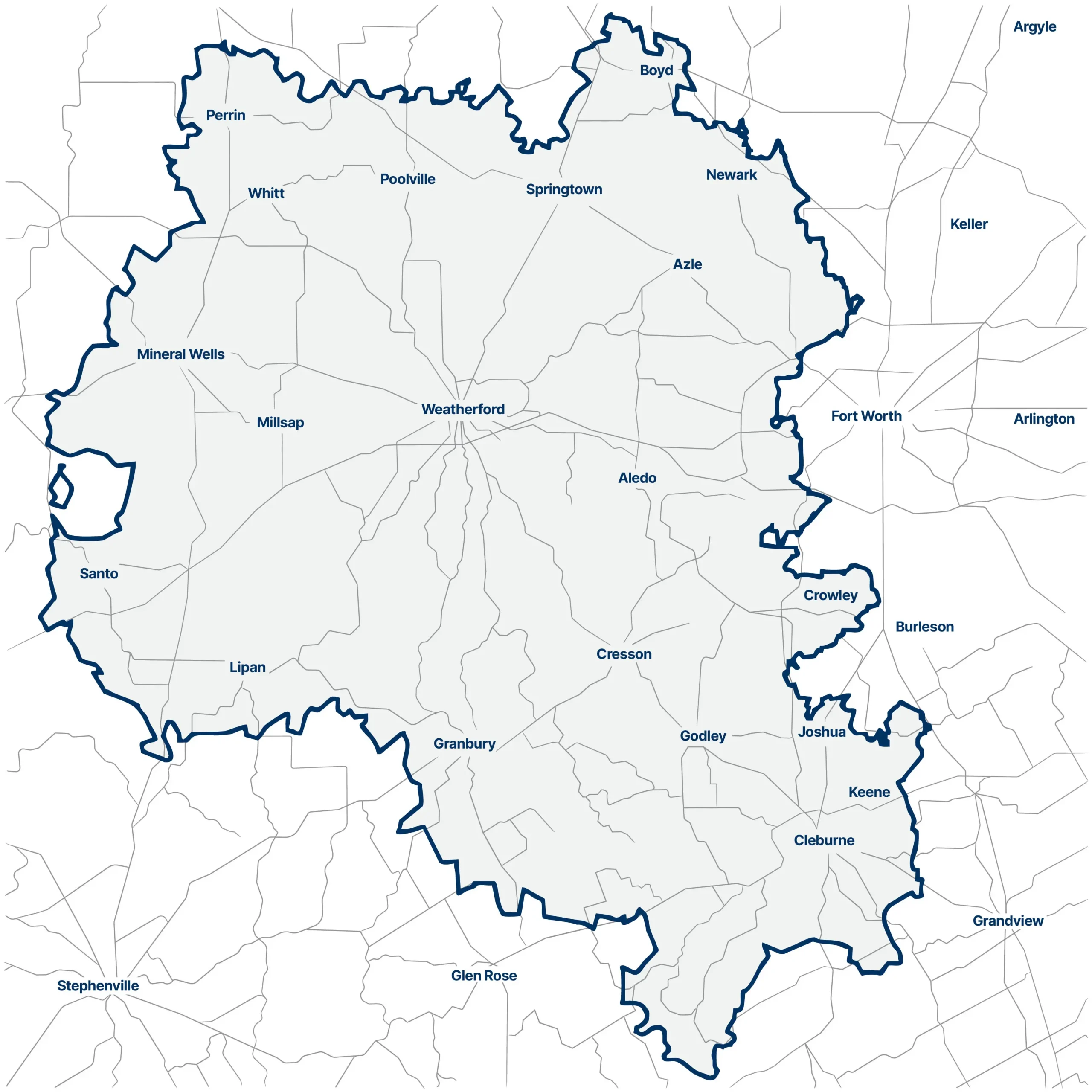
OUR SERVICE AREA
WE LOVE OURHOME TURF
We proudly serve our home turf of Parker, Johnson, and Hood county, including the following cities and towns: