
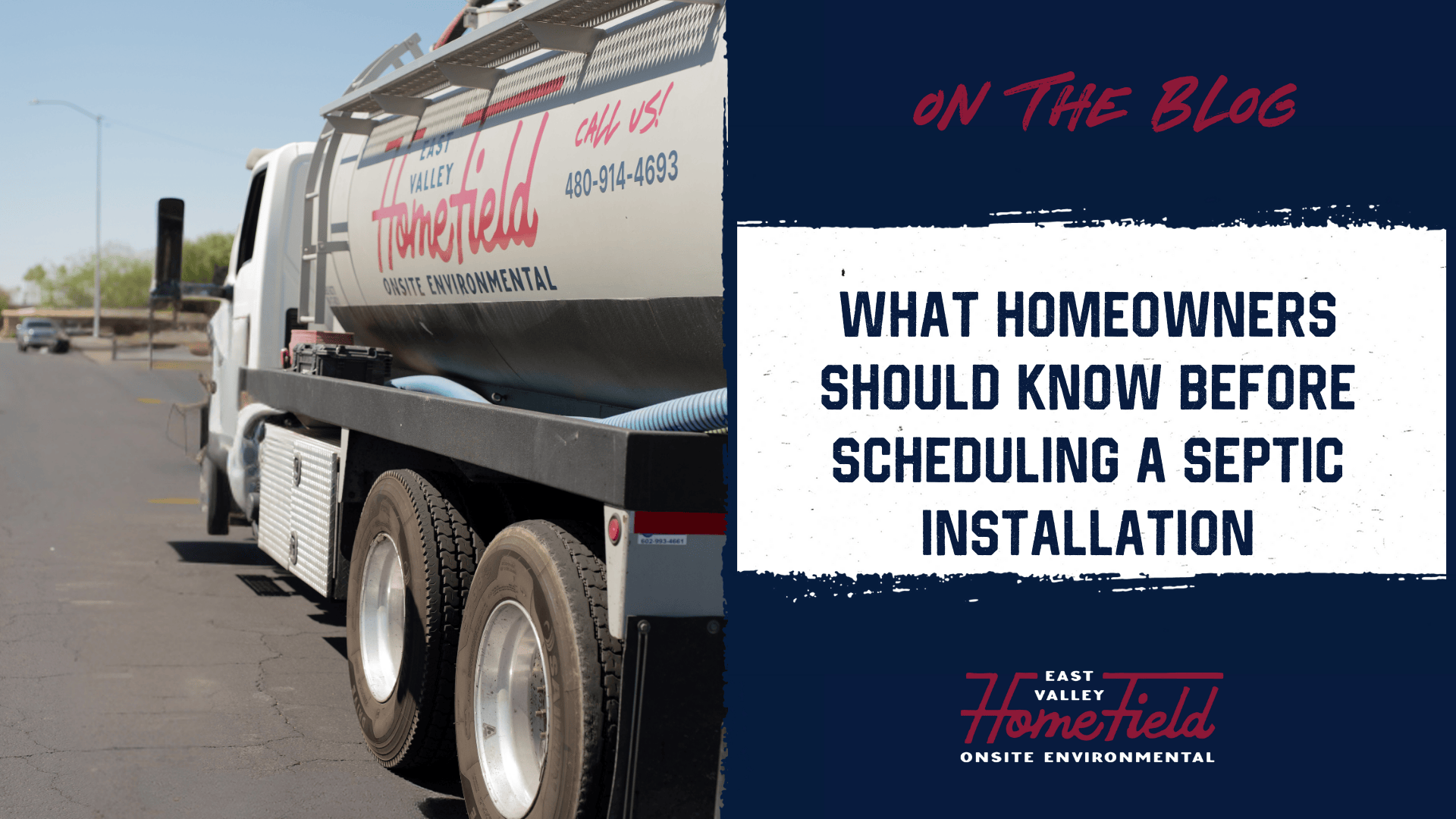
Scheduling a Septic Installation
January 22, 2026
Scheduling septic installation feels like a big step, and it is. The more you understand before work begins, the smoother everything goes. A new system shapes how your home handles water for decades, so this is the time to get clear, ask questions, and make decisions that set you up for long-term success.
Start With a Clear Understanding of Your Property
Every great installation begins with understanding your property. Soil type, elevation changes, access points, and yard layout all play a role in how the system will perform. Arizona soil can shift fast from sandy to clay. One area drains well. Another area turns into a pond after monsoon rain. These conditions influence the tank size, the drainfield design, and the placement of every component.
Before scheduling septic installation, homeowners should know that their yard may look flat, but the underground picture tells a different story. A proper evaluation ensures the system you get fits your water use habits and the specific conditions of your land.
Permits and Setbacks Shape Your Final Layout
Arizona has strict setback requirements that protect your home, your neighbors, and your drinking water. Tanks and drainfields need to sit a safe distance from wells, structures, pools, water lines, and property boundaries. These rules decide where the system can legally go and where it cannot. Permits ensure everything stays compliant with county and state codes.
When preparing for scheduling septic installation, homeowners should know that these rules can change some design expectations. The goal is always to build a strong, long-lasting system, but it must fit inside the blueprint that Arizona sets for safety and performance.
Plan for Access During and After Installation
A septic system needs clear access during the installation and for future service. Your install crew will need room for equipment, trucks, and materials. After the work is complete, the tank and its lids must stay reachable for pumping and inspections. Smart planning now prevents problems later when it is time to clean the filter or complete routine maintenance.
Before scheduling septic installation, think about where you plan to landscape or add patios, driveways, or sheds. These choices can limit access and create challenges down the road. A well-designed install keeps your yard functional and your system easy to maintain.
Know What You Can Do to Support Long-Term Performance
The installation phase sets the foundation, but long-term performance relies on proper care. Flush only the three Ps. Avoid wipes and products that do not break down. Keep large vehicles off the tank and drainfield. Clean your filter when your technician recommends it. These simple habits support the work done during the installation and protect your investment.
At HomeField, we build systems designed to last. We guide homeowners through every step, so scheduling septic installation feels simple, clear, and stress free. When you understand what to expect and how the process works, you set your home up for decades of reliable performance.

Heidi
Heidi is the marketing and business development powerhouse at HomeField Onsite Environmental. She’s all about bringing the onsite wastewater world to life with knowledge, humor, and straight-up valuable insights—helping customers make the best decisions for their systems!
Other Top Posts:

Alignment Over Hustle
Alignment over hustle is the shift most septic businesses need but few…

Your Team Is Your Brand
Your Team Is Your Brand Many business owners think branding starts with…
Sign Up For Our Newsletter
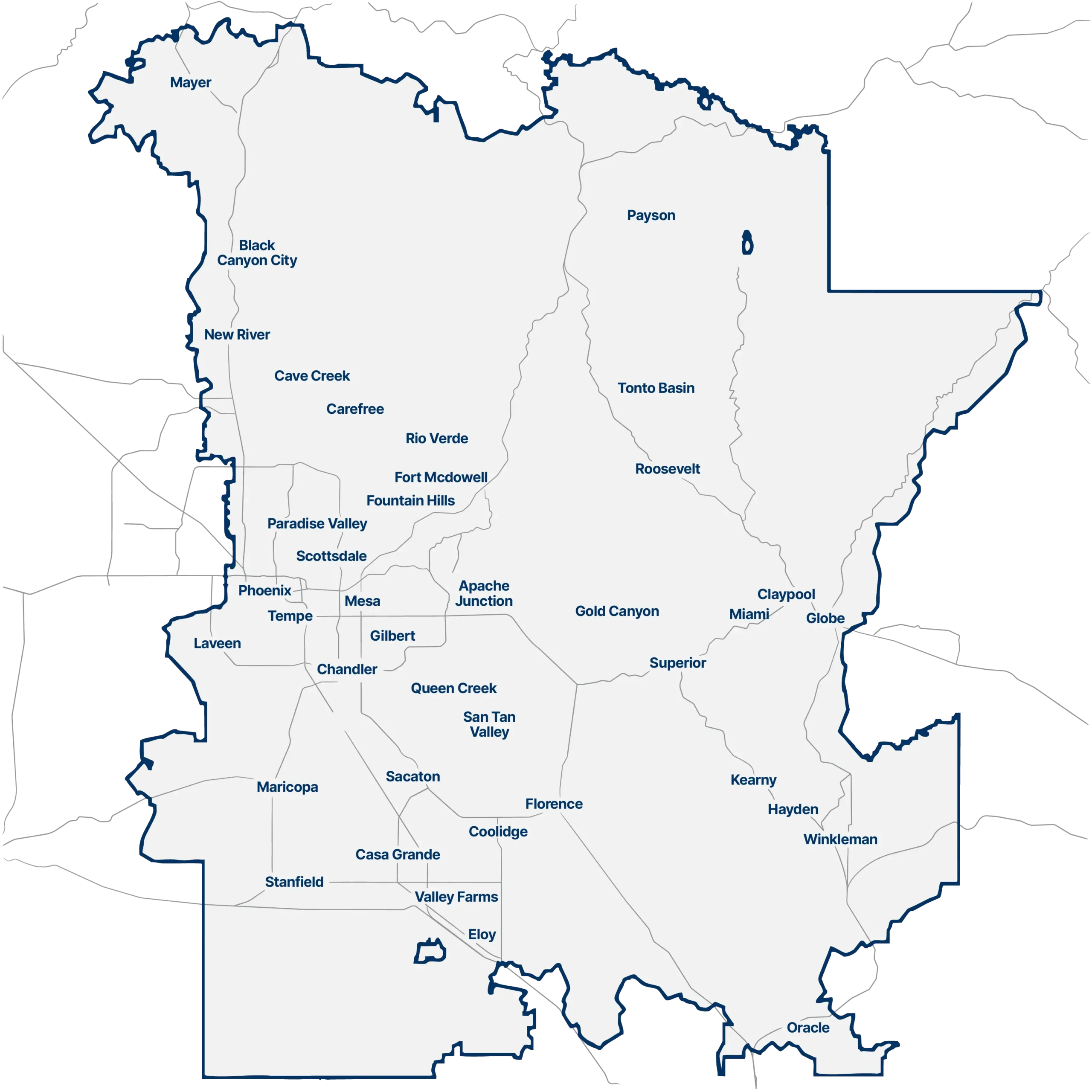
OUR SERVICE AREA
WE LOVE THE EAST VALLEY
We make the East Valley our home base, and proudly serve the cities and areas on this side of town, including: