Grease Trap Replacement
September 10, 2025
How to Know When It’s Time
very commercial kitchen depends on a grease trap, and knowing when you need a grease trap replacement is just as important for protecting plumbing and staying compliant with health codes. It is one of those behind-the-scenes systems that most people do not think about until something goes wrong. But when a grease trap starts to fail, the signs can show up fast—and the longer you wait, the worse the problem gets.
Understanding when you need a grease trap replacement is critical for avoiding major headaches, costly repairs, and potential shutdowns. In Arizona, where regulations are strict and compliance matters, catching these signs early protects your kitchen and your bottom line.
What Happens When a Grease Trap Wears Out
Manufacturers build grease traps to intercept fats, oils, and solids before they reach the main sewer line. Over time, even the best-maintained traps start to lose their ability to function properly. Materials like steel begin to corrode, concrete structures can crack, and internal components degrade under the constant flow of wastewater.
When a trap deteriorates, it allows grease and waste to bypass the system. This can cause backups inside your kitchen, foul odors throughout the building, and heavy accumulation in your outgoing pipes. It also means you are no longer operating in compliance with wastewater regulations, putting your business at risk for citations or forced closures.
Many kitchens try to keep pushing their grease traps beyond their useful life by increasing pumping frequency or doing minor patch repairs. While this might buy a little time, it does not solve the underlying problem. If the structure of the trap is compromised, no amount of cleaning can restore it. Replacement becomes the only smart move for long-term reliability.
Common Warning Signs That Point to Grease Trap Replacement
Several clear indicators signal that your grease trap is reaching the end of its life.
Frequent backups are one of the biggest red flags. If your sinks or floor drains are constantly slow, even after pumping, your trap may be failing internally. Instead of separating grease, it might be letting waste pass through untreated, causing problems down the line.
Persistent odors are another sign you should not ignore. Grease traps are designed to contain waste odors, not release them into your workspace. When smells linger even after a service visit, structural issues like cracks or worn seals could be to blame. This usually means that the trap is too damaged to hold waste effectively.
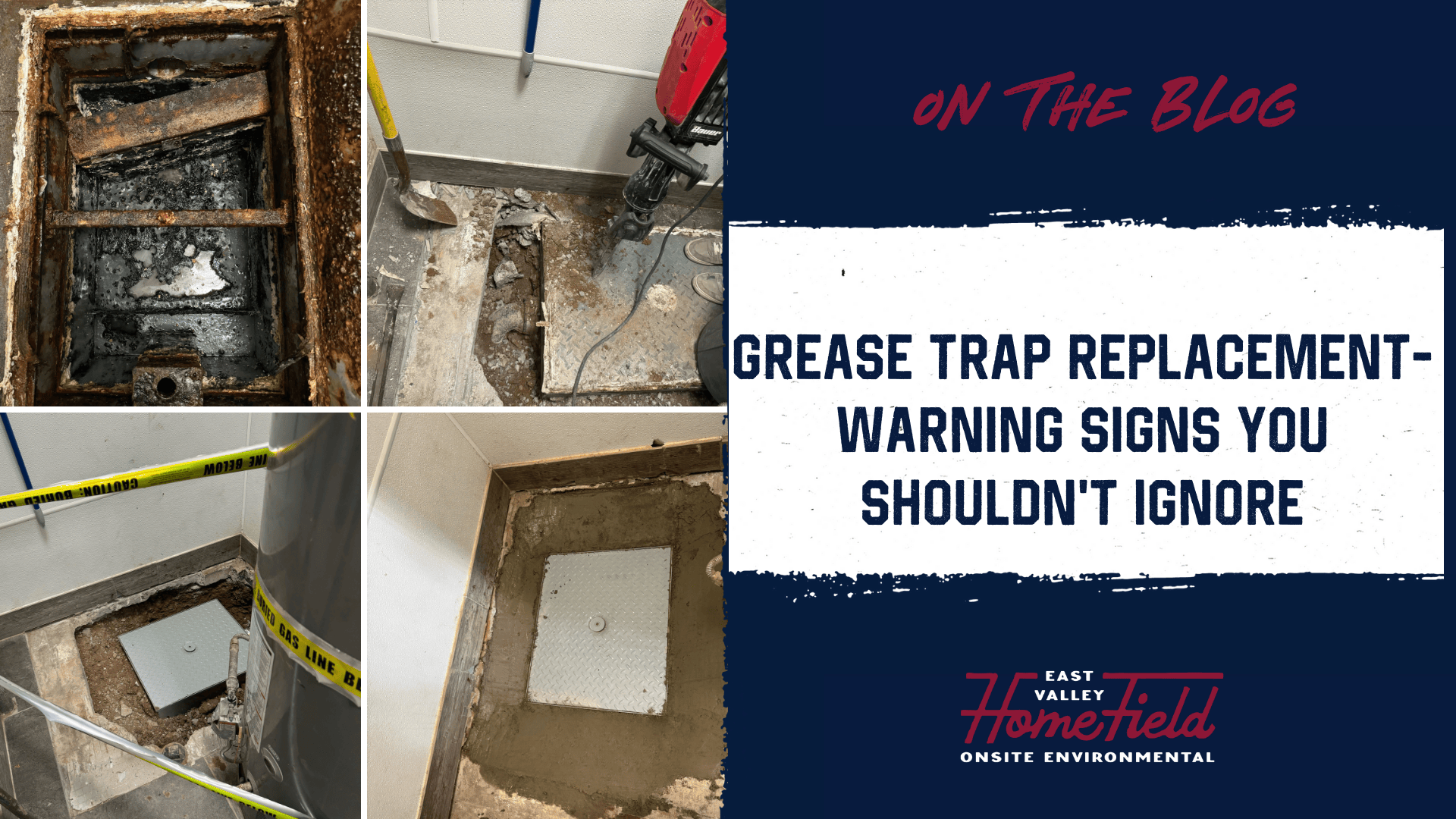
Visible damage around the trap itself, such as rust, cracks, or leaking joints, points to a compromised system. When a grease trap leaks, it no longer does its job safely or legally. Continuing to rely on a leaking or corroded trap only invites bigger and more expensive problems later on.
Plan Ahead to Protect Your Kitchen and Stay Compliant
Replacing a grease trap is not just about fixing today’s problems. It is an investment in the future of your business. A new trap restores safe flow, keeps odors contained, and ensures your kitchen remains compliant with Arizona’s strict wastewater rules.
At HomeField Onsite Environmental, we specialize in helping restaurants, schools, and commercial kitchens plan smart grease trap replacements that minimize downtime and meet all regulatory requirements. We assess the condition of your current system, recommend the best replacement options, and complete installations with care and precision.
If you are seeing the warning signs, do not wait until an emergency forces your hand. Planning a grease trap replacement early puts you in control and protects your kitchen for years to come.

Heidi
Heidi is the marketing and business development powerhouse at HomeField Onsite Environmental. She’s all about bringing the onsite wastewater world to life with knowledge, humor, and straight-up valuable insights—helping customers make the best decisions for their systems!
Other Top Posts:

Tanya Wilson Entreprenista 100
Being named to the Entreprenista 100 is not about hype or titles….
Restaurants and Grease Pumping
Why Restaurants Can’t Skip Grease Pumping Restaurant grease pumping plays a critical…
Sign Up For Our Newsletter
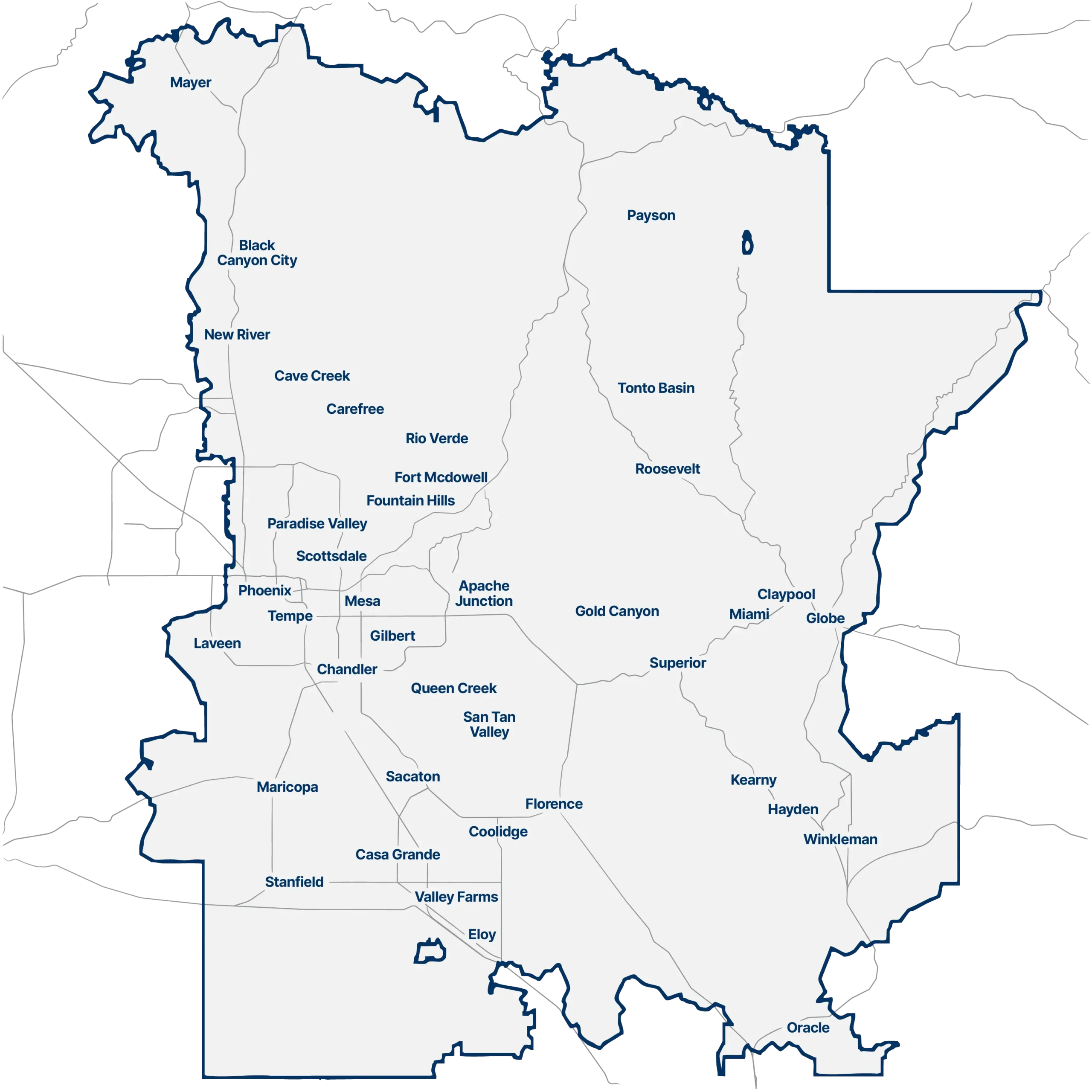
OUR SERVICE AREA
WE LOVE THE EAST VALLEY
We make the East Valley our home base, and proudly serve the cities and areas on this side of town, including: