

How Often Should You Pump Your Septic Tank in Collin County? The Real Schedule
March 6, 2026
Quick Answer
Most homeowners with a conventional system should pump every 3 to 5 years. If you have an aerobic system in Collin County, the rules are stricter: you’re legally required to have a licensed professional inspect your system three times per year under Court Order No. 2008-187-03-11. Either way, your schedule depends on household size, tank capacity, and system type. Clay soil in North Texas means you should generally pump at the shorter end of any range.
Why This Matters and What Most People Get Wrong
You just moved from Dallas or Plano into a home with a septic system. Or maybe you’ve been here a while and realized you haven’t pumped in… how long? Seven years? A decade?
Here’s the thing: septic system failures aren’t dramatic until they are. No warning. No countdown. One day your drain field backs up, raw sewage pools in your yard, and you’re looking at a $15,000 to $25,000 replacement job (and that’s if the soil cooperates).
The good news: it doesn’t have to be that way. A solid maintenance schedule keeps your system working quietly in the background for 30 or more years. Your only real job is staying consistent with inspections and pumping when the technician tells you it’s time.
The bad news: most articles you find online are generic. They tell you “pump every 3 to 5 years” and call it done. That’s accurate nationally. But Collin County has specific regulations that catch almost every new septic owner off guard, plus local soil and climate factors that change the game.
Let’s cut through it and give you the actual schedule for where you live.
The Real Pumping Schedule, By Household Size and System Type
Your septic tank accumulates solids over time. Pumping removes that buildup so it doesn’t clog your drain field. How fast it accumulates depends on how many people live in your house, how big your tank is, and whether you have a conventional gravity-fed system or a mechanical aerobic treatment unit (ATU).
Here’s the EPA baseline, with Collin County’s reality layered in:
Pumping Schedule by Household Size
| Household Size | Typical Tank Size | System Type | EPA Recommendation | Collin County Reality |
|---|---|---|---|---|
| 1 to 2 people | 750 to 1,000 gal | Conventional | 5 to 6 years | Pump as needed; no set inspection cadence |
| 2 to 3 people | 1,000 to 1,200 gal | Conventional | 4 to 5 years | Pump as needed; no set inspection cadence |
| 3 to 4 people | 1,200 to 1,500 gal | Conventional | 3 to 4 years | Pump as needed; no set inspection cadence |
| 4+ people | 1,500 to 2,000 gal | Conventional | 2 to 3 years | Pump as needed; no set inspection cadence |
| Aerobic (any size) | 750 to 2,000 gal | Aerobic Treatment Unit | 1 to 3 years | 3 inspections per year required; chlorine tabs mandatory |
Have a garbage disposal? Subtract 1 to 2 years from your conventional schedule. Garbage disposals grind food directly into the tank and accelerate sludge buildup. Same goes if anyone in the house flushes “flushable” wipes. They aren’t flushable. And they wreck septic systems.
What This Means in Practice
A family of three in McKinney with a 1,200-gallon conventional system and no garbage disposal might pump every 4 to 5 years. No mandatory inspection schedule, no contract required. Pump when the technician says it’s time.
A family of four in Prosper with an aerobic system? Different story entirely. Three licensed inspections per year, a maintenance contract in place, and chlorine tablets maintained at all times. The inspection frequency isn’t optional — it’s required under Collin County’s rules, driven by TCEQ’s aerobic system regulations.
Which category you fall into changes everything about your maintenance plan.
Collin County’s Aerobic System Requirements: What Every Homeowner Needs to Know
If you have an aerobic system, here’s what catches people off guard: you cannot legally operate it in Collin County without a maintenance contract and three professional inspections per year.
This comes from Collin County Court Order No. 2008-187-03-11, Section 10, which adopts stricter local rules on top of state minimums. For aerobic systems, those rules include:
- Three professional inspections per year, with no fewer than 120 days and no more than 130 days between each visit
- Each inspection covers a mechanical and electrical check, adjustments as needed, and full cleaning if required
- The service provider must submit an inspection report to Collin County Development Services and to you
- Initial maintenance contract minimum is 2 years from the date your system was approved
- After the initial 2 years, renew within 30 days or you’re out of compliance
The annual cost for this contract runs $260 to $385 per year, on top of whatever pumping costs you incur.
Many homeowners who moved from sewer-served suburbs have zero idea this exists. They buy a home, get a handshake from the builder, and never hear the words “maintenance contract.” Three years later, they’re either out of compliance or dealing with a system failure.
If you have an aerobic system and don’t have a maintenance contract in place, that’s the first call to make. HomeField’s Advantage Plan is built exactly for this situation. It covers your required inspections, handles the county reporting, and keeps your system ahead of problems instead of reacting to them. One call takes care of it all.
If you have a conventional system, the rules are simpler. Texas state minimums apply. No mandatory inspection contract, no set cadence. Pump when sludge levels indicate it’s time, which your technician assesses during a service call. In Collin County’s clay soil, that typically means pumping at the shorter end of the ranges in the table above.
North Texas Septic Reality: Why Clay Soil Changes Everything
Collin County sits on dense, expansive clay. Great for building foundations. Rough on septic drain fields.
Most soils absorb at least 1 inch of water per hour. Our clay often manages less than half that. Effluent backs up in the drain field instead of soaking into the soil the way it does in East Texas or other sandy regions.
This is why you see two completely different septic worlds in Collin County:
Conventional systems show up mostly in older homes and rural areas, like the older parts of McKinney and Allen. They’re gravity-fed with no moving parts, and they work fine in sandy soil. In clay, drain fields fail faster. Plan on pumping at the shorter end of the EPA range.
Aerobic Treatment Units dominate new construction in Frisco, Prosper, and Celina, precisely because clay soil can’t support conventional drain fields. They work better in our conditions, but they need more maintenance and more frequent pumping.
Spring and drought patterns matter too. North Texas gets a wet spring where the ground saturates and drain fields stress. Then a hot, dry summer where clay compacts and percolation slows further. That seasonal cycle accelerates wear compared to regions with more stable soil. It’s one more reason why the mandatory three inspections per year for aerobic systems make practical sense here, not just regulatory sense.
FAQ: Your Septic Questions Answered
How often does Collin County require septic pumping?
For conventional systems, there’s no mandated pumping schedule. You pump when sludge levels indicate it’s time, typically every 2 to 5 years depending on household size and system type. For aerobic systems, you’re required to have three professional inspections per year, and pumping happens as needed based on what those inspections find.
What’s the difference between a septic inspection and pumping?
They’re different jobs. An inspection is a check-up: the technician looks at the tank level, checks mechanical and electrical systems, notes any issues, and files a report. Pumping removes the accumulated sludge. For aerobic system owners, inspections happen three times per year and pumping happens as needed. For conventional owners, both happen on the same service call when it’s time.
My house in Frisco or Prosper is new. Do I pump more or less often than older homes?
More often. Newer homes in those areas typically have aerobic treatment units built specifically for clay soil conditions. ATUs need pumping every 1 to 3 years versus 3 to 5 years for conventional systems. The upside is that your system is purpose-built for Collin County conditions and will work reliably if you maintain it.
We have clay soil. Does that change how often we pump?
Yes. Clay slows water percolation, stresses drain fields, and accelerates sludge buildup. If you have a conventional system, plan on pumping at the shorter end of the EPA recommendations. 3 to 4 years rather than 4 to 5. If you have an ATU, you’re already ahead because it was chosen specifically for clay conditions. Either way, don’t let the schedule slide.
Do I need a maintenance contract for my aerobic system in Collin County?
Yes, if you have an aerobic system. Court Order No. 2008-187-03-11 requires aerobic system owners to maintain a service contract with three professional inspections per year. If you don’t have one, you’re out of compliance. If you’re buying a home with an aerobic system, confirm the contract is in place before closing. HomeField’s Advantage Plan covers exactly this, including the required county reporting.
How do I know if I have a conventional or aerobic system?
Check your septic permit. Your county or the title company should have a copy. Look for terms like “ATU,” “aerobic,” “treatment unit,” or “aeration.” If it says “conventional” or just “septic system,” you have a gravity-fed setup. If you can’t find the paperwork, a five-minute phone call to us will tell you.
The Practical Next Step
If you’re new to septic ownership here in Collin County, welcome to the club. It’s one of those systems nobody thinks about until something goes wrong, and then it’s all anyone can think about.
The good news: it’s straightforward if you stay consistent. Pump on schedule, get your three aerobic inspections per year if that applies to you, don’t flush wipes or pour grease down the drain, and your system will work quietly for decades.
The easiest way to stay on top of it is a maintenance program with a local provider who knows Collin County’s requirements. HomeField’s Advantage Plan handles the inspections, the pumping, and the county paperwork so you’re never wondering if you’re in compliance or when to call next. For aerobic system owners especially, it’s the cleanest way to stay legal and stay ahead.
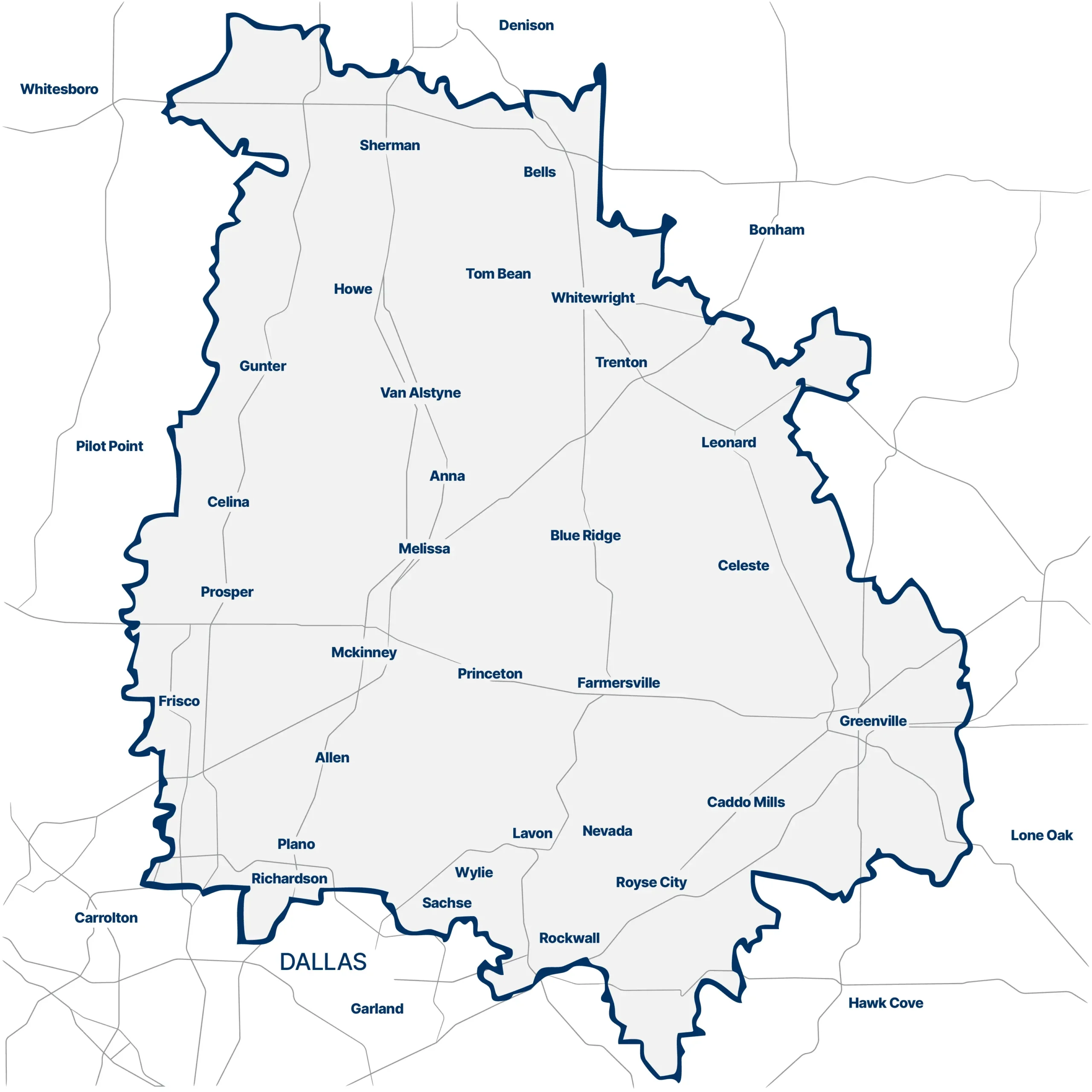
Ready to get started? HomeField covers septic pumping and maintenance across Collin County, from Frisco and McKinney to Allen, Plano, Prosper, Celina, Anna, and more.
Written by the HomeField Collin County Team. HomeField is a licensed OSSF service provider operating under TCEQ regulations in Collin County, Texas. Last reviewed: March 6, 2026.
Sources

Collin County Team
We're the home team of HomeField Collin County, and we're here to share our best septic tips, tricks, and knowledge about service in this area.
Other Top Posts:

Buying a Home with Septic in Collin County, TX: What to Know
Quick Answer Texas has no statewide mandate for septic inspections, but FHA,…
Septic System Warning Signs in Collin County: When to Call vs. When to Panic
You’ve noticed something. Maybe it’s a smell drifting up from the master…
OUR SERVICE AREA
WE LOVE OURHOME TURF
We proudly serve the cities and towns in our home turf of Collin County, including: